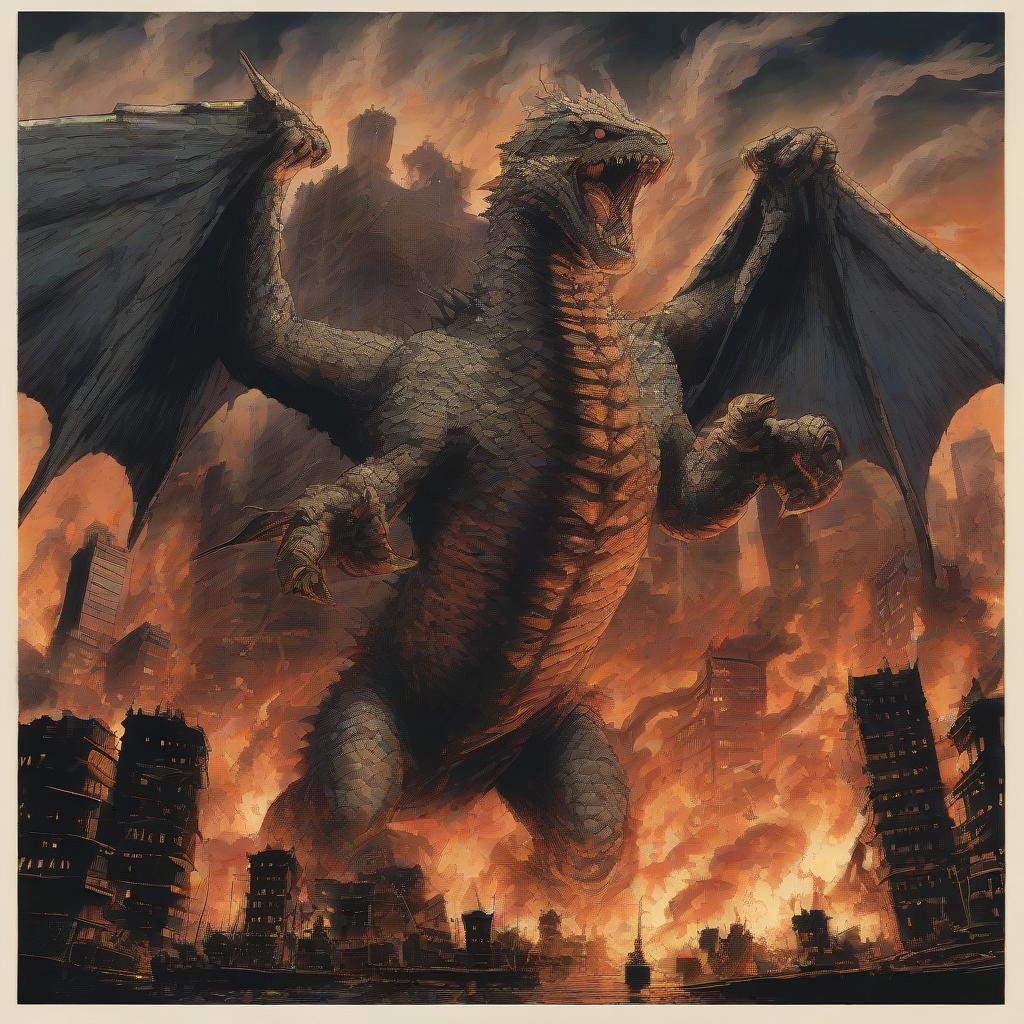
The global sensation of Godzilla Minus One, an Oscar-winning masterpiece that stripped the King of the Monsters back to his terrifying roots, set an incredibly high bar. Writer, director, and visual effects maestro Takashi Yamazaki faced the immense challenge of crafting a follow-up. How do you maintain the profound, dark historical drama that resonated with audiences worldwide while also introducing the thrilling kaiju vs. kaiju action fans often crave? Godzilla Minus Zero answers this question by delivering one of the most viscerally frightening monster battles ever witnessed on screen.
A New Era of Kaiju Terror
Set in 1949, two years after the initial devastation, Japan once again finds itself under attack from a new, formidable monster threat. As many have speculated, King Ghidorah makes his terrifying debut in this continuity. However, this is not the Ghidorah you might expect. Yamazaki reinterprets the iconic three-headed titan, making him a distinct and utterly terrifying presence. Without revealing specific spoilers about his portrayal, it is safe to say that King Ghidorah is brilliantly realized. We witness significantly more of him this time around compared to Godzilla in the previous film, and the visual effects have demonstrably leveled up from Yamazaki's already groundbreaking work in Minus One. During a press conference, Yamazaki noted his goal was to evoke a profound sense of powerlessness in the viewer, and in this, he undeniably succeeds. The sheer scale and destructive capability of this new adversary are breathtaking and horrifying, pushing the boundaries of what monster cinema can achieve.
Unflinching Portrayal of Post-War Trauma
Godzilla Minus Zero earns its surprising R rating, not through gratuitous gore, but through its unwavering commitment to depicting the brutal realities and consequences of war and disaster. The violence is not sugarcoated, refusing to shy away from the horrific impact on civilian lives. One of the film's new key characters, scientist Kanji Murakami, is introduced as a survivor of the Hiroshima bombing. Through stark flashbacks, we are given glimpses of his unbearable grief, witnessing him discover his family's burned remains and grappling with the persistent, dark thoughts driven by PTSD. Similarly, a flashback delves into the immediate aftermath of Godzilla's Ginza rampage in Minus One, finally revealing how Noriko managed to survive the catastrophic attack. These scenes resonate with the same somber tone as Murakami's experiences, underscoring the film's serious exploration of trauma. This material is integral to the narrative and could not be diluted for a lower rating, which paradoxically might make it a vital viewing experience for teenagers, offering a moral counterpoint to the often bloodless destruction seen in many modern blockbusters.
A Darker, More Complex Narrative
While Godzilla Minus Zero delivers spectacular kaiju action and powerful war-horror elements, its primary weakness lies in its deep structural reliance on its predecessor. The film offers compelling character development and several profoundly emotional moments, yet it lacks the distinct, self-contained arc of Koichi Shikishima overcoming his kamikaze survivor's guilt that anchored Minus One. The emotional connection to the human characters in this sequel is largely predicated on the attachments forged in the previous movie, as well as an existing understanding of the historical context of post-war Japan. This makes it less effective as a standalone story, though it undoubtedly enriches the overarching narrative.
Despite injecting pulpier sci-fi elements and the inherent excitement that comes with Godzilla (the classic theme still delivers chills), Minus Zero ultimately emerges as a darker film than Minus One. Its mission moves beyond heroic redemption, instead entangling itself with complications, moral ambiguities, and the enduring nature of trauma. If Minus One was akin to a new hope, Minus Zero mirrors the intensity and stakes of a classic middle chapter, leaving questions unanswered and the world far from safe. Whether this series will conclude as a trilogy or remain a powerful duology, Yamazaki has crafted a sequel that not only expands the universe but also deepens its emotional and thematic weight, leaving an indelible mark. The world may never be truly saved, but the resilience to protect oneself and family persists.
Final Verdict
Godzilla Minus Zero stands as a remarkable achievement, fearlessly delving into the darker aspects of humanity's struggle against forces beyond its control. The upgraded visual effects are stunning, presenting kaiju that are more gorgeously rendered and terrifying than ever before. It continues the poignant exploration of post-war trauma with unflinching honesty and offers thrilling surprises for the audience. While its storytelling benefits immensely from prior attachment to Minus One, making it less impactful on its own, it excels as a continuation. With its stellar music and a narrative that masterfully balances spectacle with profound emotional depth, Godzilla Minus Zero receives an Overall Grade of A-.