Snowball Earth Episode 6: Sagami's Baffling Plot
Episode 6 of Snowball Earth garnered a community score of 3.4, a reflection of the perplexing narrative choices and character motivations that unfold. This installment delves deeper into the primary antagonist, Sagami, revealing a series of twists that leave viewers scratching their heads. The core of the episode's bewilderment centers on Sagami's grand villainous scheme, which shockingly stems from an all-consuming jealousy directed at a mere child.
Sagami's Insipid Motive Unveiled
The revelation that Sagami, a seasoned adult and once celebrated war hero against kaiju pre-apocalypse, harbors such profound resentment for a child is truly baffling. One would expect a war hero to possess a significant degree of status and recognition, even if not the ultimate savior. Yet, Sagami's focus remains fixated on a young protagonist, seemingly consumed by the triviality of who gets to be the world's ultimate hero. His solution to this perceived slight is even more convoluted: establishing an organization dedicated to teaching other children how to become saviors. This peculiar form of revenge, where he still avoids being the savior himself, feels less like a menacing plot and more like a theatrical farce. The entire premise struggles to maintain any semblance of gravitas, undermining the very threat Sagami is supposed to represent.
A Villainous Team Lacking Dignity
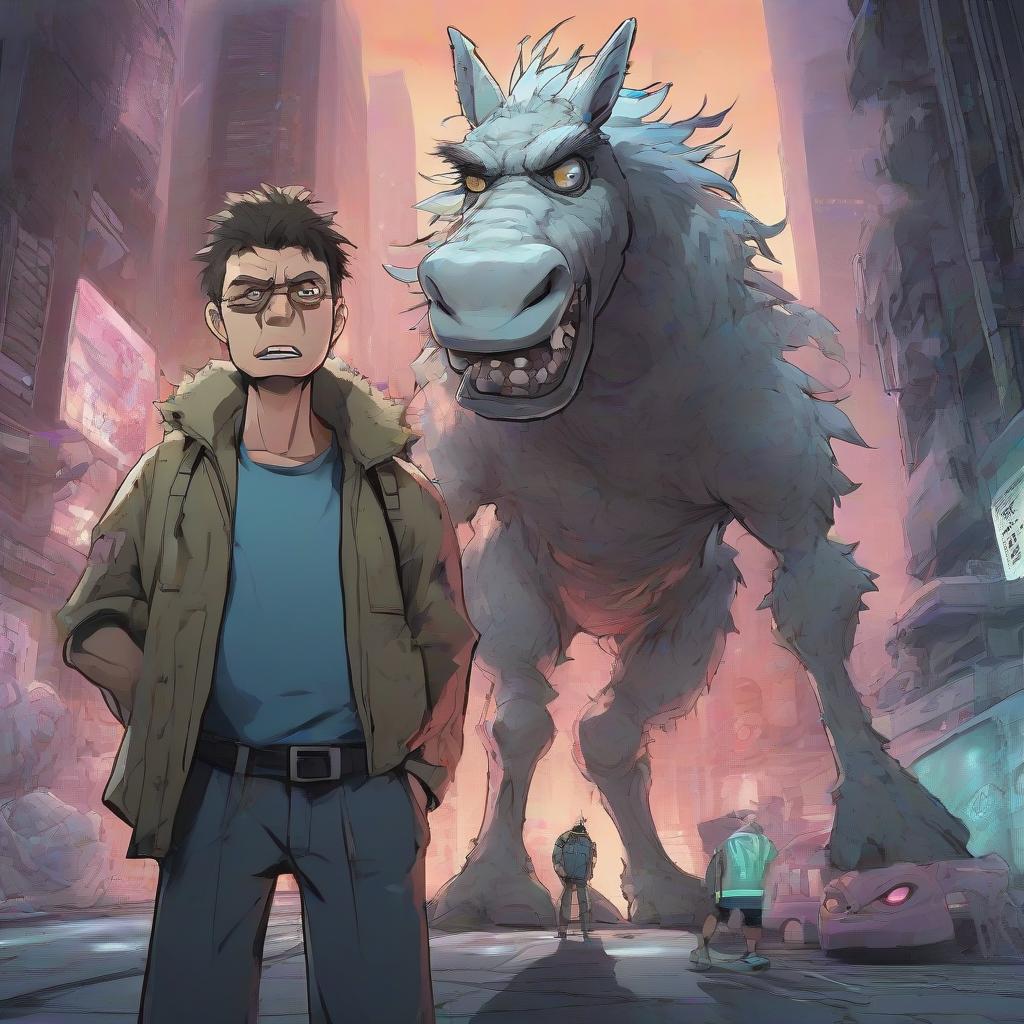
The lack of seriousness extends beyond Sagami's motivations to his entire cohort. The presence of a goofy, mascot-looking character as part of his elite team makes it impossible to treat them with any real dignity. It's akin to assembling an evil organization with a flamboyant, comical mascot as a second-in-command. This visual incongruity further strips away any potential for the audience to view Sagami's group as a legitimate threat, even within the often-eccentric standards of anime storytelling. The entire setup plays out more like a comedic parody than a serious post-apocalyptic drama.
Retreats and Missteps on the Battlefield
Picking up where the previous episode left off, Sagami, leading his kaiju-taming organization, corners Tetsuo, Yukio, and Hagane, fully intending to eliminate Tetsuo and initiate an all-out war. However, just as the heroes face certain doom, Sagami's squadmates inexplicably decide to retreat, allowing Tetsuo and his companions to escape. This convenient plot device, clearly intended to prolong the series for its remaining six episodes, directly contradicts Sagami's declaration that he "never makes mistakes." The immediate consequence of this decision, allowing his targets to live, highlights a significant misstep from a character who prides himself on infallibility. This pattern of hubris followed by immediate failure suggests more blunders are on the horizon.
Visual Oddities and Production Woes
The visual presentation of Episode 6 also contributes to its perplexing nature. Sagami is frequently depicted striking strange poses, including one particularly memorable shot where his facial expression, with teeth and mouth, evokes the image of a braying donkey. This unexpected visual choice detracts from any attempt to portray him as a formidable antagonist, veering instead into unintentional comedy. Another odd visual involves Sagami's hair transforming into a kaiju, presumably a metaphor for his growing bond and power with his creatures. However, the kaiju in question sports googly eyes, making it exceedingly difficult to take the imagery seriously. Beyond these specific stylistic choices, the episode suffers from generally poor CG animation, which is unfortunately a recurring issue. The saving grace in terms of visuals comes from Sagami's backstory sequences, which are rendered in 2D and stand out as a relative improvement.
A Farce of a Villainous Saga
Ultimately, Snowball Earth Episode 6 is a difficult watch for those seeking compelling narrative and serious stakes. Sagami's ridiculously childish motivations, coupled with his organization's lack of gravitas and the episode's visual oddities and poor animation, coalesce into an experience that feels more like a farce than a dramatic progression. The inability to take the main antagonist seriously undermines much of the tension and potential impact of the unfolding events, leaving viewers with more questions about the writing choices than about the fate of the world.