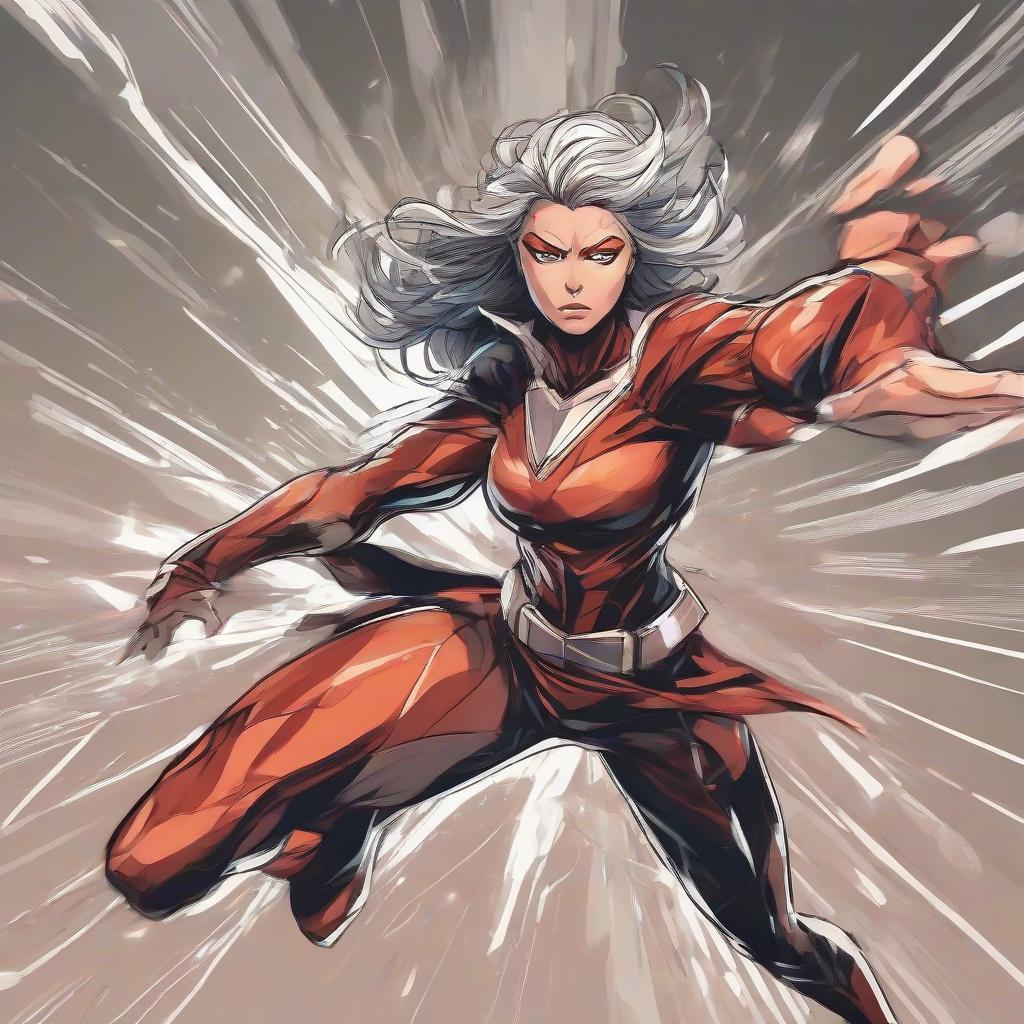
The Unveiling of Lady Justice's Editorial Demands
The world of manga creation often holds fascinating insights into the delicate balance between artistic vision and editorial directives. Recently, Ken Ogino, renowned for his work on The Ossan Newbie Adventurer and previously Lady Justice, shed light on a significant editorial hurdle he faced with his female-led superhero manga. Ogino's candid remarks have sparked a conversation about the expectations placed upon female protagonists in prominent manga magazines like Weekly Shonen Jump, revealing a surprising emphasis on eroticism over strength.
This revelation came to light after a fan revisited Lady Justice's launch 11 years ago, speculating that Ogino's initial intent was solely to "draw erotic content." However, Ogino swiftly clarified this misconception, offering a behind-the-scenes look at the creative process and the pressures he endured during Lady Justice's development. His account paints a picture of a creator caught between his artistic aspirations for a compelling female hero and the stringent, arguably outdated, demands of a major publisher.
Editorial Push for Erotic Focus
Ogino shared that his original concept for Lady Justice was deeply rooted in the theme of "American comics, made in Japan." He envisioned a "tough female hero" embodying a quintessential Japanese "moe" aesthetic, with any erotic elements intended merely as "a bit of spice" to enhance the character, not define her. His goal was to craft a powerful, resilient heroine who could stand on her own merits.
However, the editorial team at Weekly Shonen Jump had a different vision—one that significantly altered Ogino's creative direction. He recalled their explicit instruction: "If the protagonist is female, we won't publish it unless it focuses on eroticism." This directive left Ogino with a difficult choice: compromise his vision or risk his manga never seeing the light of day. He reluctantly conceded to their demands, drawing the series with a focus on eroticism, a direction he initially did not intend as the primary theme. This admission highlights a concerning trend where a female lead's viability was seemingly tied to her perceived marketability through sexual appeal, rather than her narrative depth or heroic attributes.
Dispelling Misconceptions: Ogino's True Intent
The fan's initial assumption that Ogino "came to Jump armed with just a passion to draw erotic content" was firmly refuted by the artist himself. Ogino's clarification underscores that his primary motivation was to create a strong, memorable female character within a superhero narrative. The erotic elements that eventually appeared in Lady Justice were a direct consequence of editorial pressure, not his initial creative impulse. This distinction is crucial for understanding the challenges manga creators face when their artistic integrity clashes with commercial expectations.
Furthermore, Ogino also addressed another common misconception: that Lady Justice was an attempt to compete with the wildly popular My Hero Academia. He clarified the timeline, stating that the one-shot version of Lady Justice ran before My Hero Academia even began serialization. He was in the midst of drafting his series when My Hero Academia launched, leading to a moment of bewildered solidarity with his editor. This chronological detail firmly establishes that any perceived rivalry was purely coincidental, further removing the narrative from external comparisons and centering it on the internal struggles of its creation.
A Changing Landscape for Female Protagonists
Eleven years later, Ogino looks back with a sense of both irony and hope. He openly expressed his "envy" for contemporary manga creators who now have the freedom to feature female protagonists in Weekly Shonen Jump without being mandated to focus on erotic content. This observation suggests a shift in editorial policy or perhaps a broader evolution in audience expectations and industry standards. The landscape that once rigidly linked female leads to eroticism appears to be diversifying, allowing for a broader spectrum of female characters to thrive in the mainstream.
Lady Justice's serialization between May and September 2015, resulting in two published volumes, serves as a poignant artifact of a particular era in manga publishing. While the series itself might not have achieved the widespread acclaim of some of its contemporaries, Ogino's recent revelations imbue it with new significance. It stands as a testament to the behind-the-scenes struggles and compromises that can shape a creative work, offering a valuable lesson on the often-unseen influence of editorial power on artistic expression.
The Lingering Questions of Editorial Influence
Ogino's account forces us to consider the broader implications of editorial mandates on creative freedom and the representation of characters. How many other creators have faced similar pressures? What impact does this have on the diversity and depth of characters presented to readers? While the manga industry is undoubtedly a commercial enterprise, Ogino's story highlights the tension between market demands and the potential for innovative, diverse storytelling.
The fact that current creators supposedly enjoy more freedom in depicting female leads without an erotic focus is a positive sign. It suggests a growing recognition that strong, engaging female characters do not need to be defined solely by their sexual appeal to be successful. Lady Justice, in hindsight, becomes more than just a manga series; it becomes a case study in the evolution of editorial standards and the ongoing quest for authentic artistic expression within a commercial framework. Ogino's honesty provides a rare glimpse into these intricate dynamics, prompting reflection on how far the industry has come, and perhaps, how much further it still needs to go.