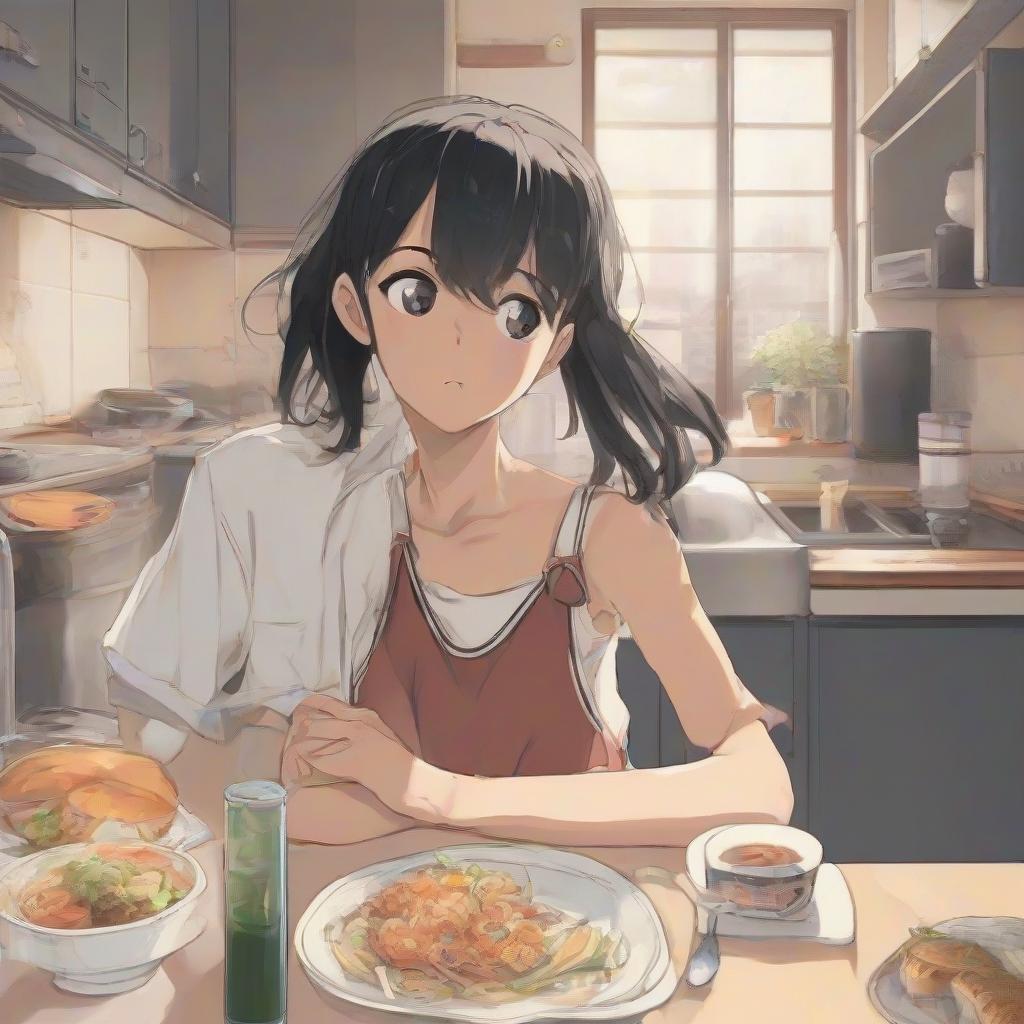
Angel Next Door Spoils Me Rotten Season 1 landed with a title that promised exactly what viewers would get: a pure wish fulfillment fantasy. However, what it delivered was a series so devoid of charm and substance that it struggles to hold any audience attention. From its plodding narrative to its utterly uninspired lead characters, this anime adaptation proves to be a largely forgettable experience.
A Lackluster Core
The series centers around Mahiru, the so-called "class angel," and her neighbor Amane. Mahiru is presented as the idealized cute girlfriend: a bit awkward, loves to cook and clean, and inexplicably devoted to Amane. Her entire persona feels constructed, lacking any genuine personality beyond these desirable traits. She is immensely popular at school yet has no close friends, a detail that conveniently allows her to dedicate all her time to Amane without other social obligations. Her family life is equally vague, placing her conveniently alone.
Amane, on the other hand, is framed as a social outcast, but the show rarely provides evidence to support this claim. He has at least one close friend and interacts amicably with other classmates. The narrative's insistence on his social ineptitude feels forced, serving only to justify Mahiru's almost immediate adoption of a live-in housekeeper role for him. This imbalance in their dynamic is glaring, with Mahiru tirelessly doing chores and offering emotional support, while Amane offers minimal reciprocation. The show tries to rationalize this by having Mahiru constantly reassure him it is fine, yet it only highlights Amane's undeserving nature.
The Pointless Secret
One of the most baffling elements of the first season is the protagonists' insistence on keeping their close relationship a secret. The stated reason is a concern about what others might think of the "class angel" associating with a "loser" like Amane. However, this justification crumbles under scrutiny. Mahiru has no close friendships whose judgment she might fear, and the perceived social hierarchy at school is never established as rigid enough to warrant such secrecy. A small group of girls dislikes Mahiru, but even she dismisses their impact. This arbitrary secrecy seems designed to create a "forbidden fruit" vibe, giving Amane exclusive access to Mahiru, but without any meaningful tension or justification, it simply comes across as frustrating and poorly conceived writing.
Production Woes
Beyond its narrative shortcomings, Angel Next Door also suffers from uneven production quality. While the animation starts off acceptably, it takes a noticeable downturn toward the season's end, impacting the overall visual experience. Voice acting, even from talented individuals like Manaka Iwami (Mahiru), often feels directionless, failing to inject much-needed personality into the bland characters. The opening theme, too, is largely unmemorable, making it an easy skip for most viewers.
Final Thoughts
Angel Next Door Spoils Me Rotten Season 1 is a prime example of a series that fails to deliver on its premise, even for a wish-fulfillment anime. Its characters are flatter than a pancake, its plot points are either illogical or poorly executed, and its pacing is excruciatingly slow. The dynamic between Mahiru and Amane is lopsided and difficult to root for, making any supposed romance feel less like genuine connection and more like an instructional manual on domestic servitude. Ultimately, this anime struggles to find any unique flavor or engaging quality, leaving viewers with a distinctly beige and forgettable experience.