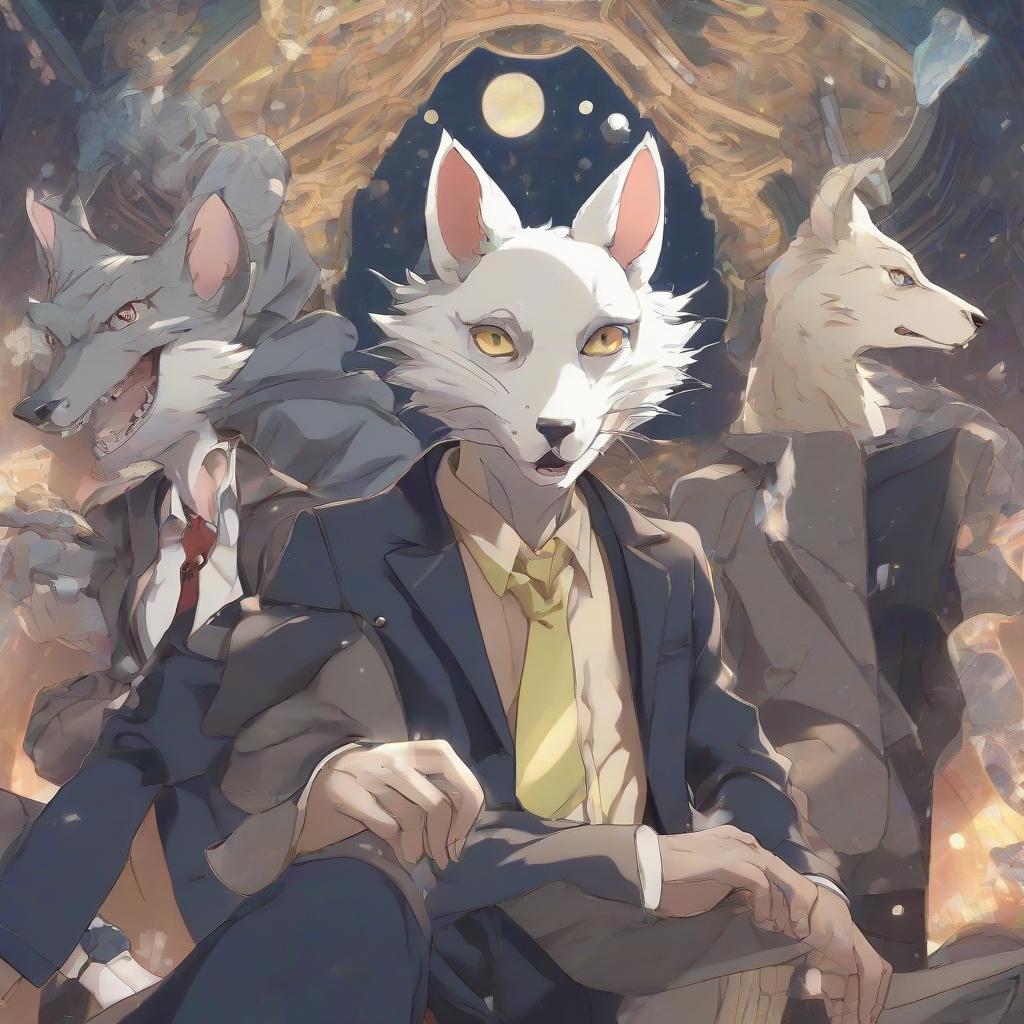
The Final Roar: Concluding BEASTARS Anime Journey
The much-anticipated finale of the BEASTARS anime has arrived, bringing an end to a story that prompted many to ponder their own perceptions of animated narratives. This adaptation, while inspired by the original manga, takes its own path, with various story beats condensed, eliminated, or rearranged. While some of these narrative choices proved beneficial, the anime’s conclusion, in its current form, faces certain limitations preventing it from achieving a truly outstanding status.
A Deeper Look into a Divided Society
What truly shone in this final season was its commitment to allowing nearly every character a moment to resonate. While Legoshi, Haru, and Louis remained central, the concluding episodes thoughtfully provided significant scenes for a multitude of supporting characters, including Jack and Bill. This approach granted viewers diverse insights into the challenges of living within this intricate society. The enduring impact of this social structure, the morally ambiguous necessities required for its continuation, and the biased standards applied across species to maintain order were vividly portrayed. Legoshi, having embarked on his adult life beyond the safety of school, now confronts the raw violence inherent in his world, primarily embodied by the formidable Melon.
Melon: The Theatrical Antagonist
Melon emerges as an undisputed highlight of these final episodes. As a mixed-species individual, he serves as a stark, darker mirror to Legoshi. While Legoshi is often gentle and reserved, Melon is characterized by his boisterous and theatrical nature. Where Legoshi aspires to an interspecies relationship, Melon perceives such unions as a detriment to society itself. His character is a rich tapestry of self-destructive tendencies, profound self-hatred, and a twisted curiosity that has shaped his identity. He consistently commands attention, relishing every act of depravity he undertakes.
This portrayal is powerfully delivered by the voice cast. Scott Whyte's performance as Melon is exceptional, capturing the essence of an incredibly twisted psychopath with a blend of gleeful abandon and genuinely haunting undertones. The English dub for BEASTARS consistently maintains a high standard, with Jonah Scott continuing his stellar work as Legoshi, a role that feels profoundly defining for his career. Lara Jill Miller’s portrayal of Haru adds a unique charm, particularly for those familiar with her prior work, bringing an interesting dynamic to her character's more mature expressions. While the dub is largely superb, a minor issue arose from the noticeable reuse of voice actors for various background and supporting roles, which occasionally caused a brief distraction given the extensive cast of speaking characters throughout the series. Nevertheless, the main ensemble was consistently provided with excellent material to work with.
Relationships and Responsibilities
The increased focus on Haru in this concluding part of the season was a welcome development, elevating the prominence of her relationship with Legoshi. These episodes dedicate significant effort to showcasing their connection, establishing them as a couple who openly confront the complexities and societal perceptions of their interspecies bond, yet remain determined to make it work. Louis's journey also remains compelling as he navigates the intricate and often unjust political landscape of his position within society. The series consistently weaves together themes of identity, affection, and sexuality in powerful ways, with some of these narrative threads finding a satisfying resolution by the end. Each character approaches this complex society from a distinct vantage point, prompting viewers to consider the implications of such a world truly existing.
The Unfinished Symphony: Pacing and Unresolved Plots
Despite the many strengths, the series grapples with a significant challenge: its conclusion feels somewhat abrupt, leaving several core themes explored but ultimately unaddressed. If viewed purely as a love story about a young man overcoming obstacles to be with the one he loves, the ending might feel more fulfilling. However, BEASTARS encompasses far broader discussions regarding the preservation of life, the concept of interspecies harmony, and the implications of figures like Melon who embody warped societal conceptions. The series often highlights societal flaws without delving deeply into their intricacies. Certain character romances fade, plotlines disappear without resolution, and the fates of various characters remain vague, giving the impression of missed opportunities.
The pacing of this final season as a whole exhibits a notable unevenness. The initial segment and the early episodes of the second part adopt a slow-burn, deliberate pace, offering intimate glimpses into the lives of the characters. However, as the narrative shifts towards its climactic confrontation, the progression feels rushed. The season could have greatly benefited from an additional episode or two as an epilogue, allowing the weight of the events to truly settle and resonate. It appears the episode count might have imposed constraints on the creative team, and while the finale does not feel like an entirely different show, it leaves a lingering sense of unfulfilled satisfaction.
A Feast for the Senses: Visuals and Sound
While the narrative pace ultimately felt hurried, the presentation remained uncompromisingly strong. Many characters, particularly Haru, displayed enhanced expressiveness in this final part compared to earlier seasons. This concluding season also incorporated more action sequences than its predecessors. Although these moments did not quite reach the intense heights of season two’s climax, they effectively conveyed a sense of realistic weight and subtle sluggishness in the characters’ movements. The action was not overly polished or meticulously choreographed, a choice that ultimately served the show’s benefit. It feels unusual to describe a series centered on anthropomorphic animals as realistic, yet this appears to have been Studio Orange’s deliberate aim in capturing the nuanced character acting through movement. Accompanying this is the music, which consistently delivers bombastic horns and smooth jazz, perfectly complementing the varied atmospheres of the story. The series’ main leitmotif is particularly memorable and likely to linger in the minds of viewers.
A bittersweet Farewell
Ultimately, the conclusion of BEASTARS elicited a touch of disappointment. Nevertheless, the series remains highly recommendable, offering a unique and compelling drama within recent memory. The characters are consistently endearing and easy to connect with, and the questions posed by the narrative are thought-provoking without becoming overly didactic. Viewers are likely to find themselves rooting for the well-being of every character. The central issue, however, lies in the fact that even with deviations from the original manga, the anime’s runtime simply did not provide sufficient scope to fully develop or enhance the presentation of its many complex ideas. The series’ finale felt akin to a gradual ascent on a roller coaster, only to hit a wall just as it approached its climactic drop. While BEASTARS offered a rich and fulfilling experience, the very last impression left something to be desired.