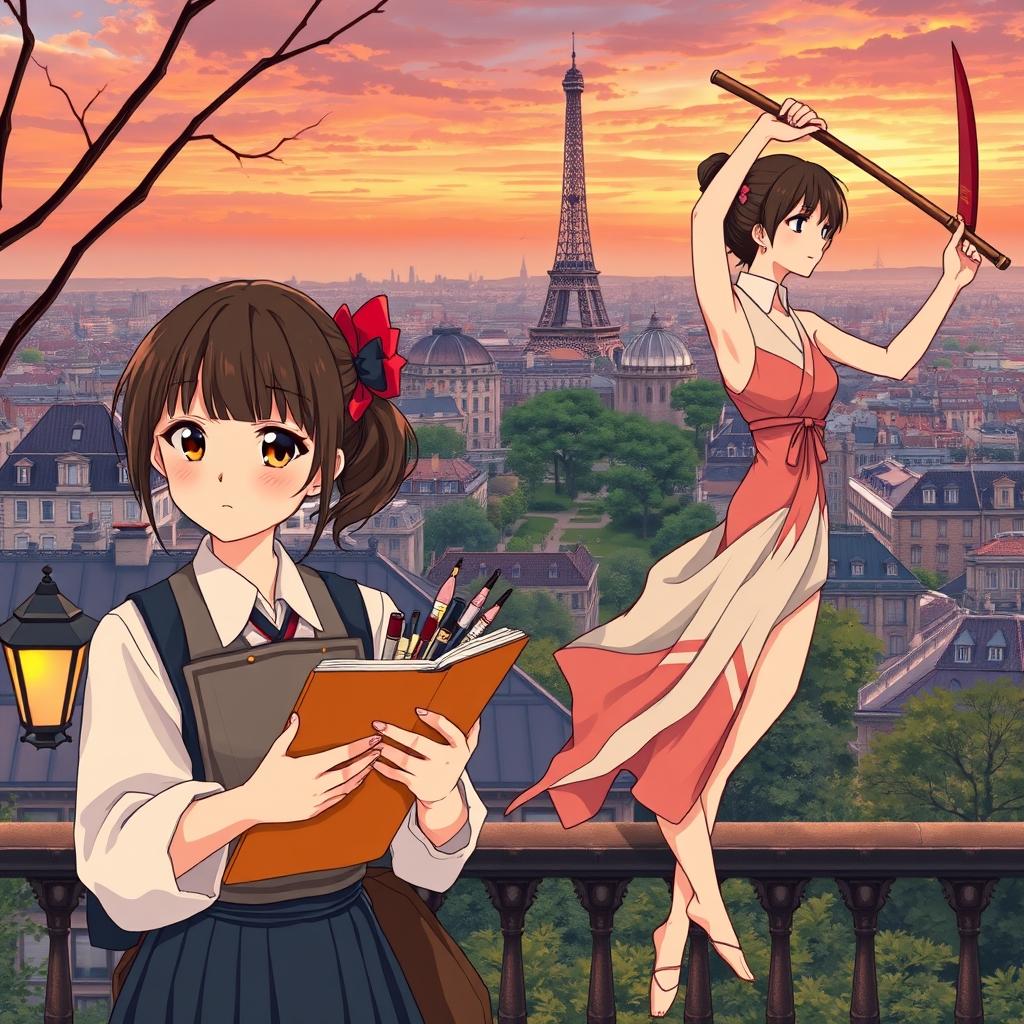
Discovering Samurai Ballerina: A Ghibli-esque Masterpiece in Paris
Among the exciting lineup of films at Scotland Loves Anime 2026, one movie stood out with its breathtaking visuals and compelling narrative: Samurai Ballerina -L'étoile de Paris en fleur-. Despite its deeply French setting and themes, this anime is a purely Japanese production, a fact that might surprise many given its uncanny resemblance to the works of Studio Ghibli. And for good reason! The original character designs and animation are crafted by Katsuya Kondō, renowned for his contributions to Ghibli classics like Kiki's Delivery Service, Ponyo, and From Up On Poppy Hill. If you were told this was the latest offering from Hayao Miyazaki's acclaimed studio, you would undoubtedly be inclined to believe it.
However, Samurai Ballerina is actually a Gorō Taniguchi film. Best known for his directorial prowess on Planetes and Code Geass, Taniguchi steps into a vastly different genre here, offering a serene yet powerful historical drama with Studio Arvo Animation's impressive theatrical debut. Set in the tumultuous 1910s Paris, the film immerses viewers in a pivotal era of world history, where cultural exchange and personal dreams collide against the backdrop of an impending global conflict.
Cultural Cross-Pollination and Personal Dreams
At its heart, Samurai Ballerina is a story of two Japanese girls finding their footing and pursuing their passions in a foreign land. Fujiko, an aspiring artist, arrives in Paris with her gallery-owning uncle, captivated by the vibrant French art scene. Chizuru, on the other hand, is the formidable heir to a naginata dojo, whose family establishes a martial arts school in Paris, aiming to spread their samurai traditions. Yet, Chizuru harbors a secret longing: to become a ballerina. This unique premise is essentially “cultural cross-pollination – the anime,” a concept that proves far more engaging than it might initially sound.
The film masterfully weaves in the historical context of the Meiji Restoration, which abolished Japan's samurai class, leading to a surge of Japanese artifacts making their way to the West. This era also saw the rise of "Japonisme" in France, a profound interest in Japanese art and culture. Both girls embody this fascinating cultural exchange, serving as fish-out-of-water protagonists through whom the audience experiences 1910s Paris. They are both wide-eyed at the possibilities Paris offers, a stark contrast to the stifling expectations back home where they are expected to marry young and become housewives. Fujiko faces criticism for her art, deemed less practical than sewing, while Chizuru's family views ballet as an inferior pursuit compared to the noble way of the naginata. The core conflict beautifully explores the clash between traditional family obligations and the pursuit of individual freedoms, a theme that resonates deeply and is explored with great nuance.
The Struggles of Friendship and Ambition
Following one's dreams, however, is not without immense challenges. Fujiko's journey takes a harsh turn when her uncle abruptly abandons her, leaving her to work in a restaurant kitchen where she's dismissively called “Asian!” rather than by her name. She scrapes by in a tiny Montmartre attic, finding solace only in its fantastic view of Paris. Chizuru initially pursues ballet in secret, under the tutelage of a retired Russian ballerina now performing in cabaret. To fund her studies, Chizuru eventually teaches naginata to a diverse group of students, all while battling discrimination stemming from her Asian heritage.
The friendship between Fujiko and Chizuru is a central pillar of the film, showcasing genuine mutual support. Yet, Fujiko's self-sacrificing nature often leads her to prioritize Chizuru's needs over her own. The narrative thoughtfully questions Fujiko's motivations: what is her purpose if her inspiration and energy run dry? While this introspection is compelling, Fujiko's artistic plotline regrettably feels somewhat underdeveloped in the later portions of the film, which increasingly focus on Chizuru's ballet aspirations. Her resolution feels almost like an afterthought, a blink-and-you'll-miss-it moment that leaves you wanting more depth.
Beyond the central duo, a delightful ensemble of side characters enriches the narrative. From a quirky lady who makes jam from everything imaginable (including onions!) to a perpetually single woman complaining about men, a group of ruffians whose role satisfyingly reverses, and the pivotal Russian pianist Ruslan, these characters provide much of the film's humor. While not strictly a comedy, Samurai Ballerina delivers plenty of genuinely funny, laugh-out-loud moments, balancing its dramatic weight with lighthearted interactions.
A Feast for the Eyes and Ears
Visually, Samurai Ballerina is an absolute triumph. The character animation is remarkably smooth and lifelike, particularly evident in the numerous dancing sequences, which must have involved extensive study of real ballet dancers or rotoscoping. This level of detail extends to non-dancing scenes as well, making every frame a treat. The film also features several immaculately staged fight sequences, effectively showcasing the naginata as a formidable weapon—proving that samurai were not solely confined to swords. Historically, women often wielded naginata, primarily to unseat opponents from horses, and in this film, both male and female characters wield them with impressive skill.
My primary visual critique, however, lies in the grand finale sequence at l'Opéra Paris. The decision to switch to CG for the dancers and backgrounds, rather than maintaining the traditional 2D animation, is jarring. While the CG model of the opera house interior is indeed sumptuous, all gold and shimmering, the sudden jump to 3D models for the dancers feels out of place and detracts from the movie's otherwise consistent and beautiful aesthetic. The frame rate struggles to keep up with the dynamic camera movements zooming through rows of dancers, and while the 3D models are decent, the shift cheapens the overall visual impact. I sincerely wish director Taniguchi had opted for the labor-intensive traditional animation for these crucial scenes; the emotional resonance would have been far greater.
Befitting an anime centered around ballet and opera houses, the full symphonic soundtrack is utterly magnificent. It incorporates recognizable portions from classic ballet productions like Giselle and Coppélia, seamlessly blended with new, evocative compositions by veteran composer Takayuki Hattori. This exquisite score elevates the film, adding a profound sense of elegance and drama.
Why Samurai Ballerina Deserves Your Attention
Samurai Ballerina -L'étoile de Paris en fleur- is a truly gorgeous and compelling historical drama that deftly balances humor with poignant dramatic moments. It was, without a doubt, my favorite film of the entire festival. With its stunning Ghibli-esque art, fascinating subject matter, wonderfully crafted characters, and excellent soundtrack, it delivers an unforgettable cinematic experience. Despite a minor stumble with the CG climax and a slightly underdeveloped subplot, the film's strengths far outweigh its weaknesses.
These inspiring girls, whether artists or ballerinas, with their unwavering pursuit of dreams in a strange foreign land, deserve a wide audience. I eagerly hope for a broader release soon, so more viewers can discover this exceptional anime.