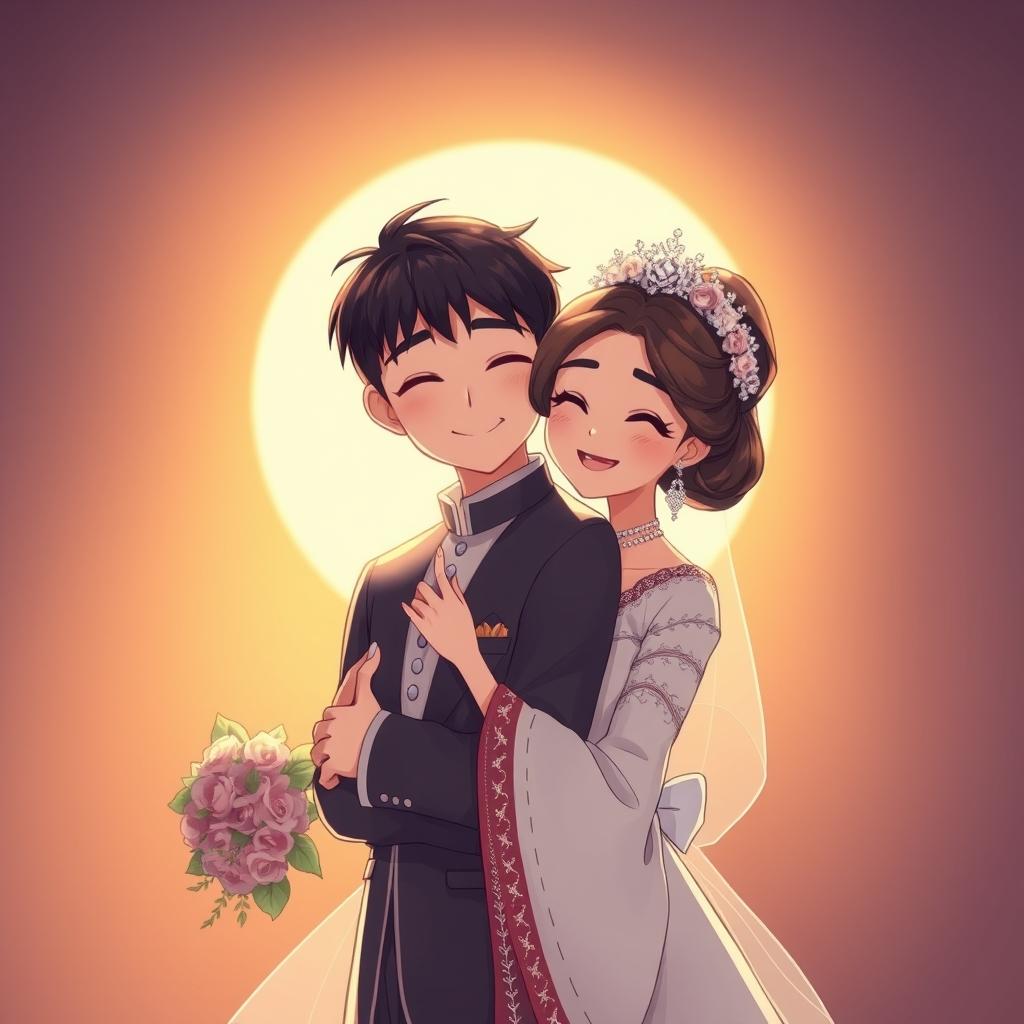
My Happy Marriage, a series beloved for its delicate romance and fantastical elements, has finally reached its much-anticipated conclusion. Across three special episodes, or the latter part of its second season, fans witness Kiyoka and Miyo's journey culminating at the altar. This finale promised to fulfill the series' very title, and while it delivers a visually stunning and emotionally resonant wedding, it also introduces a poignant, almost unsettling, layer of social commentary that makes for a truly unique viewing experience.
The Long-Awaited Union
The central joy of these concluding episodes is undoubtedly seeing Kiyoka and Miyo finally tie the knot. Their path to happiness has been fraught with supernatural threats, familial abuse, and personal insecurities. The news of their impending nuptials spreads like wildfire through the newspapers, reflecting the public's fascination with the union of a powerful supernatural family head and his gentle, previously downtrodden fiancée. The anime beautifully portrays their growing affection and steadfast commitment to each other, making the wedding feel like a well-earned reward for both the characters and the audience. The animation and art direction throughout these episodes are exceptional, bringing to life the tender moments, the elaborate setting, and the magical elements with a consistent level of high quality. Seeing Miyo, once a figure of despair, finally embrace her happiness alongside a loving partner is genuinely heartwarming and fulfills the core promise of the narrative.
The Shadow of What Could Have Been
However, the path to marital bliss is not entirely smooth, introducing an unexpected antagonist: Kimio, an elementary school classmate of Miyo's. Kimio's story serves as a powerful, somber counterpoint to Miyo's Cinderella narrative. While Miyo's arranged engagement liberated her from an abusive household, Kimio's own arranged marriage plunged her into a new nightmare. Her mother-in-law is a tyrannical figure, and her husband offers no support, leaving Kimio trapped in a cycle of torment and neglect. When Kimio encounters Miyo, now radiant and happy, a bitter resentment takes root. Kimio had hoped for a kindred spirit, someone who understood her suffering, but instead found a friend whose life had taken an impossibly different turn. This stark contrast highlights the fantasy aspect of Miyo's happy ending, reminding viewers that not everyone is so fortunate.
A Desperate Plea and Unyielding Reality
Kimio's desperation leads her to actions that, while misguided, stem from a place of profound suffering. Her attempts to curse Miyo are born from a desperate cry for help, a desperate wish to escape her own oppressive reality. One of the most impactful scenes involves Kimio begging Kiyoka for assistance. In a modern context, Kiyoka, a man of power and influence, would be expected to intervene. Yet, within the Meiji-era setting of My Happy Marriage, a battered wife belongs to her husband, and there are strict limitations on what an outsider can do. This unflinching portrayal of societal norms at the time creates a deeply unsettling feeling. Kimio's pleas are met not with aid for her personal plight but with a resolution to the supernatural problem her family faces, illustrating the rigid social structures that denied women like her any recourse.
Visually, Kimio is subtly linked to Miyo through their shared use of traditional kimono at the cooking lesson, contrasting with the other women in Western attire. For Miyo, the kimono is comfort; for Kimio, it appears to be a burden, symbolizing the weight of old-world traditions that oppress her. The narrative uses this visual cue to underline how traditional values, while sometimes romanticized, could also be instruments of profound suffering, especially for women.
A Bittersweet Finale
The inclusion of Kimio's tragic arc injects a significant dose of realism and pathos into what could have been a purely saccharine ending. It forces viewers to confront the harsh realities of the historical setting, making Miyo's good fortune feel almost miraculous rather than simply deserved. While the series successfully delivers the joyous wedding and the promised happy marriage for its protagonists, the lingering shadow of Kimio's fate prevents a wholly untainted celebration. The question of whether Kaya or Koji truly deserved forgiveness also remains a point of contention for some, further adding nuance to the series' moral landscape.
Overall, the special anime episodes of My Happy Marriage are beautifully animated and expertly told, culminating in a visually stunning wedding. The final grade for this segment, a B+, reflects the strong animation and art (A- and A respectively), solid music (B+), and a story (B) that, while providing the expected happy ending, bravely tackles darker social themes. This decision to incorporate a challenging foil figure elevates the narrative beyond a simple romance, even if it leaves a bittersweet taste in the viewer's mouth. It's an ending that demands consideration, ensuring My Happy Marriage leaves a lasting impression beyond its enchanting love story.