I Want to Love You Till Your Dying Day Finale: A Mixed Farewell
The journey with "I Want to Love You Till Your Dying Day" culminates in an unexpected finale, Episode 13, which surprisingly shifts its primary focus away from the central figures of Mimi and Sheena. Weeks ago, predicting an ending that largely sidelined these protagonists would have seemed a peculiar creative choice. Yet, in retrospect, given that most of their emotional arcs and significant conversations reached a muted resolution in the prior episode, this direction isn't entirely out of left field. Indeed, the show could have concluded last week, bringing a somewhat circular end to its narrative, even if substantial lessons or improvements hadn't been fully realized for its characters. "I Want to Love You Till Your Dying Day" consistently presents intricate problems but often falls short in offering genuine solutions or clear outlets for character development. Despite these overarching criticisms, this final episode emerges as one of the series' strongest emotionally, precisely because it delivers a surprisingly complete and relatable emotional arc, albeit for a character who spent much of the series in the background.
Ali's Heartbreaking Journey Through Grief
The heart of Episode 13 undeniably rests with Ali and her poignant struggle to cope with the loss of Seiran. While the series often felt like it was retroactively trying to make viewers care about Ali and Seiran's relationship after Seiran's death, this finale manages to resonate. The emotional impact would have undoubtedly been amplified had their connection been more central to the narrative before the tragedy struck. Nevertheless, the episode effectively uses flashbacks, showcasing tender moments between Ali and Seiran, to provide an emotional payoff in the present. What truly elevates Ali's arc in this finale is its grounded and raw portrayal of grief. Seiran is gone, yet the war rages on, and life, with its demands and relentless march forward, continues. People are still sent to the front lines, and the world moves.
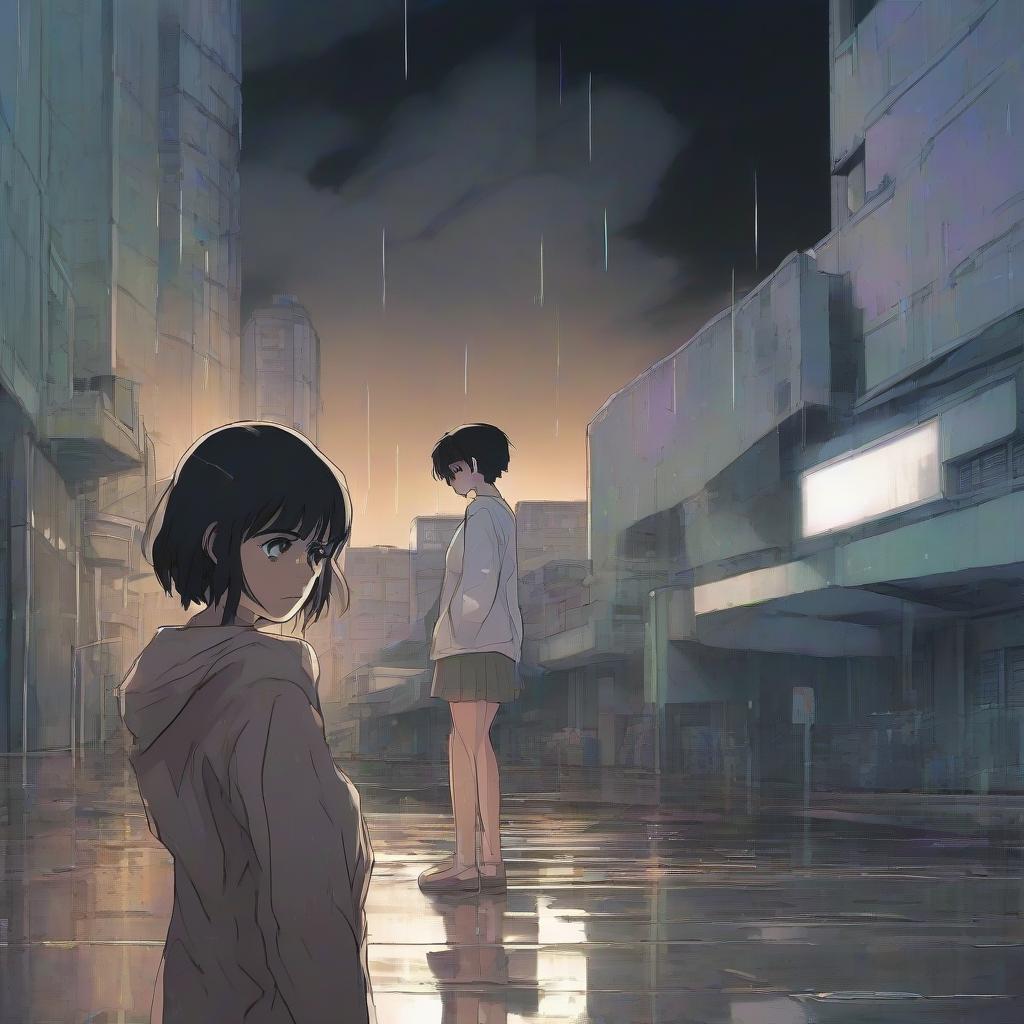
Ali's self-isolation and her brave facade, despite the profound emptiness left by a major part of her life, felt authentically rendered. The climax of the episode, where Ali finally allows herself to shed tears and the overwhelming emotions wash over her, is powerful. The metaphor of the rain, used to great effect, perfectly symbolizes this moment of catharsis and release. It was an unexpected, yet deeply satisfying, conclusion to Ali's character journey, one that successfully explored the difficult process of letting go and finding a way forward amidst profound loss.
Unaddressed Potential and Jarring Character Choices
Despite the strength of Ali's emotional resolution, this finale is rife with missed opportunities that mirror the show's overall shortcomings. The noticeable absence of Sheena and Mimi throughout much of the episode feels not only jarring but largely unnecessary. Furthermore, the decision to introduce a random upperclassman to facilitate Ali's breakthrough in grief feels like a significantly lazy narrative choice. The series would have achieved greater thematic consistency and emotional weight if Sheena or, more appropriately, Mimi, had been the one to guide Ali through her grief.
Imagine the narrative power if Mimi, with her unique perspective as an immortal, had been the one to bring Ali to the outer walls, allowing her to see the world through Seiran's eyes before her passing. Such an interaction would have served as a crucial point of emotional growth for Mimi, fostering a more genuine connection between the two characters rather than the forced closeness the past few episodes attempted to establish. These creative choices underscore a persistent issue within the series: a reluctance to fully capitalize on its own character dynamics and narrative potential.
A Series of Unfortunate Events: Reflecting on the Overall Show
Episode 13 encapsulates the conflicting feelings towards "I Want to Love You Till Your Dying Day" as a whole. While it delivers moments of genuinely well-directed and emotionally charged storytelling, there's a constant lingering question: does this show truly comprehend the vast potential it possesses? After thirteen episodes, what enduring lessons or insights have been imparted? The war, the intricate mechanics of this world that so readily dispatches orphaned students into battle against adults, remains largely unexplored. We know Sheena struggles with perceived weakness, and Mimi, the immortal girl, grapples with understanding ordinary teenage life.
Yet, despite these individual character struggles and events, the show often feels like it's not truly saying anything profound. It often presents itself as a mere "series of unfortunate events" unfolding, rather than a cohesive narrative with a deeper message or compelling character progression. It's unclear if the source material offers more depth, but the anime adaptation frequently appears hesitant, presenting safe yet melancholic ideas with a muted execution, merely to stretch across thirteen episodes. While the show wasn't overtly boring, it certainly veered close at times. Its lack of ambition and a clear overarching thematic statement leaves little incentive for a return viewing, as there are many other ambitious narratives worthy of one's time.
Final Verdict for Episode 13
Episode 13 of "I Want to Love You Till Your Dying Day" stands out as one of the more emotionally impactful installments, primarily due to its focused and well-executed portrayal of Ali's grief. However, it cannot escape the shadow of the series' broader issues, including squandered character interactions and a general reluctance to delve deeper into its own world and themes. The conclusion for Ali is commendable, but the missed opportunities with Mimi and Sheena highlight a persistent problem of unfulfilled potential throughout the entire series. It's a bittersweet ending that offers closure for one character while leaving many questions unanswered about the overall narrative's intent.