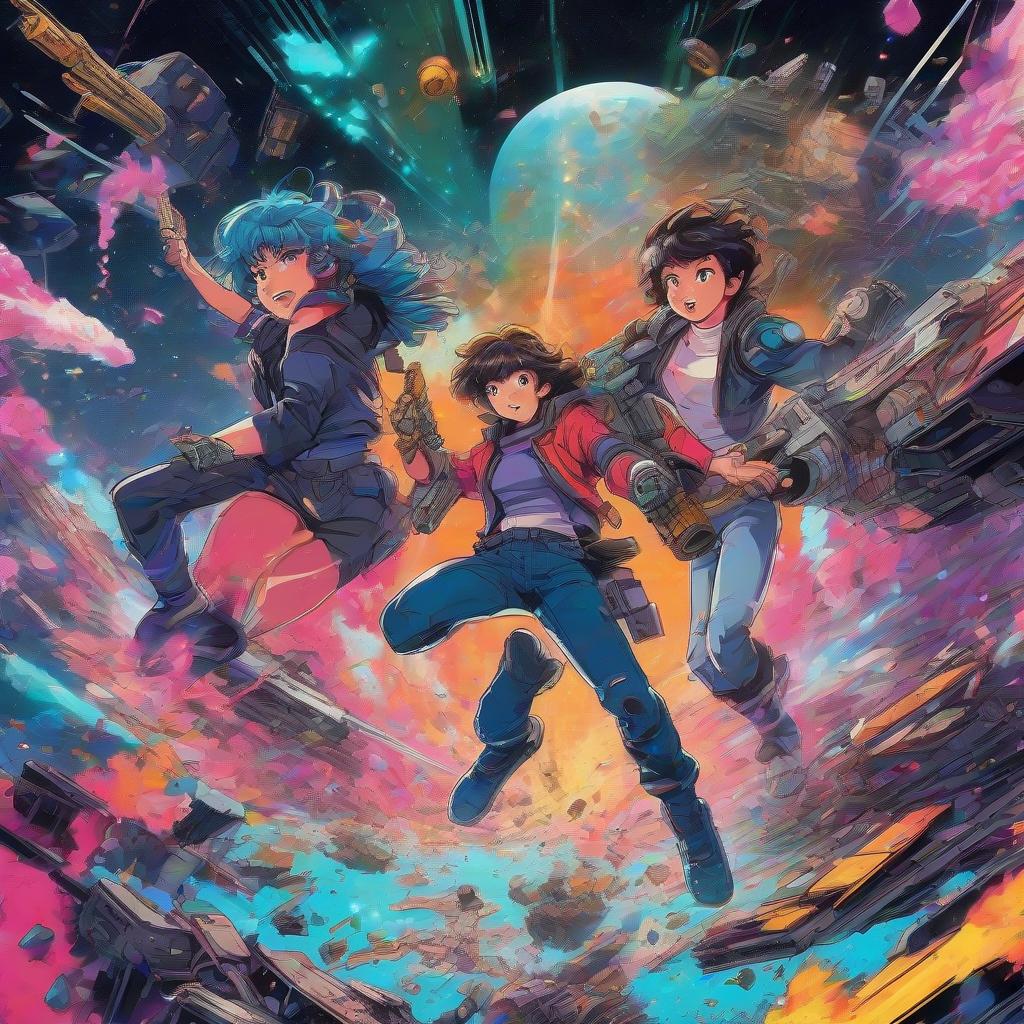
The allure of nostalgia is a potent force, often more captivating than the present. Yet, some creative works genuinely capture that sentiment, delivering experiences that resonate deeply. Orbitals, an exclusive cooperative action-adventure for the Nintendo Switch 2, achieved just that from its initial reveal. This beautifully rendered depiction of Bubble Era Style Space Opera, featuring two friends, Maki and Omura, navigating cosmic wreckage, immediately cast its spell, reminiscent of Josef Fares' Hazelight games. Developed by Shapefarm, a studio boasting talent from games like Flintlock: The Siege of Dawn, and published by Kepler Interactive, Orbitals promised a fresh experience brimming with charm.
A Visual Feast: Bubble Era Anime Reborn
Orbitals’ commitment to its retro aesthetic is truly remarkable. The game masterfully incorporates authentic uses of color, mosquito noise, haloing, and other broadcast artifacts, creating an "animēshon" aura that transcends mere surface-level homage. Its spectral-soaked Techpunk setting and characters are vibrantly animated, fostering a genuine sense of wonder. The studio meticulously injects "wink and nod" references to the production style of classic anime, subtly embedding Easter eggs rather than overtly pushing them. This thoughtful fan service focuses on hallmarks of the Bubble Era, delighting players with City Pop-fueled montages and dynamic Itano Missile circuses, elevating the visual experience far beyond simple pandering.
Innovative Co-op Gameplay: Tools and Teamwork
Beneath its gorgeous veneer, Orbitals establishes a compelling cooperative gameplay loop. The decision to fuse spectacle with a Hazelike experience is intriguing, especially given the subgenre’s limited exploration outside its pioneers. Balancing skill-based challenges with cooperative mechanics is a delicate art, and Orbitals strikes a commendable balance. It offers a challenge gripping enough for serious engagement, yet avoids frustrating difficulty spikes. This success is largely due to the expertise of Jakob Lundgren, Orbitals’ lead game director and former Level Design lead for Hazelight. His focus on the role of tools truly distinguishes the game.
Maki and Omura's interstellar journey emphasizes the strategic use of distinct tools. In one memorable level, players navigate erratic temperatures, utilizing a water cannon for long-pressurized streams and a laser cannon for pinpoint heat beams or wide-spread pulse shots. This seemingly elementary hot and cold dynamic unfolds into a deceptively deep gameplay experience, driven by excellent pacing. We found ourselves manipulating moving platforms with cold air, then heating them to counteract frigid fans, or guiding a snowball by dynamically altering its size with water and laser to activate crucial switches. These intricate puzzles steadily test player understanding, ensuring a constant flow of engaging problem-solving that never felt tedious.
Beyond on-foot puzzles, Orbitals features spaceship segments where players divide responsibilities as pilot and gunner, echoing classic space adventures. These sections serve as serviceable palate cleansers, adding variety and a sense of action to the otherwise ingenious puzzle designs. Throughout the campaign, Orbitals consistently delivers moments of collaborative delight, encouraging partners to relish the next creative challenge without ever feeling repetitive.
Lingering Glitches and a Rushed Narrative
Despite its brilliance, Orbitals isn't without its flaws. Mechanical hiccups occasionally hinder the experience. Pathfinding could become unnecessarily difficult when waypoint markers mysteriously disappeared, forcing players to spam tools or emotes to indicate their location. Inconsistent physics, particularly with momentum and jumping, sometimes made maneuvering feel sloppy, and finicky collision detection with crucial objects or platforms was frustrating. Crucial button prompts would sometimes vanish if the camera angle shifted slightly, leading to aggravating interruptions in otherwise well-designed challenges. Even the secret collectibles, while offering fun mini-games, felt like a missed opportunity for more impactful unlockables like permanent upgrades, which could have boosted replay value and encouraged speedruns.
However, the most significant drawback lies in Orbitals' characterization and narrative. Despite the gorgeous presentation, the story lacks substance. The premise is thin: Maki and Omura are part of a space colony, survive a cosmic calamity thanks to "I.M. Machine" technology (which 3D-prints bodies), and fifteen years later, must collect "Reactor Cassettes" to power a shield against an impending storm. The world-building initially sparks interest, crafting an engaging dynamic between the protagonists. Yet, the narrative pacing quickly derails. The campaign, involving only six notable characters (two of whom are mere plot devices), rushes into a confusing final act, skipping crucial development. The gravitas feels unearned, and the potential for an impactful conclusion is squandered.
Our playtime clocked in at less than five hours to roll credits. This brevity leaves players feeling a "pain of famine" rather than a desire for more. The story's conclusion, though theoretically capable of being impactful, is undermined by the lack of development and the bewildering brevity of the experience.
The Verdict: A Short but Sweet Cosmic Journey
Orbitals is a genuinely enjoyable game, offering a beautiful cooperative experience that will resonate with anyone drawn to its distinctive anime presentation and retro charm. It excels in delivering ingenious puzzle design and a captivating visual style that pays thoughtful homage to a beloved era. However, players must approach it with the expectation that its magic, while potent, will dissipate quickly. The rushed narrative, underdeveloped characters, and brief runtime significantly detract from its overall potential, preventing it from reaching true greatness. While its gameplay ebb and flow provides ample amusement, the experience abruptly ends, leaving a sense of unfulfilled promise. Despite these caveats, Orbitals stands as a visually stunning co-op adventure worth experiencing, even if its cosmic journey feels cut tragically short.
Overall: B Graphics: A Sound/Music: A Gameplay: B- Presentation: A+