Episode 9 of Goodbye Lara dives deep into its core themes, weaving a complex narrative around the power of light, the elusive nature of true love, and the rich tapestry of folklore. This installment proves to be a pivotal moment, challenging expectations and deepening our understanding of Lara's transformative journey.
The Double-Edged Sword of Light
Light in fairy tales, especially those by Hans Christian Andersen, often symbolizes hope and salvation. Think of The Little Match Girl, where light offers a brief, albeit tragic, solace. In Goodbye Lara, this initial premise holds true: Lara's unique light is believed to be the key to restoring the merfolk, a hope that has sustained Lisa for centuries. It's the beacon guiding them forward.
However, episode 9 masterfully reminds us that light, much like fire, possesses a destructive potential. It warms but also decimates. The question looms: will Lara's light genuinely benefit everyone? Folklorist Maria Tatar's observation that "for Andersen, brightness and illumination are signals for spirited imaginative activity" resonates here. While the return of mermaids excites most of modern Japan, Luca and Mari are presented as exceptions, accepting Lara's reality without question. For others, like Lisa, the path forward might seem to lie in exploitation, as seen in the freak show. We recall Kota's decisive act of burning down the building to rescue Lisa, a destructive act fueled by light. This parallel suggests Lara's light may also be two-faced, rescuing her family while inadvertently destroying something else in the process.
Lara's Desperate Quest for True Love
Central to this episode is Lara's increasingly desperate attempt to define and secure "true love." With her time running out, she attempts to force a breakthrough with Luca, leading to a pivotal, rejected kiss. This moment, specifically the act that triggers the heart knife, is a fascinating subversion of classic folklore. Tales are replete with unwanted or nonconsensual kisses, with Sleeping Beauty being a prime example. Yet, Goodbye Lara flips the script: the princess is the aggressor, and the 'prince' is uninterested. This twist aligns perfectly with how Luca and his sibling defy traditional gender norms and further acknowledges mermaids as powerful trans symbols. The incident forces us to ponder what Lara's true love truly entails. Perhaps it is not about external validation or heteronormative expectations, but simply her own sincere feeling, unburdened by archaic conventions.
Birds, Beauty, and Belonging
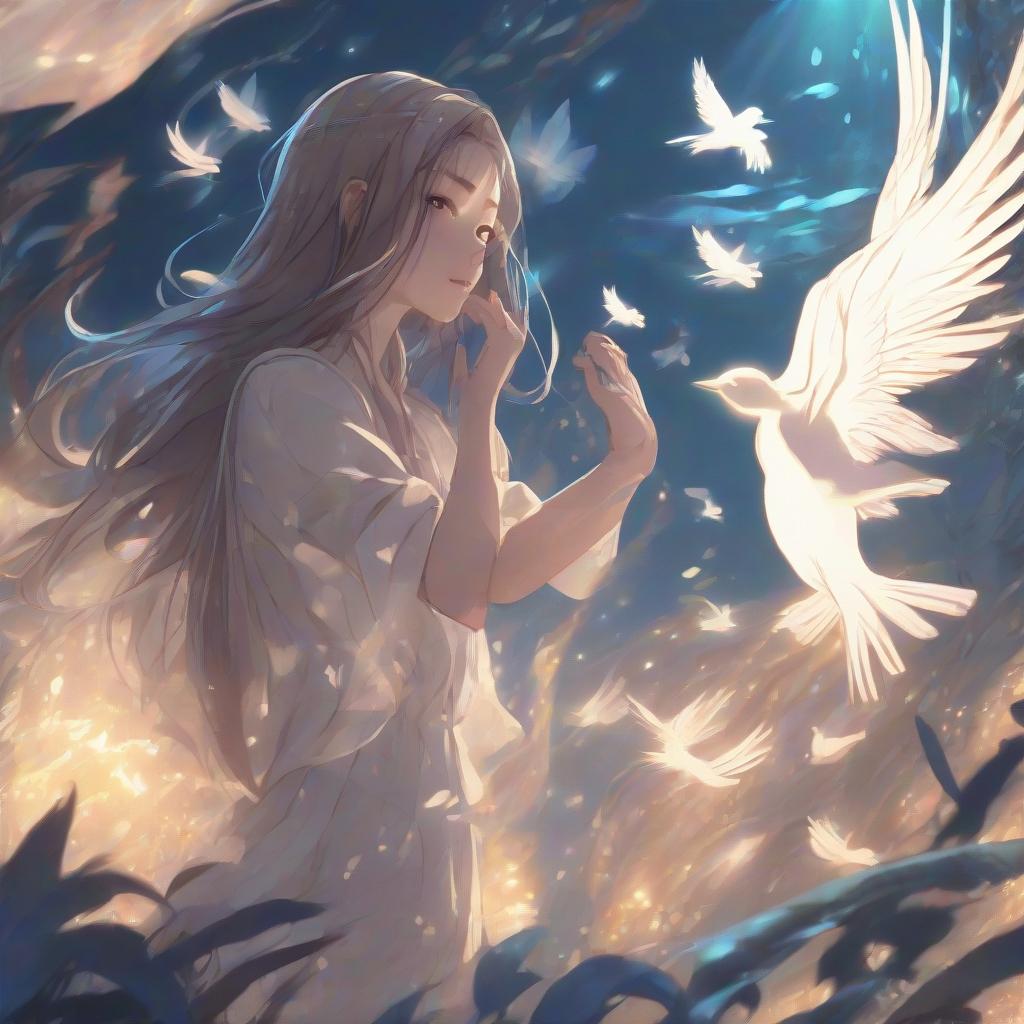
The episode is strikingly punctuated by multiple appearances of white birds. In Andersen's tale, the Mermaid transforms into a spirit of the air, creating an inherent opposition between birds and mermaids. The recurring motif of exactly six white birds is particularly significant, referencing Lara and her sisters, and echoing the common number of brothers in variants of The Wild Swans. Lara's ride in a swan boat cleverly blends these two tale types, possibly even linking her story to Lisa's, if one subscribes to the theory of Lisa being Elisa from The Wild Swans. Even without that specific connection, the symbolism of birds as spirits of the air is potent, as is the nod to Andersen's The Ugly Duckling. The Ugly Duckling, famously a cygnet, transforms from a despised creature into a beautiful and valued swan. This raises a critical question for Lara: is her value similarly tied to her appearance?
The narrative suggests it might be. The original prince desired a beautiful woman, not a monstrous fish. Lisa, conversely, desires a beautiful mermaid, not a hideous human. Everyone seems to have an opinion on how Lara should look, and this directly impacts her quest for true love. She seeks someone who will love her for who she is, transcending her mermaid or human qualities. This desire for unconditional acceptance might very well be what fuels the heart knife's reaction when Luca, much like the prince before him, appears to reject her affection.
Transformations and Divisive Love
Lara's light is undeniably transforming her world, from Grace bursting from her tank to the literal breaking of Mari's window. While these changes are overt, not all transformations are universally perceived as beautiful or beneficial. True love, as Goodbye Lara episode 9 so eloquently suggests, might be just as divisive, challenging preconceived notions and forging new paths that some may embrace while others resist. The journey continues to be one of profound self-discovery and societal re-evaluation.