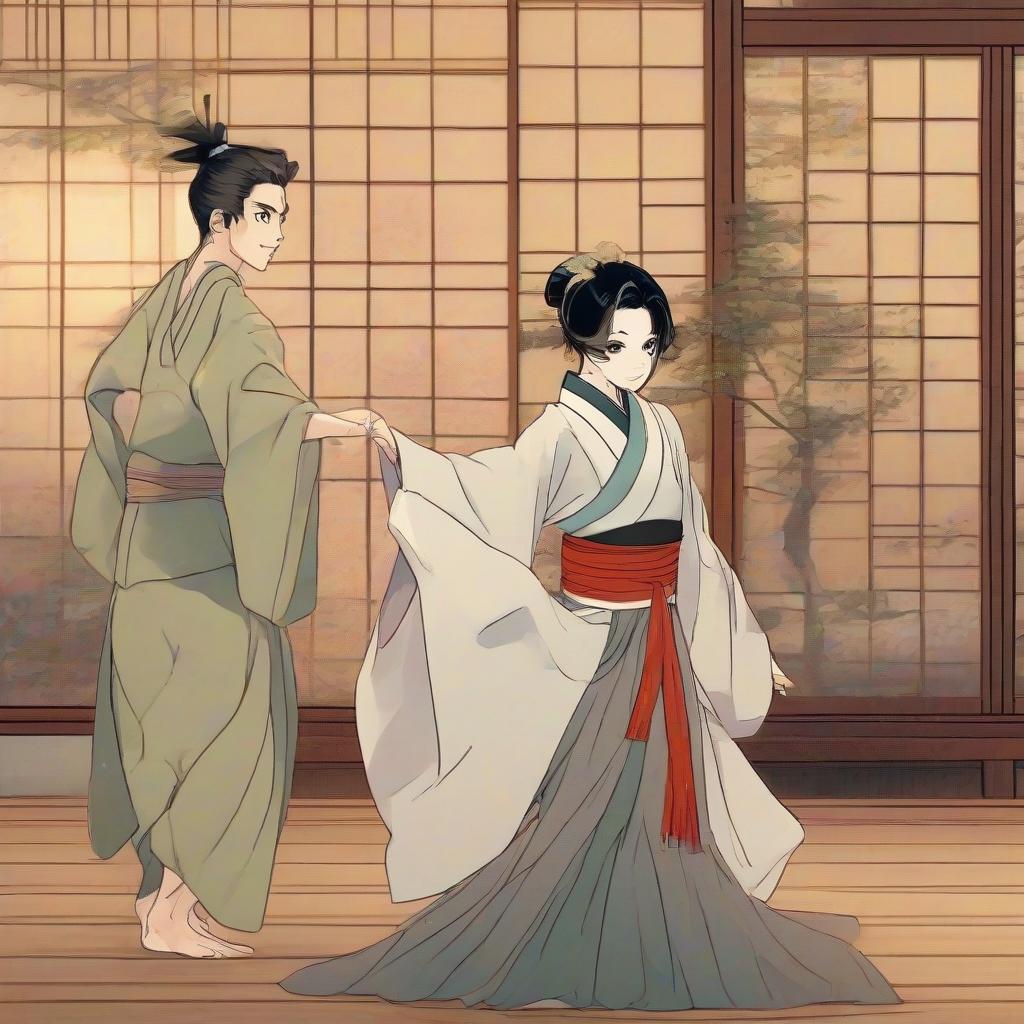
The journey of any great hero often hinges on the introduction of a formidable rival, someone who pushes them beyond their perceived limits. For Oniyasha, the young prodigy tasked with uniting Japan through art, this inevitable challenge arrives swiftly in episode 5 of The World Is Dancing. As he grapples with his sacred mission, Oniyasha discovers that the world of performance holds rivalries that are as intense as they are unexpectedly petty. This week's installment, “A Budding Throb,” skillfully blends lighthearted hijinks with crucial developmental moments for our aspiring dancer.
Oniyasha Meets His Match: Chiharu
Lord Yoshimitsu's court is not exclusively reserved for burgeoning talents like Oniyasha. The long-standing Shinza troupe of Dengaku performers boasts its own stars, among them the ambitious young dancer Chiharu. Her aspiration to become the protege of Yoshimitsu's captivating wife, Nariko, sets the stage for immediate friction. When Nariko lavishes attention upon Oniyasha and Ishiya for their literacy and appreciation for poetry, Chiharu's jealousy ignites, leading to a classic theatrical rivalry.
What makes Chiharu a compelling foil is the nuance in her character. Her initial anger is a childish display of possessiveness, yet it is tempered by a surprising willingness to apologize and rectify her mistake, particularly concerning Nariko's broken comb. This complexity suggests a rival who is not purely antagonistic but rather driven by her own earnest ambitions and insecurities. Nariko's influence also introduces a significant new dimension to Oniyasha's artistic development: the potential of integrating poetry into his theatrical dance. This seemingly minor detail is poised to become a cornerstone of his future performances, marking a pivotal moment in his artistic evolution.
Hijinks and New Inspirations
Despite much of “A Budding Throb” serving as table-setting for Oniyasha's evolving status quo, it is far from devoid of engaging moments. The episode treats viewers to a characteristic burst of stylish, abstract animation as Oniyasha desperately searches for a routine to counter the Shinza troupe's representative in an upcoming lion-dance-off. His method of finding inspiration is delightfully unorthodox, culminating in a scene where he prances naked through the woods, meowing like a cat.
This seemingly ridiculous sequence beautifully encapsulates Oniyasha's childlike intuition and his fearless embrace of unconventional sources for artistic inspiration. His ability to look beyond traditional boundaries, even if it leads to comical antics, highlights his potential as a groundbreaking performer. It underscores the series' commitment to exploring the very essence of creativity, showing that true artistry can blossom from the most unexpected and seemingly absurd places.
Audience Matters: A Lesson Learned
However, sheer innovation and raw talent are not always enough. The World Is Dancing introduces a crucial lesson for young Oniyasha: a performer must always consider their audience. His avant-garde cat choreography, born from earnest exploration, fails to resonate with the crowd. The show masterfully conveys this disconnect through discordant music, which mirrors the bewilderment of the onlookers. Their lukewarm reaction stands in stark contrast to the favorable reception given to Zojiro's safe, traditional performance.
This moment serves as a powerful metaphor, akin to ancient Japanese audiences witnessing their own “Rites of Spring.” While Oniyasha possesses moxie and fresh ideas, he learns that true artistry requires not just originality, but also the ability to communicate and connect with those watching. History assures us of Oniyasha's eventual success and glory, but the beauty of The World Is Dancing lies in depicting the arduous, often humbling, path he must traverse to achieve it. Even in a relatively lighter episode, the narrative thoughtfully explores the challenges of artistic innovation and audience reception, making Oniyasha's journey deeply rewarding to follow.