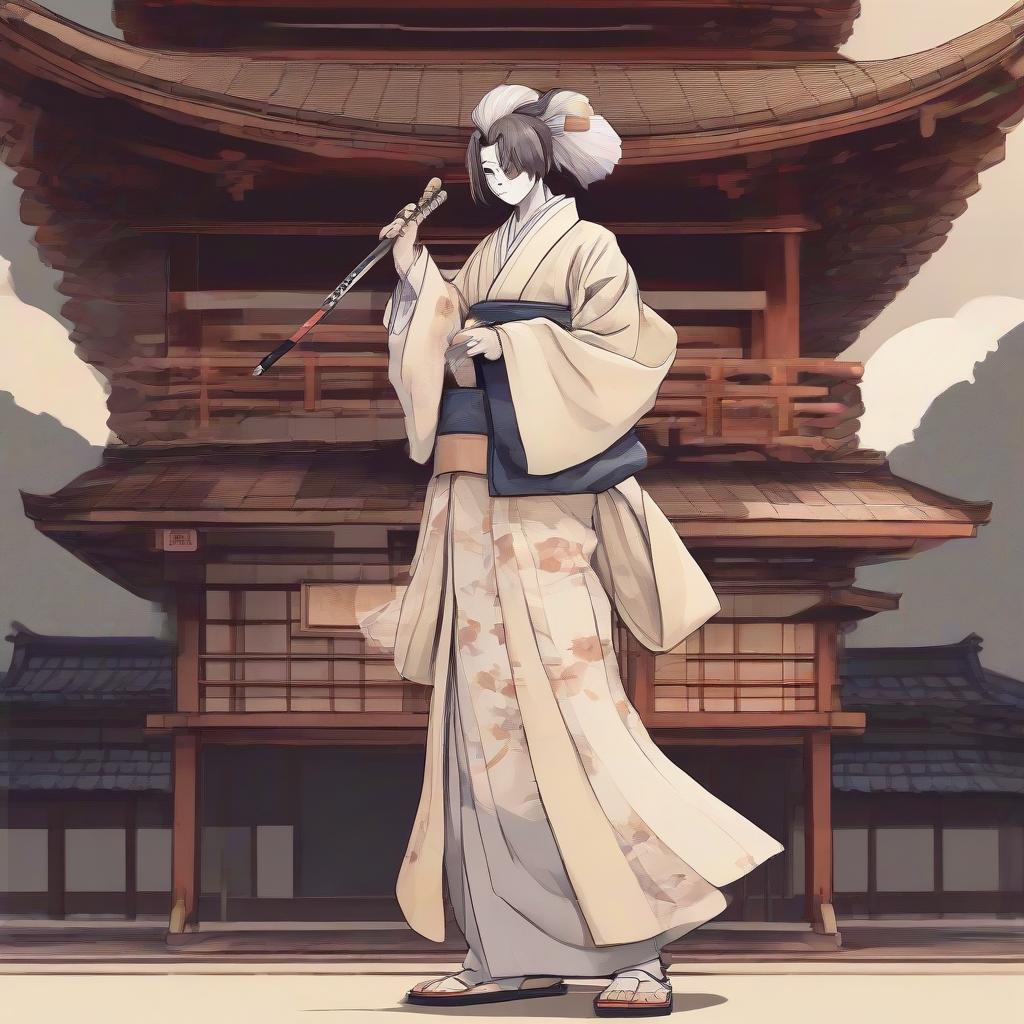
Dancing is a fundamental human expression, deeply woven into every culture worldwide. From modern line dances to ancient tribal rituals, movement tells stories and connects people. Japan stands as a prime example, boasting a rich heritage of performance arts, among them the profound and ancient tradition of Noh. Following our exploration of Rakugo, it is time to delve into Noh, an art form equally steeped in history and distinct in its beauty. What makes Noh so unique, how has it evolved, and who was Zeami Motokiyo, the visionary often credited with shaping this magnificent dance theater?
What Defines Noh Artistry
Noh, originating in the Muromachi period around the 14th century, stands as Japan's oldest continuously performed art form. Its most iconic feature is undoubtedly its masks, which, paired with elaborate costumes, evocative music, and meticulously slow choreography, narrate tales of legendary deities, supernatural beings like Oni and Tengu, and classic folktales. These masks, crafted from Japanese cypress and treated with durable lacquer, are true works of art. Worn primarily by the main actor, they draw focus and embody diverse roles. A subtle tilt of the head can even create the illusion that a mask's expression has changed, a testament to the art form's nuanced performance.
The Noh stage, known as butai, is another striking element. Lacking curtains, it features a long, diagonal walkway, the hashigakari, which serves as both a physical and metaphorical bridge. It connects the backstage world to the main stage, and conceptually, the mythical realm to the audience's reality. A distinctive Shinto shrine-like roof crowns the butai, invoking spiritual sanctity. Supporting this roof are four named pillars: shite-bashira, metsuke-bashira, waki-bashira, and fue-bashira, each guiding the performers' movements and focus. The entire structure, typically made of Japanese cypress, reinforces Noh's minimalist and traditional essence.
Noh plays encompass various themes, categorized into Kami (Gods), Shura (Warriors), Katsura (Women), and Kiri (Supernatural entities). They also vary in mood and style. Mugen mood plays explore non-linear time in spiritual worlds, while Genzai mood follows a more conventional temporal progression in mundane life. Styles include Geki, which emphasizes narrative, and Furyu, which prioritizes dance and aesthetic elements. The main actor, the Shite, embodies the titular character, while the Waki provides a foil. A choir, Kyogen, and musicians, Hayashi, provide accompaniment. Perhaps the most distinguishing characteristic is Noh's dance itself—remarkably minimalistic and slow-paced, with performers often moving so subtly that their motion is barely perceptible, a stark contrast to more energetic forms like Kabuki.
The Legacy of Zeami Motokiyo
At the heart of Noh's development is Zeami Motokiyo, a figure whose influence on the art form is often compared to William Shakespeare's impact on Western theater. Known in his youth as Oniyasha, Zeami built upon the contributions of his father, Na'ami Kiyotsugu, and spent his life refining and codifying what we recognize as Noh today. He transformed Sarugaku, a more acrobatic and comedic precursor, into the serious and refined art form it became. Zeami's academic and creative endeavors were crucial in establishing Noh's cultural significance, allowing it to endure through centuries.
Despite facing periods of potential extinction, particularly during Japan's modernization and Westernization efforts in the Meiji era, Noh persevered. Its recognition as an "Intangible Cultural Property" in 1957, alongside other vital Japanese performance arts, cemented its status. Interestingly, Zeami's era saw men, women, and boys participating in Noh. However, later periods imposed stricter patriarchal norms, excluding women from the stage until the 20th century, when efforts began to reverse this historical exclusion, though full equity remains a challenge.
Noh's Global Footprint
Noh's profound history and cultural importance have garnered international attention. Unlike some Japanese art forms that were once considered "too Japanese" for global appeal, Noh has consistently been recognized for its unique aesthetics by scholars and enthusiasts worldwide. A wealth of academic literature exists for those eager to delve into its lineage, style, and impact, and numerous performances are accessible online, making this ancient art form readily available to a global audience.
Far from being a stuffy, purely traditional art, Noh is diverse, offering a spectrum of human experience through tragedies, horrors, comedies, and romances. Its influence can be seen in unexpected places. Take, for instance, the iconic oversized suits worn by David Byrne of The Talking Heads during their live performances. Byrne himself cited Noh as an inspiration, noting how the front-facing, rectangular silhouette of Noh costumes resonated with his artistic vision. This cross-cultural impact highlights the universal appeal of theatrical expression, demonstrating how elements of Noh resonate far beyond its Japanese origins.
Conclusion: With roughly 240 plays still performed today across various schools, each safeguarding unique interpretations and elements, Noh remains a vibrant, living art form. For those intrigued by its depths, Zeami Motokiyo's works are available in English, offering invaluable insight into his artistic and philosophical contributions. Noh continues to captivate and inspire, bridging centuries and cultures through its powerful, minimalist beauty.