Red River: A Deep Dive into Historical Shoujo Manga
Chie Shinohara's Red River stands out as a monumental work in historical shoujo manga, expertly blending ancient history with captivating fantasy. This review focuses on the journey through omnibuses 2-5, which encompass original volumes 4-18. Set primarily in the Hittite Empire around 1300 B.C.E., the series follows Yuri Suzuki, a modern Japanese teenager transported to a perilous past. As Yuri navigates the treacherous political landscape and the conniving Queen Nakia, her relationship with Prince Kail deepens, both romantically and politically, setting the stage for an epic narrative that spans warring nations and personal growth.
Historical Fidelity Meets Creative License
One of Red River's most striking features is its commitment to historical accuracy, a testament to Chie Shinohara's extensive research. While certain liberties are taken—Yuri's inspiration is likely Puduhepa, a later historical figure, and some names are altered—the foundation remains firmly rooted in known history. Mursili II's reign, the devastating plague of 1330 B.C.E. that claimed his father Suppiluliuma, and the manipulative actions of his stepmother Malnigal (Nakia in the manga) all reflect historical records. This fidelity means that some historical events, even tragic ones like the fate of Prince Zannanza, are immutable within the narrative, adding a layer of realism and gravity to Yuri's experiences. Shinohara's travels across the Middle East for research are evident in the detailed depictions of buildings, weaponry, and daily life, imbuing the ancient world with a tangible authenticity.
Navigating Sensitive Content: A Product of Its Time
It is crucial for modern readers to approach Red River with an understanding of its publication era and historical context. The series, originating from 1990s shoujo manga, contains significant elements of nonconsensual and dubious consensual sexual contact. This reflects both the harsher realities of women's lives in the ancient world and the different romance standards prevalent in manga of that specific decade. Yuri frequently encounters situations where her wishes and comfort are disregarded by various men, including her romantic interest, Kail. While some instances are attributed to Nakia's dark sorcery, others are portrayed as characters 'unable to help themselves.' Kail, in particular, demonstrates this problematic behavior, and it isn't until much later in the series (volume fourteen, within the fourth omnibus) that their romantic interactions truly become consensual. Readers should be prepared for these challenging themes.
Yuri's Transformative Journey: From Kidnap Victim to Commander
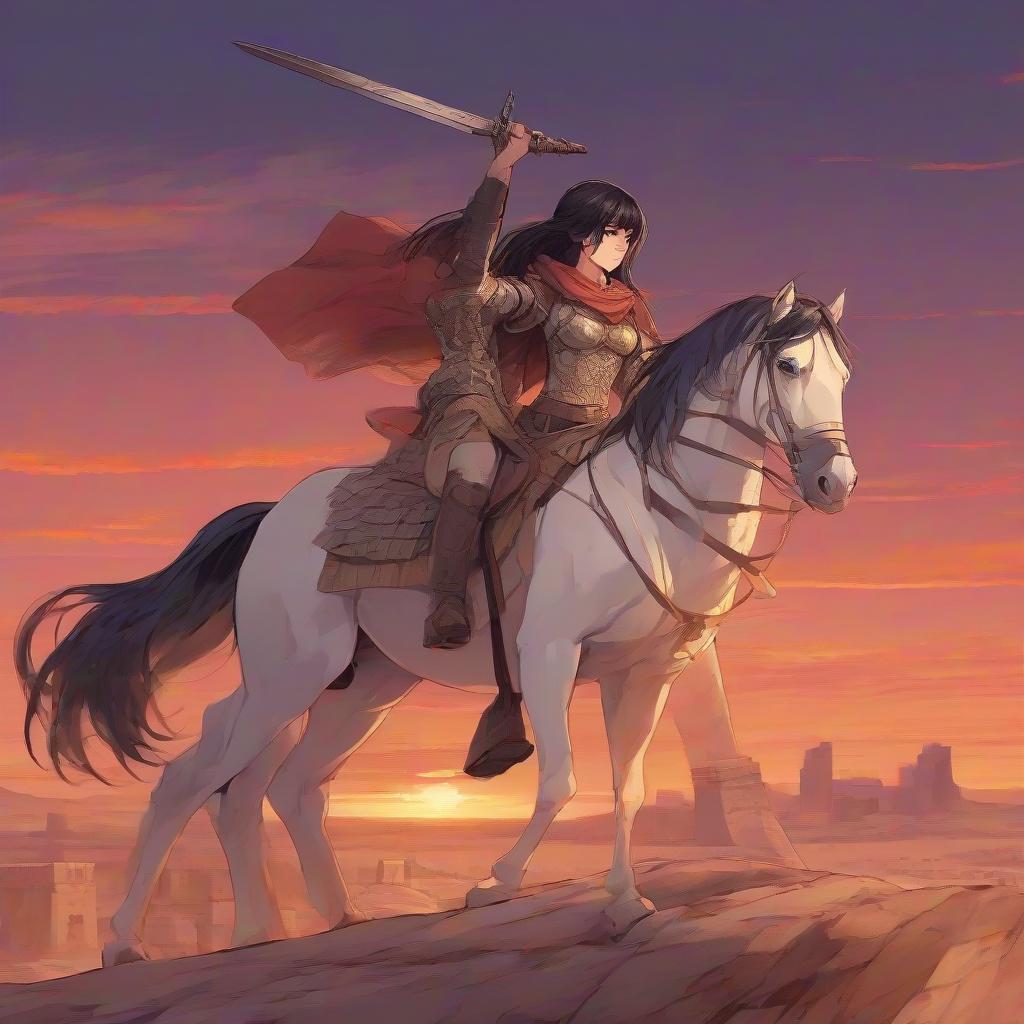
Yuri Suzuki's character arc is arguably the heart of Red River. Initially a bewildered kidnapping victim, she gradually transforms into a formidable commander-in-chief, known as gal meshedi. Her unique modern perspective—where women possess unquestioned free will—makes her an anomaly in the ancient world, leading many to equate her with the powerful goddess Ishtar. Yuri's strength lies not in subtle manipulation but in direct action: picking up a sword and riding into battle. Her journey through these volumes sees her mature from a fifteen-year-old girl to a seventeen-year-old woman making critical decisions for herself and the empire. She never fully forgets her life in Japan, but she embraces her new reality, making choices that are authentically hers, independent of Kail or any other influence. This powerful portrayal of growth and self-determination is incredibly well-executed, making her an enduringly dynamic protagonist.
Art and Narrative Scope
The artwork in Red River is generally lovely and immersive, capturing the grandeur and intimacy of the Hittite Empire. While Shinohara's detailed backgrounds and primary character designs are consistently strong, observant readers might notice stylistic shifts when her assistants drew background characters, which can be a minor distraction. Despite this, the overall visual storytelling enhances the epic scope of the narrative. These omnibuses cover intense historical wars and political intrigue, with Yuri actively participating as a soldier. The blend of historical events with a fantastical time-travel premise works impressively, grounding Yuri's extraordinary experiences in a believable ancient world.
Conclusion: An Enduring Epic
Regardless of whether one categorizes Red River as traditional isekai or simply historical fantasy, its excellence is undeniable. By attributing some historical actions to Yuri, the series impressively weaves its time-travel narrative into actual historical events, creating a compelling and intricate plot. This manga is a truly epic work of shoujo fiction that has stood the test of time, remaining a significant read even thirty years after its original publication. For those seeking a rich blend of history, fantasy, romance, and a strong female protagonist, Red River comes highly recommended. It's a journey well worth taking.
Overall Grade: A-