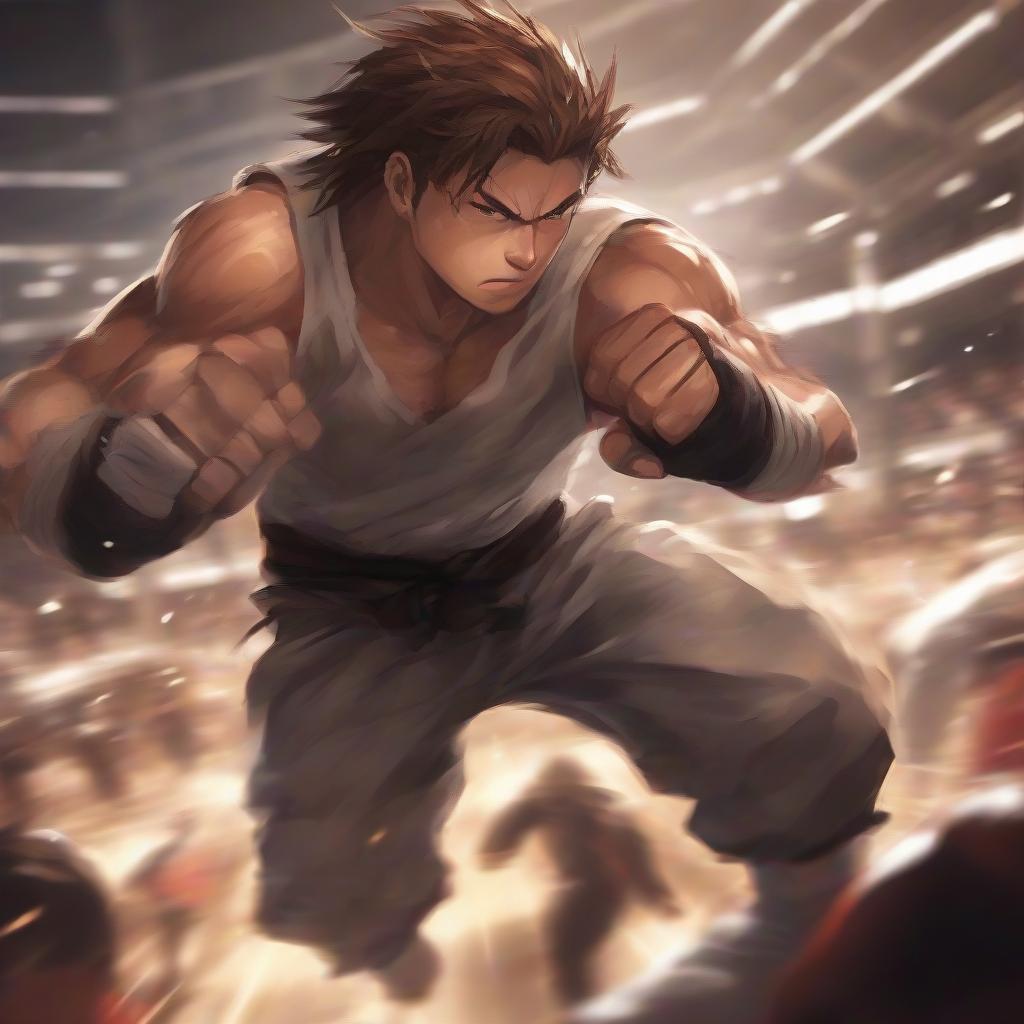
Baki The Grappler Volumes 9-12: A Deep Dive into Extreme Martial Arts Mayhem
Baki Hanma's journey to become the strongest fighter in the world is anything but conventional. In Baki The Grappler Volumes 9-12, readers are plunged deeper into the bizarre and brutal world of martial arts, facing challenges that defy reality at every turn. From unimaginable training regimens to heart-wrenching family confrontations and the return of a legendary tournament, these volumes consolidate Baki's reputation as a series where the only constant is the relentless pursuit of ultimate strength.
Unhinged Training Regimen
The saga continues with Baki preparing once more to confront his father, Yujiro Hanma, the fearsome Ogre. His training regimen in these volumes is, to put it mildly, spectacularly unhinged. Baki ventures into the wilds of Northern Japan, seeking out a team of battle-hardened commandos known for their superhuman feats. This isn't just about physical conditioning; it's a descent into the psychological abyss where "Buddha-level enlightenment comes from crossing over from almost dying to be slightly dead, then finding a way to fight anyway."
A standout moment involves Baki achieving a "Galaxy Brain" state, schooled in pain and terror by a character inspired by Billy Milligan. This figure, a master of dissociative identity disorder, battles with, for, and against the Japanese Self-Defense Forces, apparently achieving near-godlike status after a brush with death. The two-volume training sequence is a masterclass in controlled chaos, brilliant in its absurdity. Baki emerges, bloodied but smiling, reflecting on his mysterious mentors—Mr. Gaia, Mr. Nomura, The Twins, and the knife-user—a testament to the series' unique blend of hardcore training and outright surrealism.
The Ogre's Shadow: Baki vs Yujiro
Armed with newfound, albeit utterly bizarre, combat prowess, Baki once again faces his monstrous father, Yujiro Hanma. Despite his extreme training, Baki's efforts prove futile against the Ogre. The ensuing confrontation is not only physically devastating for Baki but emotionally crippling, involving a tragic turn for his mother. The review notes uncomfortable Oedipal scenes, culminating in his mother being tragically used as motivation for Baki to finally desire to kill his father. Yujiro, a character who clearly loves no one, once again rejects Baki as unworthy, cementing his son's functionally parentless state and further fueling his obsessive quest for power.
A New Quest for Strength and The Underground Arena's Return
Following the devastating encounter with Yujiro, Baki does what he does best: he returns to training. From elite Japanese sword masters to Brazil's top MMA fighters, Baki deliberately subjects himself to relentless pummeling, ever chasing the strength needed to defeat his father. This relentless pursuit of power sets the stage for the return of the Underground Arena at Tokyo Dome, a tournament designed to crown the strongest fighter in the world.
The review highlights the introduction of Katsumi Orochi, son of Director Orochi, who, at merely twenty years old, has supposedly "perfected" karate. His ability to perform the legendary bottle chop is presented as a mark of his formidable skill. Katsumi, lacking the scars or sneer of a typical Baki antagonist, is poised to be a significant opponent, adding new stakes to the familiar tournament format.
Tokyo Dome's Bloody Stage
Baki Hanma, the reigning champion, enters the competition with a newfound poise and confidence, a far cry from the arrogance he once displayed. This time, he brings Kozue, the girl closest to him, as a guest. Her reactions to the bloody spectacle are appropriately horrified and confused, as Baki had not prepared her for the sheer brutality of his world. The review pointedly notes the recurring theme of women in Baki's orbit often facing unfortunate fates, hinting at Kozue's potentially precarious position within the narrative, serving a role previously occupied by Baki's mother. The initial fight, pitting Baki against a grotesque wrestler twice his size, immediately sets a tone of extreme violence and Baki's unwavering resolve to inflict pain.
Anatomy Defied: The Art of Baki The Grappler
Keisuke Itagaki's art in Baki The Grappler continues to be a defining feature, described as "outstandingly detailed and ugly as hell." Every panel, every stance, joint lock, and punch is a deliberate exaggeration that challenges conventional anatomy and physics. Itagaki's desire to convey motion and immense strength leads to fantastically distorted figures and hideously unsafe, gravity-defying moves. Volume twelve is particularly noted for its extreme physiological expressions. The example of Katsumi Orochi's hand pulled back to perform the bottle chop illustrates this perfectly: instead of a natural form, we see a protruding pisiform, curled and separated fingers—a hyper-stylized depiction of power and precision, far removed from realistic human capability but entirely consistent with Baki's unique visual language.
Enduring Legacy of Mayhem
These volumes bring us to the halfway point of Baki The Grappler, re-engaging readers in the thrill of competition for the third time. Despite the predictable outcome of Baki's eventual victory, the series maintains its grip through the sheer spectacle of its wacky opponents and their absurd downfall. Baki The Grappler Volumes 9-12 deliver exactly what fans expect: unadulterated, over-the-top martial arts action, a compelling yet unsettling narrative of a son's struggle against his monstrous father, and an art style that is as distinct as it is grotesque. The focus on extreme violence, near-death experiences, and gloating psychotics, including Baki's own father Yujiro, remains central to its appeal. The manga continues to be a uniquely engaging, albeit often uncomfortable, ride.