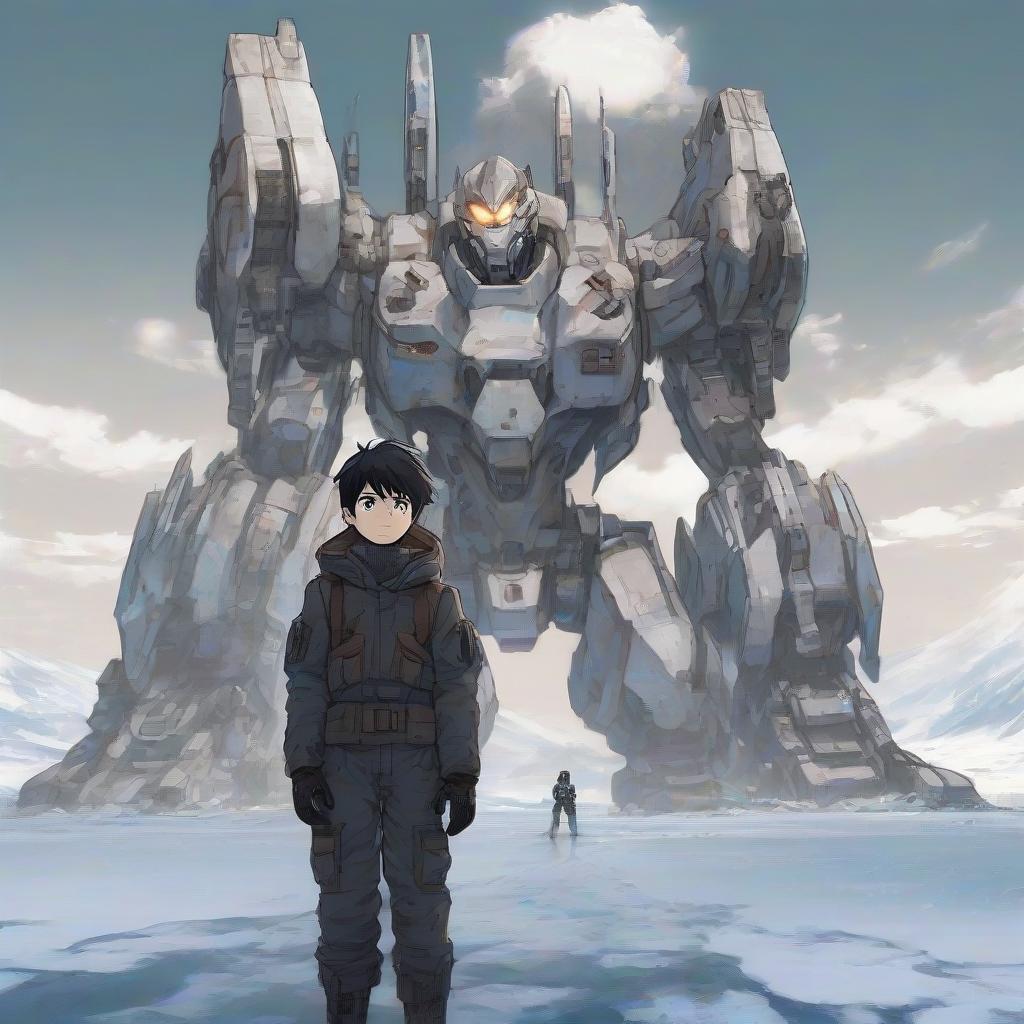
Snowball Earth has rolled out its first three episodes, presenting a fascinating premise that blends classic mecha action with a post-apocalyptic survival narrative. With community scores hovering around the mid-3s (Episode 1 at 3.6, Episode 2 at 3.8, and Episode 3 at 3.7), the initial reception suggests a show that, while not groundbreaking, offers a decent enough ride. However, a deeper dive into these early installments reveals a significant disconnect between its engaging plot and its often-distracting visual execution.
A Familiar Yet Fun Premise
At its core, Snowball Earth delivers a narrative that feels both familiar and refreshingly earnest. We're introduced to Tetsuo, a solitary young boy, and his bond with Yukio, a hyperintelligent robot. Their journey begins with a skipped but impactful kaiju slaying, leading to a ten-year leap where Tetsuo becomes humanity's space-faring savior, battling colossal creatures alongside his robotic companion. This high-stakes space adventure takes an abrupt turn when an accident strands them on a desolate, ice-bound Earth. The show’s premise evokes a charming fusion of the heartfelt companionship seen in The Iron Giant with the stark, frozen landscapes of The Day After Tomorrow, all wrapped up in a mecha anime package. It’s designed for pure popcorn entertainment, and on a conceptual level, it largely succeeds in delivering simple, enjoyable fun.
Episode 1: Setting the Stage
The inaugural episode efficiently lays out the groundwork. The decision to gloss over Tetsuo's initial kaiju triumph is a smart pacing choice, allowing the story to fast-forward to the more compelling ten-year mark. This time skip also sees Yukio evolve, growing larger and more imposing, a subtle detail that adds to the robot's character. Tetsuo's life on the space station highlights his isolation, with Yukio being his sole confidant amidst the constant battle against kaiju. The episode's most memorable moment is a cleverly executed bait-and-switch. Tetsuo, emerging from his shuttle back on Earth, anticipates a hero's welcome filled with adulation and friendship. This vibrant, cheerful fantasy is abruptly shattered, replaced by the grim reality of a frozen, barren world and overwhelming solitude. It’s a powerful visual contrast that effectively establishes the desolate setting.
Episodes 2-3: Exploring the Frozen World
The subsequent two episodes shift focus to world-building and character development, albeit on a foundational level. Tetsuo grapples with the crushing weight of loneliness before serendipitously encountering a group of survivors. This development promises the companionship he desperately craves, though the initial introductions to the supporting cast suggest they are, for now, functional rather than deeply compelling. Given the show's entertainment-first approach, profound character arcs aren't necessarily the expectation. These episodes also feature more direct kaiju encounters, Tetsuo's eventual reunion with Yukio, and even a fun, quick nod to the iconic Akira slide. The plot continues to move along at a comfortable pace, offering more of the expected action and discovery.
The Glacial Problem: Animation Woes
Despite the engaging premise and decent pacing, Snowball Earth is unfortunately plagued by a pervasive issue: its dull computer-generated imagery. The CG often feels jarring, giving the anime a distinctly "video game cutscene-y" aesthetic rather than a cohesive animation style. While it doesn't reach the infamous depths of Berserk 2016's visuals, it undeniably shares a similar uncanny quality that pulls viewers out of the experience. Episode one attempts a blend of CG with digital 2D animation, but by episode two, the CG takes over almost entirely, and not for the better. This reliance on less-than-stellar CG severely dilutes the impact of what could have been thrilling fight sequences. The backgrounds and overall color scheme are adequate, and the fight choreography itself is passable, yet the sterile appearance of the CG characters and kaiju drains the action of its intended excitement. Shots featuring characters with awkwardly agape mouths due to shock or surprise further highlight the visual discomfort. The disparity becomes particularly evident in a brief, almost throwaway 2D animated shot of Tetsuo running at the 7:56 mark of episode three. Despite its simplicity, this fleeting moment of traditional animation feels leagues superior to the 90% CG content surrounding it. This visual inconsistency and the overall quality of the CG represent a significant squandering of the anime's artistic potential.
Final Thoughts on Early Episodes
Snowball Earth’s initial three episodes present a compelling storyline with plenty of potential for fun, mecha-infused action and post-apocalyptic exploration. The core concept is solid, and the narrative beats are well-executed, especially in setting up Tetsuo’s emotional journey. However, the consistent drawback of the show’s computer-generated animation is a major stumbling block. What could easily be an engaging, visually dynamic experience is frequently hampered by visuals that feel unpolished and sterile. While the plot provides adequate popcorn entertainment, the animation quality makes it a challenge to fully immerse oneself in the world. It’s a show with a good heart and a fun brain, but its visual execution leaves much to be desired, preventing it from reaching its full potential.