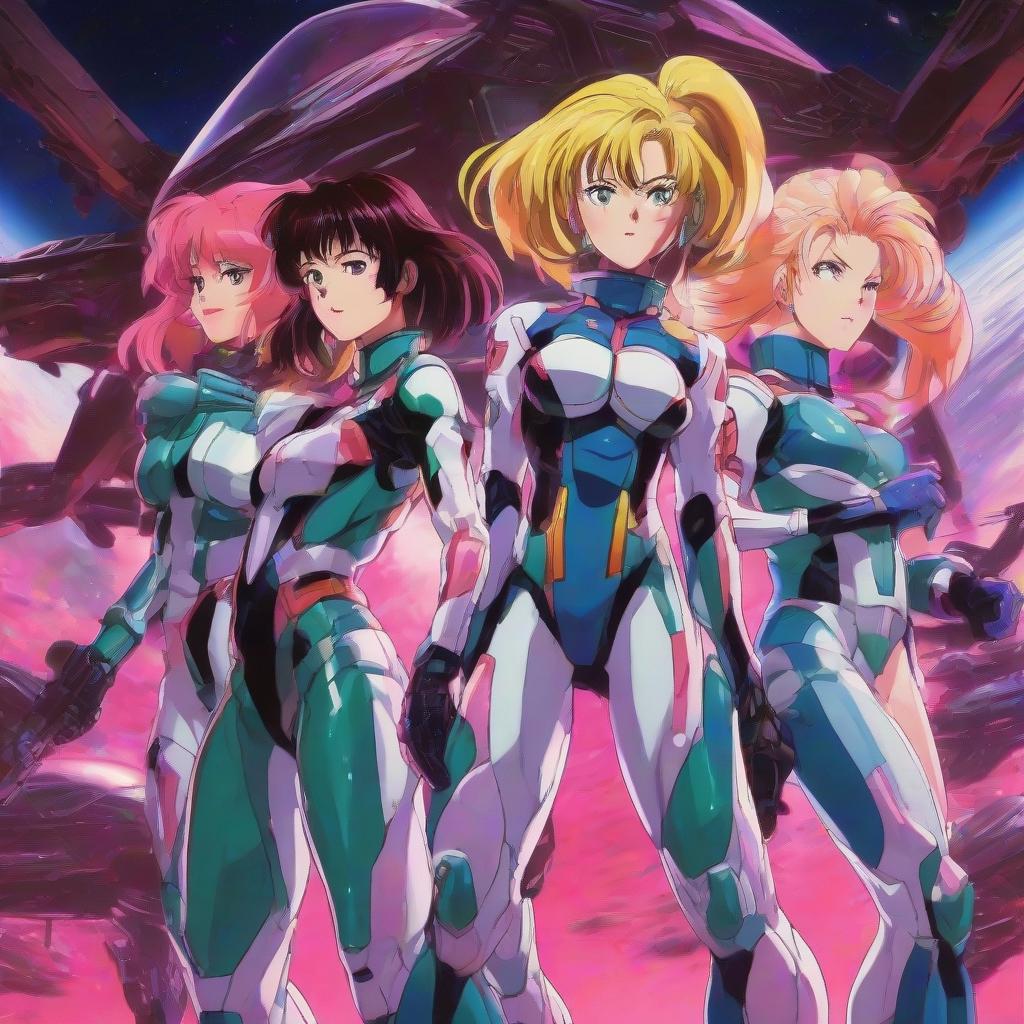
Diving into the 90s Anime Time Capsule: Iczer Girl Iczelion
Step back to 1994 and immerse yourself in Iczer Girl Iczelion, a two-episode original video animation (OVA) that serves as an intriguing, albeit alternate, entry in the broader Iczer franchise. Directed by Toshihiro Hirano, known for his work on the original Iczer-One, this particular OVA carves out its own distinct narrative path, making it perfectly accessible for both newcomers and long-time fans without prior knowledge of the series. Currently available for streaming, Iczer Girl Iczelion offers a fascinating glimpse into 90s anime production, complete with its unique charm and idiosyncrasies.
Earth's Peril and an Unlikely Heroine
The premise is classic sci-fi heroism: Planet Earth faces annihilation at the hands of intergalactic supervillains, the destructive sibling duo Cross and Chaos, who obliterate civilizations for sport. Humanity's last hope rests with the Iczelions, battle-suited warriors destined to confront this cosmic menace. The mantle falls upon four seemingly ordinary high school girls: Nagisa, Nami, Kiiro, and Kawai. Chosen to sync with the powerful Iczelions, they must overcome their fears and charge up to save the galaxy. Our primary protagonist, Nagisa Kai, dreams of becoming a professional wrestler, a detail that initially hints at her latent strength.
However, Nagisa's introduction to heroism is far from glamorous. When her robot companion, Iczel, attempts to sync with her to fight the encroaching alien forces, Nagisa proves entirely unprepared for the overwhelming challenge. Her initial reaction—running away and screaming—is portrayed with a surprising, almost grating, realism. While her persistent panic might test the patience of some viewers, it offers a refreshing, albeit uncomfortable, depiction of how an average high school student might genuinely react to being thrust into an intergalactic war. It is a raw, relatable portrayal of fear that sets her character arc in motion.
Assembling the Iczelions and Finding Inner Strength
The narrative truly begins to shift in the second episode. Following a musical interlude featuring pop idol Kiiro, who is quickly revealed to be another Iczelion, the team begins to coalesce. Other Iczelions seek out Nagisa, attempting to coax her back into the fight. Despite their pleas and even after they bravely save her from Cross, Nagisa remains hesitant. It is not until she witnesses her classmates fall victim to Cross's ruthless attacks that Nagisa finally taps into her profound inner strength. Predictably, once awakened, Nagisa emerges as the most formidable Iczelion, leading the charge against Cross, Chaos, and their menacing Voids. While the plot beats are undeniably predictable, this familiar progression contributes to the OVA's comfortingly nostalgic feel.
One minor point of disappointment lies in the underutilization of Nagisa's wrestling aspirations. Although her wrestling background briefly influences her fighting style early on, it quickly gives way to generic light-beam attacks, which efficiently dispose of enemies without much flair. A missed opportunity, perhaps, to see Nagisa suplex an alien villain, a move that would certainly elevate any potential reboot of the series.
Visuals and Iconic Transformations: A 90s Time Capsule
Consistent with earlier entries in the Iczer franchise, Iczer Girl Iczelion features transformation sequences that are both visually striking and characteristic of the era. These moments are animated with a full, yet carefully neutered, depiction of nudity, complete with lingering close-ups of breasts and featureless crotches. However, these sequences share a delightful dress-up quality reminiscent of iconic magical girl transformations from series like Sailor Moon. Crucially, the subsequent armor worn by the Iczelions effectively covers the vulnerable areas, providing a sense of practical design that is appreciated. Unlike its predecessors, this OVA notably steers clear of any overt suggestions of intimacy between female characters, and there is no implication or threat of sexual violence, which marks a refreshing departure.
A Glimpse into 90s Anime Production
The streaming quality of Iczer Girl Iczelion provides a window into its origins. The presentation appears to be a direct digital conversion of the original master. While generally clear, the absence of translated songs or credits for Kiiro's pivotal musical moment lessens its emotional impact for non-Japanese speakers. The platform offers no additional language options, subtitle customization, or other modern streaming features, creating an experience akin to watching a direct rip of an old VHS tape. This raw presentation, while lacking modern polish, paradoxically enhances its appeal as a historical artifact.
Produced by a team including director and screenwriter Toshihiro Hirano, with music by Kenji Kawai and Tatsumi Yano, and character designs by Hirano and Masanori Nishii, Iczer Girl Iczelion embodies the distinct creative spirit of its time. The animation techniques, character designs, scriptwriting conventions, and even the voice acting styles are palpably different from contemporary anime. From the grand, often overblown, opening music that the plot struggles to fully live up to, to the distinct 1990s pop soundtrack, every element screams its vintage. This makes viewing the OVA a genuine time-travel experience, showcasing how far anime production has evolved, even within the niche of action-oriented heroine series.
Final Thoughts on a Cult Classic
Iczer Girl Iczelion may not be considered a must-watch anime in today's landscape, but it stands as a crystallized relic of Japanese animation from 1994. It is neither exceptionally brilliant nor particularly flawed, striking a balance that makes it an interesting watch for those curious about anime history. Its continued availability for streaming is a testament to its enduring, albeit niche, appeal. As a historical document of low-budget 1990s OVAs, it is a fascinating journey through time.
Overall Grade: B- Story: B- Animation: B Art: B- Music: B-
Pros:
- Provides a fun, accessible look at classic 90s anime.
- Its continued existence and watchability offer a valuable historical perspective.
Cons:
- The story is predictable.
- Animation can feel sluggish at times.
- The music is definitively dated, reflecting its era.
- Features close-up upper body nudity of female characters that often feels gratuitous.