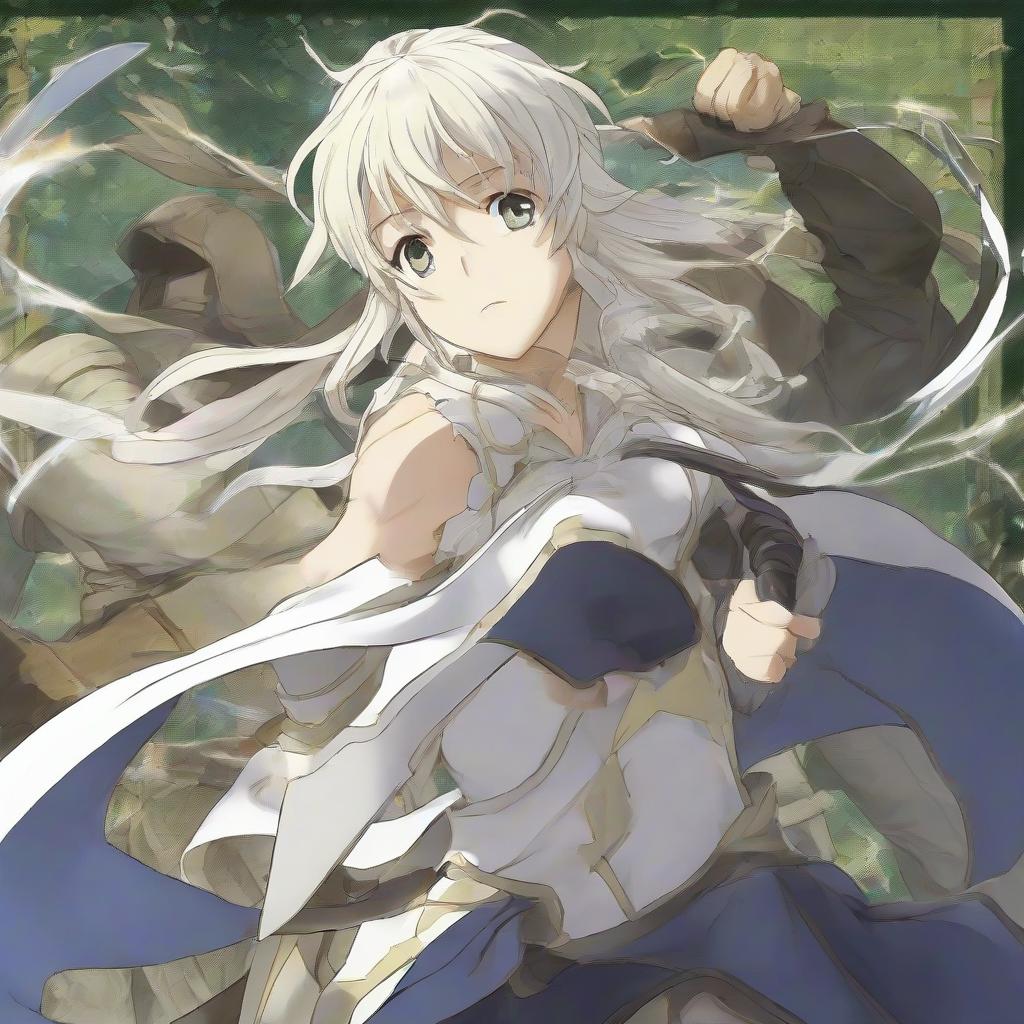
Lefiya Takes Center Stage in Sword Oratoria Volume 13
A Shifting Narrative Focus
The side story titled Is It Wrong to Try to Pick Up Girls in a Dungeon On the Side: Sword Oratoria initially presented itself as a narrative centered on Aiz Wallenstein. However, as the series has progressed through its numerous volumes, a distinct shift in focus has become increasingly clear. Volume thirteen solidifies this evolving direction, firmly establishing Lefiya Viridis as the primary protagonist and the central driving force of the story. This development marks a pivotal moment, seemingly the culmination of author Fujino Omori's long-term vision for the series, where Lefiya and Bell Cranel now embark on fully parallel journeys of self-discovery and growth.
Beyond Aiz's Shadow
To fully appreciate this narrative evolution, understanding Aiz's place within Loki Familia and the broader city of Orario was crucial. Aiz, despite her formidable strength, possesses a certain incompleteness as a character. Her motivations and personal voids have provided a necessary backdrop, allowing Bell and Lefiya to emerge as natural extensions of her ongoing quest. Their ultimate growth necessitates a surpassing of their master's path. Bell demonstrated this profound development when he chose to protect Wiene, defying Aiz's initial biases. In a similar vein, Lefiya undertakes her own significant leap in this volume, confronting her deep-seated dependence on Filvis's memory and, in essence, truly coming into her own.
The Weight of Loss and Misguided Emulation
Following the harrowing battle for Knossos and the subsequent death of Filvis, Lefiya finds herself enveloped in a profound sense of loss and regret. Her grief is complex, stemming not merely from Filvis's demise but deeply rooted in her own survival. She grapples with overwhelming guilt, believing she should have acted more effectively, been inherently better. This conviction leads her to the misguided notion that she owes it to Filvis to adopt and live the other elf's life. This manifests in striking ways: she cuts her hair, alters her battle attire, and even seeks out Bete Loga, notoriously abrasive, to instruct her in the ways of a magic swordswoman.
A Path of Self-Destruction
The irony of Lefiya seeking sword training from Bete, a character who does not wield a sword, highlights the misguided nature of her quest. What she truly seeks from Bete is not skill with a blade, but rather an education in ruthlessness and detachment, traits she perceives as essential to embody Filvis's essence. This pursuit is as profoundly unhealthy as it sounds. Remarkably, Lefiya herself does not perceive her actions as self-destructive. In her mind, remaking herself in Filvis's image is an act of profound honor to the lost, failing to recognize that this path entails forfeiting her own unique existence. Filvis made her own choices and faced their consequences. Lefiya, conversely, needs to forge her own aspirations rather than merely mimicking the deceased.
Return to the School District
The School District plays a critically important role in Lefiya's transformative journey within this volume. It stands as her alma mater and notably, Lefiya remains the first and, thus far, sole member of Loki Familia to have originated from this educational institution. This unusual circumstance arises from the school's administration by Baldr, who is Loki's legendary adversary. However, under pressure from the Guild, Loki had previously sent recruiters to the school when its vessel last visited Orario, leading to Lefiya's recruitment into the familia. Now, leveraging this precedent, Loki, Finn, Gareth, and Riveria collectively dispatch Lefiya to recruit new students. Their stated reason is her prior attendance and experience with students.
A Hidden Purpose
In reality, Lefiya's assignment to her old school is orchestrated for her own personal benefit. Her superiors are deeply concerned for her well-being. This mission to recruit acts as a crucial intervention, forcing Lefiya to confront herself and her past. It is a deliberate effort to guide the young elf back towards a future that is distinctly her own. Just as Bell has diligently worked towards realizing his personal vision of a hero, Lefiya must undertake a similar journey of self-definition. This essential realization does not fully dawn upon her until she is directly confronted with the responsibility of training a group of students.
Lefiya's Wiene Moment
When circumstances take a dire turn within the Dungeon, and everything goes awry, Lefiya's true breakthrough occurs. The act of helping these students, guiding them through peril, becomes her pivotal "Wiene moment." It is during this crisis that she transcends her self-absorption, looking beyond her internal struggles to genuinely see other individuals who rely on her for their survival and to forge their own paths forward. In that profound instant, Lefiya recognizes her inherent value not as an imitation of another, but as herself. This realization is a cornerstone of her maturation.
Detachment from Mainline Events
An interesting aspect of this volume's connection to the main series is Omori's deliberate choice to bypass the War Game between Freya and Hestia Familias. While it logically follows that Loki Familia was not permitted to participate in this particular conflict, Lefiya's single-minded pursuit of Filvis's phantom within the Dungeon feels almost like a convenient dismissal of a major series plot point. Omori explicitly notes that Lefiya barely registers the War Game's occurrence. This narrative choice, however, can be interpreted differently. Lefiya's complete disinterest in such a significant event within Orario's history powerfully underscores how deeply entrenched she remains within her own mind. She cannot even muster her habitual rivalry with Bell to take an interest in a war that could have drastically altered his trajectory and removed him as a contender for Aiz's affections.
The Emergence of Her Own Hero
Lefiya has always had a considerable journey of personal growth ahead of her. Her graduation from the School District at the remarkably young age of twelve, while other students remained considerably longer with one of her new charges being sixteen years old and thus a year her senior, speaks volumes about her relative immaturity. In her youthful eyes, Filvis represented the ultimate ideal of a mature elf woman. Losing Filvis, therefore, created a perceived necessity for Lefiya to accelerate her own growing up. Yet, becoming someone else is not true maturation. It is merely a symptom of an individual who has not yet discovered their authentic identity. Over the course of this novel, Lefiya finally begins to grasp this fundamental truth. The young elf who emerges from the Dungeon alongside her students may not yet be a fully formed woman, but she is unquestionably well on her way. She is destined to be a very different kind of hero than Bell, but after the events of this volume, it is unequivocally clear that, like him, she will rise to meet the challenges of the future as her true, unique self.