Trigun Maximum: A Deep Dive into Nightow's Sci-Fi Western Masterpiece
A Long and Winding Road
Few manga series have had as complex a journey as Trigun. From its initial serialization in a canceled magazine to its explosion in popularity thanks to the 1998 anime, and finally its grand conclusion in Trigun Maximum, Yasuhiro Nightow's creation has captivated fans for decades. I came to Trigun Maximum after being assigned to review the new anime, Trigun Stampede, and felt the need to revisit the original manga. My previous attempts to read the original series were cut short due to its density.
From Goofy to Gritty
The initial anime adaptation, while beloved by many, only scratched the surface of Nightow's world. Its early episodes were filled with repetitive humor and a slow-moving plot, a stark contrast to the darker, more complex narrative that would emerge in its second half. The manga, however, presents its own set of challenges. Trigun was originally serialized from 1995 to 1997 in Monthly Shonen Captain before being moved to Young King Ours, a seinen magazine. This shift in demographic signaled a change in tone and scope for the series.
Maximum Scope, Maximum Spectacle
Trigun Maximum serves as an extended ending to the original Trigun story. It expands upon the events and characters introduced in the first three volumes, elevating the stakes and spectacle while staying true to the core philosophies of the series. It's remarkable how well the 1998 anime captured the spirit of Trigun Maximum, despite the manga not concluding until 2007.
Navigating the Labyrinth
One of the biggest hurdles for new readers is the sheer complexity of the manga's storytelling. Nightow's layouts can be incredibly confusing, and his action sequences are often difficult to parse. It can be helpful to watch the 1998 anime first to get a basic understanding of the plot. Even then, preparing yourself to grit your teeth and push through to the final volume is worthwhile.
A Love Letter to the West
Nightow's love for American Westerns and Star Wars is evident throughout Trigun. The series is set on a desolate desert planet where human colonists struggle to survive after their ships crashed. Society has regressed to a Wild West-like state, with small towns at the mercy of bandits and mercenaries. Vash the Stampede, a wandering gunman, is portrayed as a notorious outlaw responsible for countless atrocities, however, he is a pacifist who never kills.
The Darker Side of Vash
Trigun Maximum delves into the darker aspects of Vash's character. While his goofy side is still present, he is portrayed with less levity. This version of the story is far less episodic than the 1998 anime, focusing on the relentless battles against the Gung-Ho Guns. These fights are lengthy and drawn-out, similar to those found in other popular battle manga.
Artistic Strengths and Weaknesses
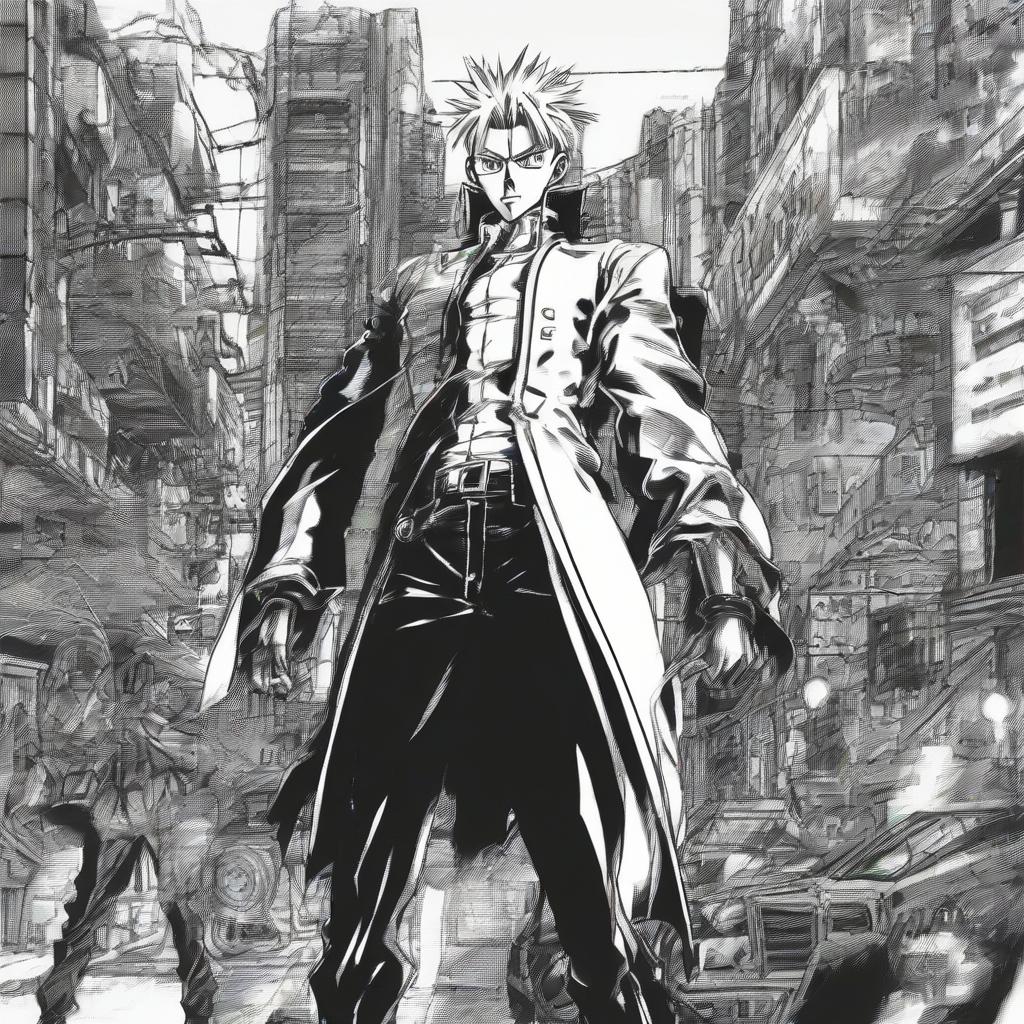
Nightow's art is a mixed bag. His character designs are undeniably cool, and he has a knack for creating memorable poses and splash pages. However, his visual storytelling often falls short. The chaotic action sequences and confusing panel layouts can make it difficult to follow the flow of the battles.
Translation Troubles
Even dialogue-heavy scenes can be challenging to decipher. Characters sometimes look similar, making it hard to identify who is speaking. The translation, which uses quotation marks around every plot-relevant term, can feel clunky and distracting. A more rigorous editor and a smoother translation would have greatly improved the reading experience.
Shifting Focus
Vash himself often takes a backseat in the narrative. Entire volumes are dedicated to Nicholas D. Wolfwood's story, with Vash only appearing midway through. While these volumes are great for Wolfwood fans, they feel somewhat disjointed from the main plot. Similarly, Milly and Meryl don't have much to do in Trigun Maximum, which is a shame, as their appearances provide a lighter contrast to the darker themes of the series.
Wolfwood's Expanded Role
Wolfwood benefits the most from the extra time devoted to his character development. We learn more about his traumatic past, his connection to The Eye Of Michael, and his ties to Knives. This depth adds a layer of complexity to Wolfwood's character that was not fully explored in the 1998 anime.
A Grand Climax
For those who found the ending of the 1998 anime anticlimactic, Trigun Maximum delivers a spectacular conclusion. The final confrontation between Vash and Knives is an epic battle filled with sci-fi spectacle and Star Wars-esque space battles. The overall themes of the story remain intact, with Vash facing impossible choices and making heroic sacrifices.
A World Worth Exploring
The world of Trigun is richly detailed and meticulously crafted in the manga. Even with its storytelling issues, Trigun Maximum is a valuable addition to the Trigun universe, deepening and expanding upon the concepts and characters introduced in the anime. Each version of Trigun, manga and anime, offers a unique perspective on the story.