This Week in Games - Living the Tomodachi Life
This Week in Games: Xenoblade Triumphs, Dragon Quest Friction, and AI Art Controversies
Welcome back, folks! I come bearing news of a monumental personal achievement. After seven long years, spanning two consoles, three mainline games and their expansions, and countless hours (443, to be precise), I have finally conquered the Xenoblade Chronicles trilogy. Xenoblade Chronicles X still looms on the horizon, but that can wait. I admit, I felt a strange emptiness this week, a void left by the absence of an immediate Xenoblade adventure. I've been so immersed in that world that I'm not sure what to do with my free time now. I'll share my complete thoughts on the Xenoblade saga later. In the meantime, I'm adjusting to a world without Xenoblade on my immediate agenda, despite rumors of a Xenoblade Chronicles 2 remake. On a brighter note, official Izuna merchandise is coming next week, with a full release planned for June. It seems we'll be hearing more about Izuna this summer. Lots to anticipate!
Dragon Quest VII: A Reimagined Dilemma
My recent review of DRAGON QUEST VII: Reimagined touched on the game's reluctance to challenge players with battles. I want to elaborate on that point, because I worry that the takeaway might be simply that the game is easy and therefore bad. The issue is more nuanced than that.
Wizardry's Temple of Cant and Dragon Quest's Roots
To understand my perspective, we need to look back at Dragon Quest's origins, specifically Ultima and Wizardry. These games had very distinct mechanics. Ultima was particularly unforgiving; death had significant consequences, requiring players to trek back to Lord British for healing. Similarly, Wizardry forced players to exit dungeons to save their progress due to storage limitations. This limitation, ironically, created a core element of dungeon crawlers: the fear of a total party wipe. The Temple of Cant offered resurrection, but it wasn't guaranteed, corpses could turn to ash, resulting in the permanent loss of a character. Dragon Quest, from the beginning, aimed to make the experience more manageable. When defeated, players were sent back to the King, losing half their gold. Sequels followed a similar pattern, with the option to resurrect characters at churches, albeit at a substantial cost.
The Core of Dragon Quest: Resource Management
The original Dragon Quest was already softening the stakes for players. This trend continued throughout the series; the GameBoy Color remakes of Dragon Quest 1 and 2 increased the gold and experience earned from battles. The heart of the Dragon Quest experience, beyond any arbitrary difficulty, lay in resource management. Consider the Evac and Zoom spells. Early in the game, players learn Evac, which allows easy dungeon escape at the cost of MP. This created a dilemma: players needed to conserve MP to cast Evac when finished exploring. But what if they ran out of Herbs and needed to heal, or faced a tough enemy and required a Frizz spell? MP was limited, and MP-restoring items were rare. In later stages of the games this became less of an issue, but early on resource management created tense moments. Remember, Evac only returned players to the dungeon entrance; they still had to journey back to the nearest town for healing. Zoom, which allowed warping to any town, wasn't available until later (Chimera Wings were an alternative, but only warped players to the last visited town). Zoom also couldn't be used indoors.
Modern Convenience vs. Engaging Gameplay
Now, consider how this is handled in the HD-2D remakes and DRAGON QUEST VII: Reimagined. Zoom costs no MP and is combined with Evac, working everywhere. In DQ7R, it's completely free. Item scarcity is also absent; Herbs are readily available without spending gold. While the HD-2D remakes allowed full health and MP restoration upon leveling up, DQ7R made it permanent. Players can now enter dungeons and use skills and magic without concern. I want to emphasize that these decisions aren't inherently bad. Some Dragon Quest fans even find separate Evac and Zoom spells unnecessary. The problem in DRAGON QUEST VII: Reimagined is that these changes are coupled with the ability to instantly defeat weaker enemies on the map.
A Missed Opportunity for Engaging Gameplay
Dragon Quest shifted from random encounters to on-map enemies, offering the possibility of pre-emptive attacks. DRAGON QUEST VII: Reimagined combines this with the ability to wipe out significantly weaker enemies. This renders battles almost pointless. I found myself actively avoiding attacking enemies to engage in battles. This, in my opinion, is a design flaw. The game could have either simplified resource management or offered on-field convenience, but not both. With both changes, the game becomes busywork: no need to worry about resources or battles. It's not about the game being too easy, it's about undermining its own gameplay loop. It would be different if characters were overpowered but still had to endure random battles that depleted their resources.
The Importance of Friction
This is what my runs in Etrian Odyssey become (where I regularly retire characters for skill point bonuses). However, Etrian Odyssey still uses random encounters, with a constant on-screen indicator of the next encounter's proximity. Even with powerful characters and abundant MP-restoring items, there was a limit to how long I could explore a dungeon before running out of resources. Carelessness could only last so long. There was always a risk, especially with F.O.Es nearby. Even Earthbound sparingly allowed one-shotting enemies in Onette and Twoson. If Earthbound had Reimagined's tuning, Starmen would be defeated instantly. I'm torn. I appreciate the options in DRAGON QUEST VII: Reimagined. Again, the problem isn't ease itself. An easy RPG can still be enjoyable. Xenoblade Chronicles has been easy for me because exploration breaks the difficulty curve, but I still loved those games. Complaining about "modern games" being too easy ignores challenges like maxing out skill hats in Kirby and the Forgotten World. The mechanics in Reimagined are valid ways to make the game accessible to newcomers and children. What I desire is friction.
Friction: More Than Just Difficulty
Difficulty is one form of friction, but so are limited inventory space or restricted teleportation. A recent game, Full Metal Schoolgirl, offered consumable passes earned from bosses that allowed skipping sections of dungeons on subsequent runs. This created a choice: fight the boss again for another pass, or run through their area. This isn't about difficulty; it's about time and effort, forcing players to engage with the game's mechanics. It's about preventing players from mindlessly progressing through the game. This is why arguments about health bars in Monster Hunter or easy modes in Dark Souls don't resonate with me. These features wouldn't prevent players from engaging with the core mechanics. A health bar doesn't eliminate the need to track monsters and learn their patterns. An easy mode wouldn't remove the need to learn positioning or movelists to fight Knight Artorias. As I've shown, Dragon Quest has previously softened difficulty, even by adjusting numerical values. Reimagined even lets players make enemies not take action in battle. Difficulty isn't a mechanic or a theme; resource management, meta-knowledge, and clue-finding are. I hope Dragon Quest XII focuses on these more effectively.
Kazuma Kaneko's Tsukuyomi and the Generative AI Backlash
Kazuma Kaneko, renowned for his Shin Megami Tensei character designs, caused a stir when he went freelance to create his own game using Generative AI.
Tsukuyomi was a free-to-play mobile game where players controlled a demon hunter scaling a demon-filled tower, collecting cards based on their actions. The game was marketed as featuring cards with Kaneko's art, but it was a misdirection. The cards featured AI-generated art trained on artwork designed to emulate Kaneko's style. This supposed "ethical" use of AI was flawed, as the engine generated cards resembling Elsa from Frozen and Superman wearing Doctor Fate's helmet. There was even a Ganesha with an elephant head for a butt. The upcoming paid version of Tsukuyomi features card art redone by Kaneko, based on the AI-generated content. Players of the free-to-play version can import three of their favorite cards into the paid game. (One Bluesky user wondered if perpetually generating new cards using AI was more expensive than drawing a new card. That seems likely.)
The fan response has been overwhelmingly negative. People respected Kaneko for his art and had no interest in a game involving AI generation. The backlash was so severe that the official Tsukuyomi Twitter account deleted all posts and re-uploaded the trailer with comments disabled. Quote retweets effectively ratioed the trailer. And yes, there's a US$2,000 special edition.
There's little new to say about generative AI. Some claim it's a tool for efficiency, but evidence suggests otherwise. Others argue it can help disabled artists, but creators like Tetsuo Hara, the mangaka behind Fist of the North Star, who suffers from degenerative eye disease, disagree. My stance is simple: if you didn't bother making something, why should I bother buying it?
Tomodachi Life: Living the Dream Direct
It's been a while since Tomodachi Life: Living the Dream was announced for the Switch. Nintendo finally provided a more in-depth look, and while some elements raise concerns, it seems to be a fun and quirky experience!
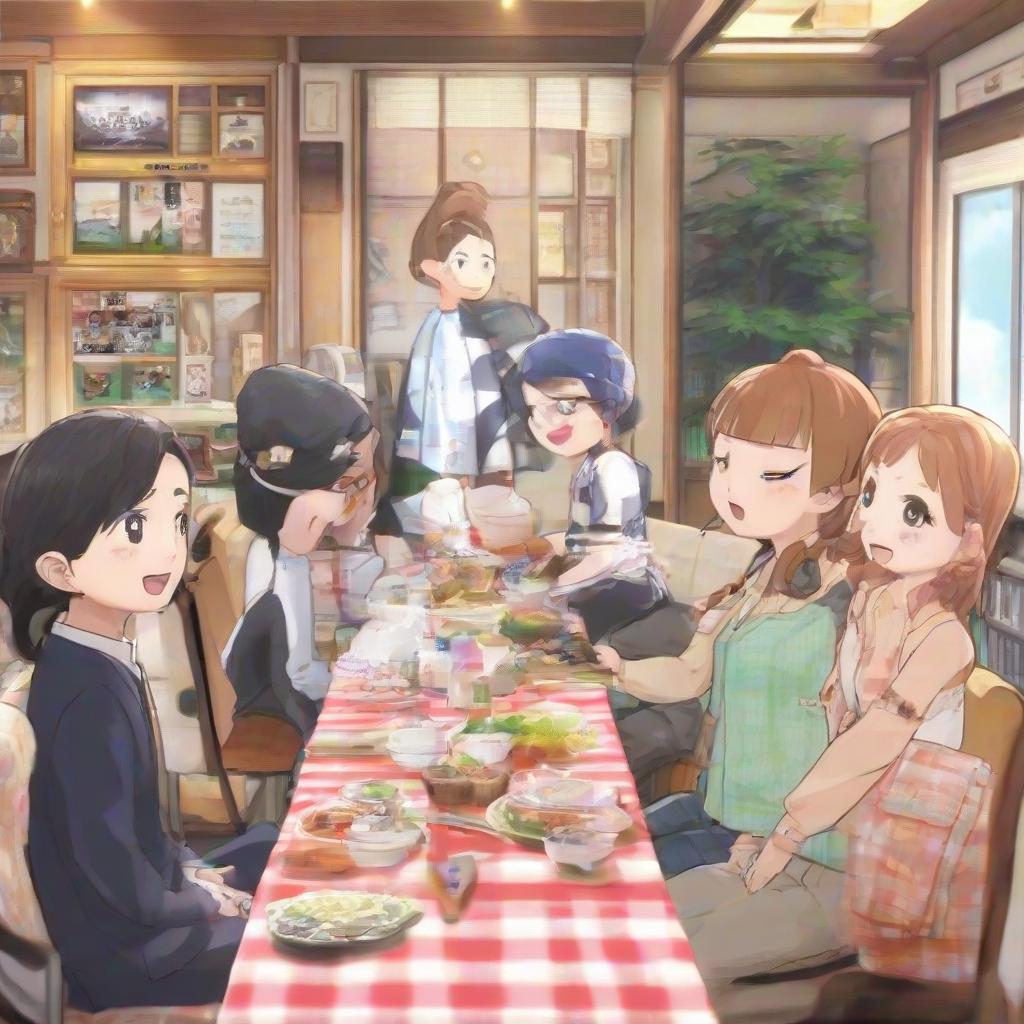
The original Tomodachi Life game didn't release in the United States; Tomodachi Collection in 2009 was Japanese-only. The sequel, Tomodachi Life, released in the U.S. in 2014. Living the Dream continues the established formula: players create Miis who live together on an island, defining their personalities and voices (using a charming text-to-speech system, not AI). Players manage their Miis' lives, providing food, clothing, and furniture. The Miis engage in various activities, like discussing their dreams, arguing over TV shows, falling in love, marrying, and having children. The appeal lies in witnessing these interactions. It highlights how enjoyable Miis were and how much of a shame it is that Nintendo largely ignores them. Miis were a defining feature of the Wii and DS, prompting other companies to create their own versions. The Switch has sidelined Miis, making the console feel "sparse" (along with the lack of profile themes). But I digress.
Living the Dream adds new character creation options, including ears (allowing for elf Miis!). Players can also draw face paint for scars, tattoos, and other designs. Fans are delighted to learn that Mii creation includes selecting pronouns and sexual orientation. Miis can be designated as Nonbinary and choose their attraction (exclusively to men, bisexual, or open to any gender identity). The previous Tomodachi Life faced criticism for not allowing same-sex Mii pairings, which were only possible through a glitch that Nintendo patched out. Nintendo apologized and promised to include same-sex pairings in the next game. It took twelve years, but they delivered!
The Direct primarily showcased skits featuring the unfortunate Angie, heartbroken by the clown Hugh Morris. Instead of emphasizing bizarre skits like people worshipping the Virtual Boy or singing in musicals, the Direct focused on mundane activities like shopping for outfits and snacks, and customizing living spaces. A new feature allows customizing the island, with Miis requesting additions like new trees. There are many options, but they feel somewhat limited. The original Tomodachi Life island felt vibrant and lived-in, while the new one feels emptier, likely to accommodate customization. Players can likely do creative things, but the feature needs improvement.
The Palette shop allows players to custom-design in-game textures for outfits and "television shows." Thanks to Tomodachi Life: Living the Dream being available for the Switch 2 (as well as the Switch), Joy-Cons can be used in mouse mode. There's a dedicated photo mode. This is where a snag occurs.
Understandably, people anticipated taking pictures of their Miis doing unusual things. Nintendo knows that some will create inappropriate content, so there are limitations on sharing Miis. This is disappointing, especially for those wanting to import characters like Hank Hill. Some understand the circumstances. A bigger issue is the lack of Portuguese localization. Despite Nintendo's popularity, some regions lack localized versions. (One Vietnamese fan lamented the lack of a Vietnamese Breath of the Wild). Regardless, Tomodachi Life: Living the Dream looks promising, and will be released on April 16.
Quick Tidbits
Castlevania director Shutaro Iida, aka "Curry the Kid," announced his struggle with cancer. His request is that people enjoy Bloodstained 2 and his other works.
Bandai Namco revealed three characters for Tekken 8's Season 3 update: she-ninja Kunimitsu, portly pugilist Bob, and Roger Jr., the son of genetically-modified kangaroo Roger. The last character is a secret. They'll join the roster this spring, summer, and autumn.
CAPCOM has a temporary website celebrating Okami's 20th anniversary (and the upcoming sequel), to be expanded in April 2026. However, the website lists the Okami sequel and Okami HD, but not the canonical Okamiden on Nintendo DS.
Shiren the Wanderer: The Mystery Dungeon of Serpentcoil Island has launched for mobile platforms (iOS and Android), featuring all console content, including the Rescue feature for salvaging failed runs, where other players can help.
Masahiro Sakurai, creator of Kirby and the YouTube channel Masahiro Sakurai on Creating Games, announced the passing of his cat Fukurashi, who died at 17 after suffering from terminal illnesses.
Needy Streamer Overload: Typing of the Net is out, adding an Endless mode and a Worldwide mode for learning Internet slang. It's available on Steam.
That's all for this week. By the time you read this, Nintendo's Partners Direct will have aired; we'll cover it next week. Thank you for reading and supporting This Week in Games. Check out Iron Lung, it seems competent. Be good to each other. I'll see you in seven!
This Week In Games! is written from idyllic Portland by Jean-Karlo Lemus. When not collaborating with Anime News Network, Jean-Karlo can be found playing Japanese RPGs, eating popcorn, watching v-tubers, and tokusatsu. You can keep up with him at @ventcard.bsky.social.
The views and opinions expressed in this article are solely those of the author(s) and do not necessarily represent the views of Anime News Network, its employees, owners, or sponsors.


