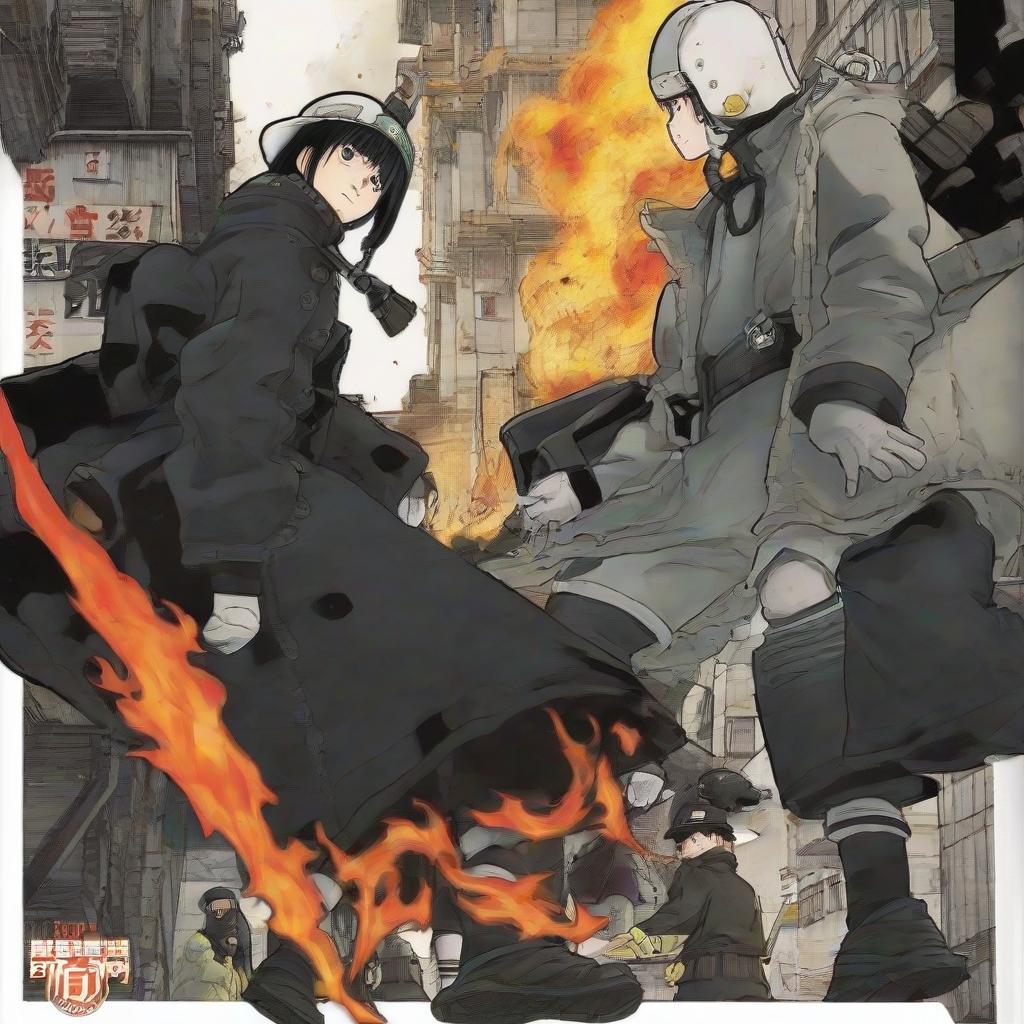
Fire Force Volumes 11-20: A Wild Ride Through Tokyo's Inferno
Atsushi Ohkubo's Fire Force continues its fiery saga in volumes 11 through 20, pushing Special Fire Force Company 8 into deeper conspiracies and escalating battles. Following the intense confrontation with Shinra's brother, Sho, the company faces new adversaries while grappling with the Evangelist's sinister plot to ignite the world. These volumes, encompassing the anime's first season finale, the entirety of the second season, and the opening of the third, expand the world and deepen the mysteries surrounding the Tokyo Empire.
Recurring Irritations and Endearing Absurdities
While the manga excels in its dynamic art, creative character designs, and thrilling action sequences, it's impossible to ignore the persistent fan service, particularly concerning Tamaki Kotatsu. Although there's a brief respite, the "Lucky Lecher Lure" gags resurface during the chaotic Nether battle in volumes 18 and 19. This tonal inconsistency remains a significant drawback.
Despite this recurring issue, Fire Force maintains its fun, adventurous spirit. Even as the battles become more brutal, with a high body count and graphic character mutilations, the series retains its lightheartedness and humor. Ohkubo's passion for the series shines through, resulting in moments of genuine laughter amidst the grim backdrop of spontaneous human combustion. The storyline about Company 8's preparation for a nude calendar in Volume 11 stands out as a particularly absurd and hilarious example.
Exploring New Characters and Uncharted Territories
These volumes introduce several self-contained story arcs that contribute to the overarching narrative. Shinra's encounter with Captain Hague of Company 4 is bizarre, yet even this seemingly one-joke character plays a more significant role. The introduction of Inca, another Adolla Burst holder, adds another layer of complexity. Sought after by the White Clad as one of the prophesied "eight pillars," Inca's unpredictable nature and reality-bending powers make her a compelling, if somewhat insane, character. The storyline revolving around the race to retrieve Inca provides a surprising and satisfying conclusion.
A trip to the remains of mainland China expands the world of Fire Force beyond the Tokyo Empire. The desolate desert landscape, scarred by a massive spatial fault, hints at a larger, more mysterious world. This journey allows Ohkubo to further embrace the series' inherent absurdity. The hallucinogenic gas that induces temporary insanity in those who forgo gas masks leads to hilarious scenes of the main characters grinning and giggling like madmen. It is this kind of wacky detour that enhances the reading experience.
Talking Animals and Disturbing Truths
The eccentricities don't stop there. During their journey, Shinra and his companions befriend Scop, a talking mole, and Yata, a talking crow. The only explanation for these animals' enhanced intelligence and speech is "fire magic," which is par for the course by this point. Despite the daft whimsy, this arc reveals the disturbing truth about "Amaterasu," the Tokyo Empire's vital power source.
The backstory of the antihero Joker is revealed, depicting a Berserk-esque history of childhood abuse. The character of Nataku from Haijima Industries further explores this theme. Nataku's role involves abusing children as part of Haijima's experiments to trigger Adolla Bursts. His sole motivation is the victimization of the weak. The story leaves off with him as a "guardian" of a child character.
Maki's Moment and Status Quo Shifts
Maki gets some much-needed character development. Her military family underestimates her desire to protect others, leading to her transfer to a desk job. Maki possesses both feminine and masculine traits. She is a romantic and incredibly strong, but self-conscious about her muscular physique. Although she is sidelined during the climactic arc, her return and mastery of fire are crucial in preventing an apocalyptic explosion. Her character receives validation from her colleagues.
Volume 20 comprises a standard shonen training arc, filled with humorous scenes of Shinra and Arthur being tortured by Captain Benimaru Shinmon. Tamaki gets to contribute beyond being objectified. Her cat-themed powers receive a boost. The volume concludes with a status quo-altering twist.
Overall Impression
Despite its flaws, Fire Force remains an engaging and entertaining manga. The art is strong, the action is intense, and the humor is often laugh-out-loud funny. With the story heading in new and unpredictable directions, the desire to see where this bonkers tale goes next is intense.
Grade: B+
Pros:
- Dynamic art and character designs
- Intriguing world-building
- Good character development
- Intense and easy-to-follow battles
- Idiotic humor
Cons:
- Recurring fan service involving Tamaki
- Questionable handling of child abuse themes