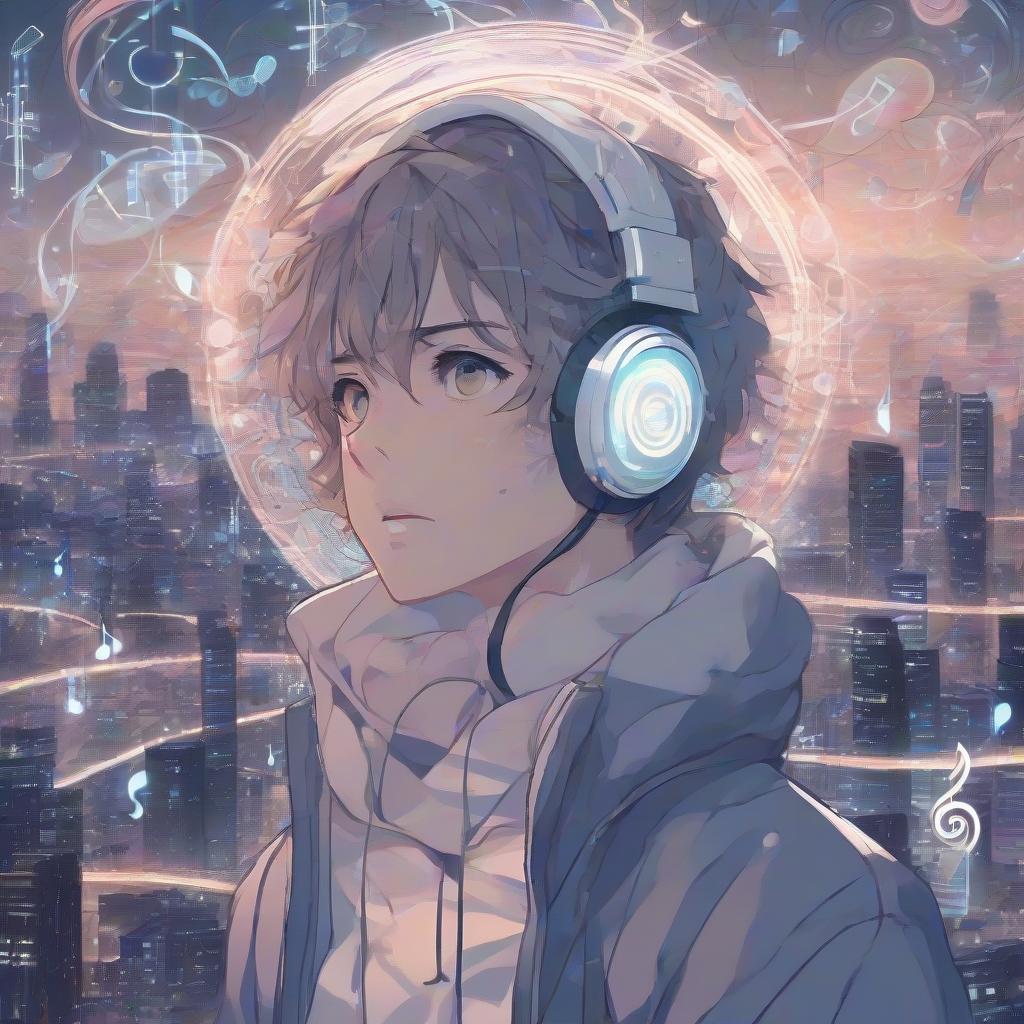
Shingo Natsume, director of 'One-Punch Man' and 'Sonny Boy', brings his distinct vision to the big screen with 'ghost – end of night'. This cinematic debut dives deep into existential questions, crafting a challenging yet mesmerizing anime experience. Prepare for a thought-provoking journey into a future where reality, memory, and consciousness are redefined.
The Starry Sky and Nike's Quest
Set in a near-future, 'ghost – end of night' introduces a world where death is no longer feared. Humans upload their consciousness to the 'Starry Sky', a virtual network offering eternal memory. Nike, a young prodigy, becomes an administrator of this system. However, Nike perceives a 'filth' within the universe, born from humanity's complacent, distraction-filled existence. Convinced of her powerful role, she embarks on a mission to cleanse this cosmic blight, questioning the very nature of reality.
Natsume's Cerebral Direction
Natsume’s direction offers philosophical depth, with Nike embodying a powerful, Haruhi Suzumiya-like figure navigating an 'Emo Phase'. Convinced of her cosmic power to cleanse the universe’s 'filth', Nike contrasts sharply with her predecessor, Masu. He cherishes life's transient, everyday moments, believing real things are obtained by hand, but not guaranteed to be held. This wisdom challenges Nike's grand perspective, pushing her to understand human connection amidst her universal mission. Their dynamic forms the core of the film's profound questions about meaning.
A Unique Visual and Sonic Journey
Visually, 'ghost – end of night' is both stunning and isolating. Nike’s 'galaxy-brained' moments create breathtaking psychedelic landscapes, pushing digital animation to its limits. These cinematic sequences contrast with cold, realistic backgrounds and a hazy color palette, making characters appear detached. Natsume Ono’s character designs emphasize this with limited emotional range. Musically, the film truly excels. Alt-rock band Hitsujibungaku provides six poignant insert songs, perfectly complemented by Ohzora Kimishima’s synth score. This transforms the film into a feature-length concept album, echoing Pink Floyd's 'The Wall', showcasing Natsume's masterful synergy between music and narrative.
A Film Demanding Contemplation
This film is not for passive viewing. Its narrative is largely inferred, demanding multiple watches and deep discussion to fully unravel its meaning. The structural flow can feel fragmented, with scenes sometimes appearing out of sequence, challenging viewers to piece together the overarching journey. While the ending offers intriguing parallels to 'Haruhi' fan theories, the path to it can feel circuitous. 'ghost – end of night' deliberately makes itself difficult to grasp immediately, positioning itself as a work meant for contemplation rather than easy consumption. It's a challenging watch, but one that promises lasting impact for those willing to engage.
Conclusion: A Bold Artistic Statement
'ghost – end of night' stands as a bold, ambitious statement from Shingo Natsume. While its challenging narrative and distant aesthetic may not appeal to everyone, its profound philosophical inquiry, stunning animation, and exceptional musical score create a truly unique cinematic experience. It is a testament to artistic freedom, a film that rewards persistent engagement and offers much to discuss long after the credits roll. Highly recommended for fans of cerebral anime and Natsume's distinctive vision.