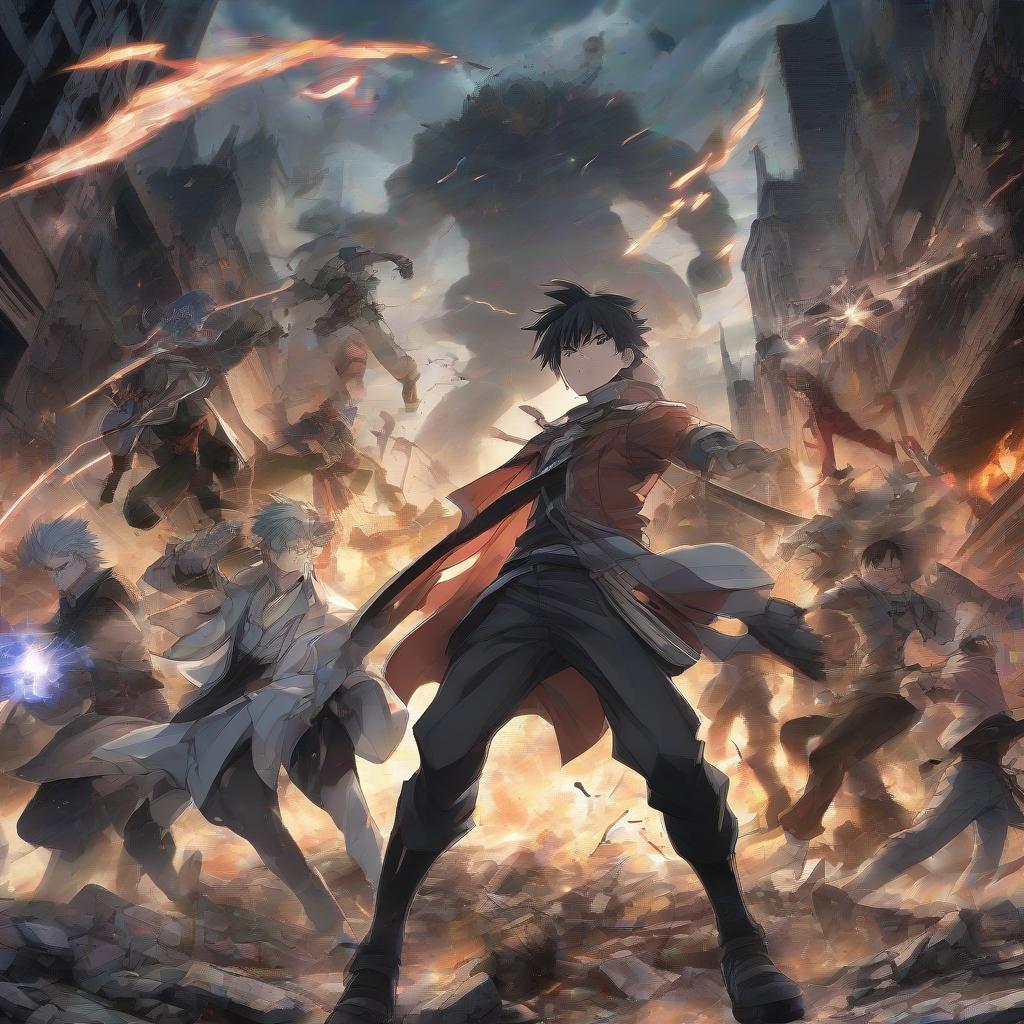
My Hero Academia All's Justice: The Final War Arc Arrives on Switch
My Hero Academia: All's Justice, the anticipated third installment in Byking Inc.'s 3D arena fighting series, brings the climactic Final War arc to life on Nintendo Switch. As a direct sequel to My Hero One's Justice 2, this game thrusts players into the heart of the conflict against Tomura Shigaraki and the League of Villains, aiming to destroy everything. While equipped with multiple quirks and the support of Japan's heroes, players will navigate the chaotic battlefield as their favorite characters. This My Hero Academia video game review explores whether All's Justice lives up to the hype for fans and newcomers alike.
Diving into Story and Presentation
All's Justice wastes no time getting players into the action. After a brief tutorial reintroducing game mechanics, you're free to explore a city overworld, tackle missions, engage in online battles, or jump straight into the story mode. The story covers the critical Final War arc of the anime series, meaning a lot of narrative context is assumed. For those unfamiliar with the My Hero Academia story, this fighting game is definitely not the ideal entry point, as crucial buildup is missing.
The game's presentation offers a mixed bag. On one hand, the voice acting and music are outstanding, featuring the original soundtrack and voice cast, which immediately immerses fans. Dynamic, expressive cutscenes with fast cuts and dramatic poses truly leverage the 3D environments, often rivalling iconic moments from the show. The cel-shaded 3D character models look fantastic during these sequences. However, these high-quality moments are surprisingly rare. A significant portion of the story mode relies on awkward still frames, sometimes directly lifted screenshots from the anime, giving a surprisingly cheap, almost amateurish feel to key narrative points. This inconsistency can detract from the overall experience of the My Hero Academia story.
Story mode offers welcomed variety through branching paths, allowing players to follow different heroes like Todoroki's pursuit of Dabi, Endeavor's clash with All For One, or Uraraka's confrontation with Toga. This setup effectively showcases everyone's abilities without compromising the original narrative, a common pitfall for other fighting games. However, a trade-off is evident in environmental variety. Since the final arc takes place across a limited number of locations, such as the floating Hero Academy, these areas dominate the combat environments, leading to visual monotony over time, despite the game offering more diverse stages in other modes.
Enhanced Combat and Gameplay Mechanics
The combat system in All's Justice is undoubtedly the best this series has delivered. Byking Inc. has refined the foundation of previous My Hero Academia games, crafting a fast-paced combat system that feels significantly less janky or floaty than its predecessors. The increased speed and diverse character move sets mean a slightly higher learning curve, which is appropriate for a third installment given the characters' evolving power levels. Yet, the controls remain incredibly accessible for newcomers, requiring only a moment to adapt to the aggressive combat pace.
Players can execute basic ground and air attacks, seamlessly integrating them into a robust combo system that utilizes the game's tag-team mechanic. You can call in teammates for extra damage or swap characters mid-combo to extend your assault. Building up your battle gauge allows for devastating Plus Ultra attacks or entry into an enhanced mode for maximum damage output. The particle effects and unique animations for each character's finisher moves are directly inspired by the series, enhanced with additional flair that feels natural and impactful. Whether you're battling through story mode or facing off in online matches, the refined combat ensures an enjoyable experience, especially for diehard fans of the My Hero Academia series.
Content Longevity and Overall Appeal
Beyond the core story and online battles, All's Justice offers a selection of missions that introduce unique scenarios, mostly combat-focused. While reaching specific achievements under handicaps or different circumstances can be fun, these missions often feel like filler, adding bulk without significant depth. Most of the game's core content can be experienced in just a few hours, raising questions about its long-term replayability and shelf life beyond dedicated fan engagement.
Even with its definitive improvements, All's Justice doesn't break new ground compared to other 3D arena fighters. It refines the existing formula rather than innovating. If the primary goal was to create a fighting game that organically integrated the new moves and forms of the series' unique characters, then it has succeeded. This My Hero Academia Switch game is tailored for diehard fans of the series or those who have played previous installments, as they are most likely to appreciate its refinements and direct narrative continuation. For a casual player or someone new to the franchise, its appeal might be limited, as it's designed more to enhance an established fan's experience than to draw in new ones.
Final Verdict on All's Justice
My Hero Academia: All's Justice is a solid B-grade entry. Graphically, it lands a B, with impressive cel-shading and dynamic moments offset by cheap story segments. Sound and music earn a B+, leveraging the anime's fantastic soundtrack and voice cast. Gameplay receives a B for its significantly improved, faster, and more impactful combat system. Presentation gets a B- due to the stark contrast between its visually stunning and its surprisingly low-effort narrative delivery. All's Justice perfects the combat from previous games, seamlessly integrating new abilities, but suffers from cheap story elements and filler side missions, ultimately lacking innovation.