Introduction to Look Back's Live-Action Journey
Tatsuki Fujimoto's "Look Back" has resonated as a powerful manga and acclaimed anime film. Now, director Hirokazu Kore-eda offers a live-action adaptation, premiering at prestigious film festivals. For fans, the necessity of another retelling is key, given its excellent predecessors. While this live-action iteration might be perceived as the least impactful, it preserves the compelling core narrative. Crucially, it leverages its new medium to provide fresh insights and unique strengths. This review explores how Kore-eda reinterprets the story, highlighting its advantages and how it stands apart.
Expanding the Narrative: Kore-eda's Deeper Dive
Kore-eda's "Look Back" significantly expands the original story, which was concise in both manga and anime. For a 100-minute feature, Kore-eda dedicates more screen time to meticulous manga creation. We see real individuals drawing, a distinct experience from animated depictions. The film also deepens the protagonists' creative discussions, offering richer insights into their fictional series. Their inspirations, from personal experiences to pop culture nods, are explored in greater detail. These additions enrich the characters' artistic journeys. However, this extended pacing, while adding depth, imparts a slower narrative flow. For those accustomed to brisk earlier versions, this tempo might lessen immediate emotional impact.
Live-Action Versus Animation: Strengths and Struggles
Translating "Look Back" to live-action presents challenges and unique opportunities. While realistic drama appears well-suited, animation often conveys profound emotions with unmatched intensity. Manga and anime brilliantly used expressive illustrations for iconic scenes, capturing raw feeling effortlessly. Kore-eda's film, despite Senzo Ueno's gorgeous cinematography—wide nature shots and bright palette contrasting darkness—struggles to replicate the visceral force of drawn emotions. Instead, it relies on an excellent score and slow motion, which can sometimes lean dramatic rather than impactful.
The casting switch between child and teenage actors also highlights a live-action hurdle. Child actors portray elementary school-aged protagonists realistically. Yet, the abrupt transition to older actresses for their middle school years feels more artificial than smooth animation progression. This break can disrupt immersion, unique to live-action with different performers.
A Powerful, Unique Climax Through Rotoscope
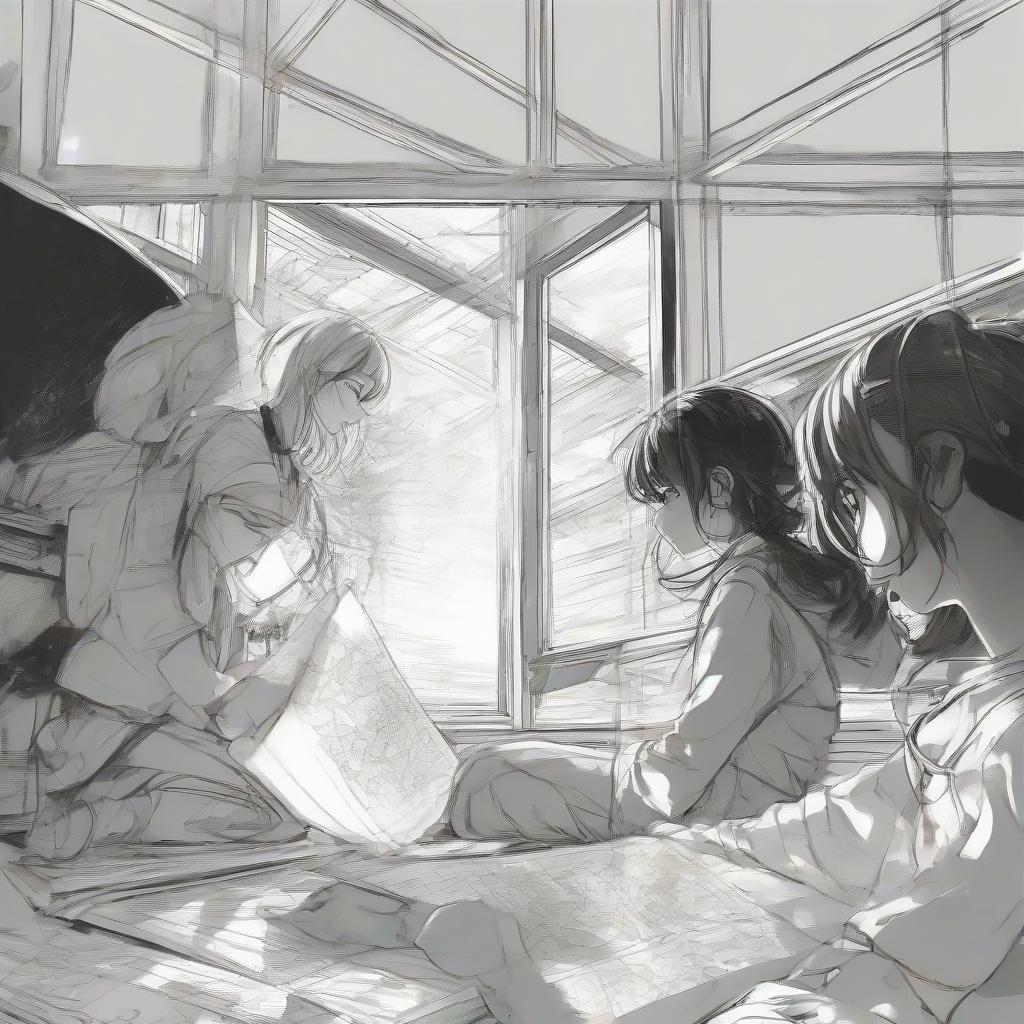
Despite comparative weaknesses, Kore-eda's "Look Back" excels in one pivotal scene, arguably surpassing its animated predecessor: the final montage of reminiscence in a character's room. This sequence marks a profound stylistic shift, employing rotoscope animation, masterfully handled by Yōko Kuno and Shinei Animation. This unique denouement, exclusive to the live-action film, delivers an incredibly potent emotional release. Until this point, the film conveyed shock and mourning skillfully, but this visually distinct and deeply moving segment finally brought the reviewer to tears. This moment demonstrates how live-action, when creatively integrated with animation, can forge new narrative paths, generating unparalleled depth of feeling.
Final Thoughts: A Valid Adaptation
The necessity of another "Look Back" adaptation remains valid, given the acclaim for its manga and anime versions. However, Kore-eda's live-action film definitively justifies its existence by offering a distinct, valuable perspective. While it may not consistently achieve the instant iconic impact or brisk pacing of its predecessors, its deliberate expansions into creative process and character motivations are genuinely worthwhile. The film's unique strengths, particularly its stunning cinematography and the profoundly moving rotoscoped ending, add new, significant layers. Even its relative weaknesses interestingly underscore the specific advantages of animation and manga, making it an insightful case study in adaptation. Ultimately, Kore-eda's "Look Back" stands as a great story, providing a compelling watch for newcomers and a thought-provoking experience for established fans seeking a fresh lens on this powerful narrative.