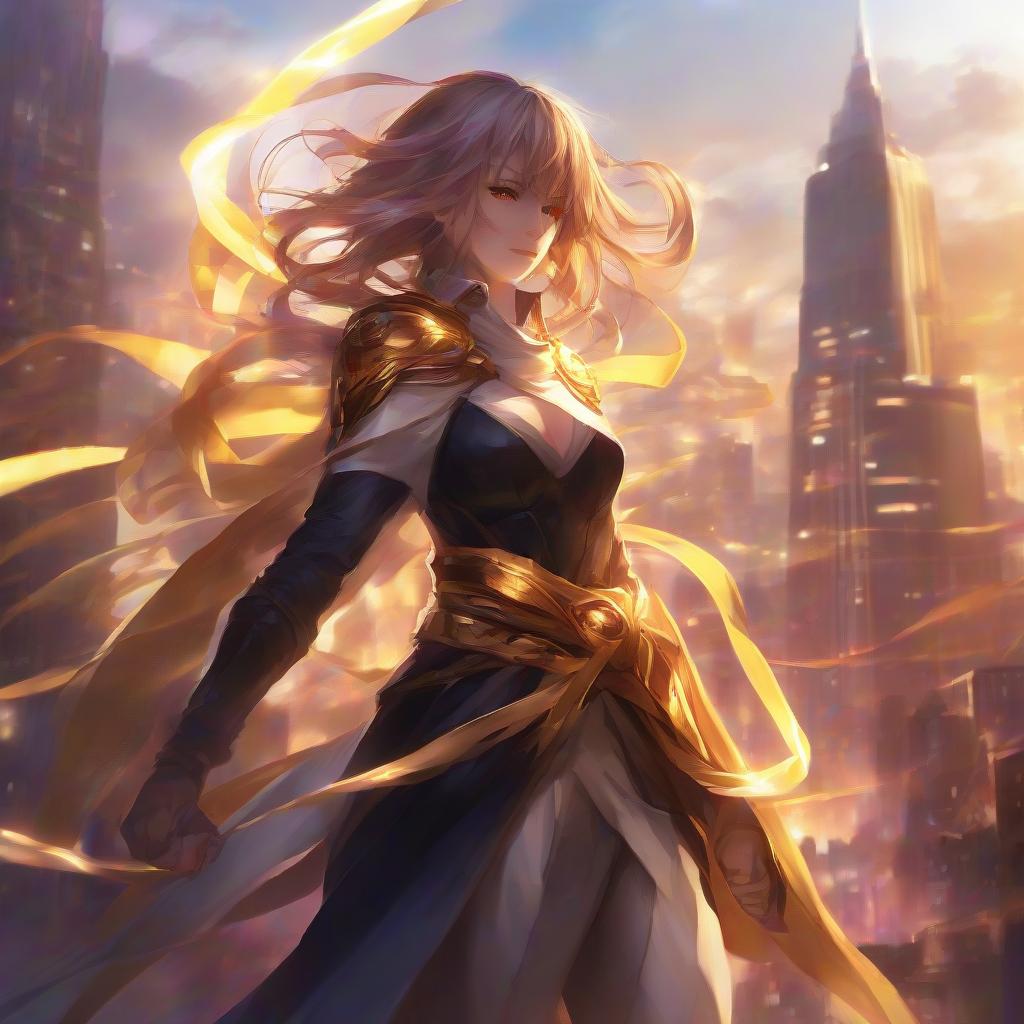
Osamu Tezuka's The Princess Knight stands as a monumental work in the history of anime and manga, a foundational pillar for shojo, magical girl genres, and narratives exploring gender identity. Published from 1953–56 and adapted into an anime from 1967–68, its enduring legacy is undeniable. It comes as no surprise, then, that this iconic series would inspire a modern cinematic reimagining: The Ribbon Hero. This anime film takes the core concept and spins it into a new, action-packed narrative, now available for streaming via Netflix.
A Bold Reimagining for a New Era
The Ribbon Hero centers on Princess Sapphire, seven years after her home, Silver Land, was devastated by the fearsome Nergal. A homeless and solitary wanderer, she eventually finds solace, work, and community in Gold Land. However, her newfound peace is shattered when the Nergal reappears. This time, Sapphire discovers an inherent power, allowing her to transform into the formidable Ribbon Knight, potentially offering a chance to defeat the creature that ruined her past.
Long-time fans of Osamu Tezuka's original Princess Knight will certainly spot familiar details and thematic nods. However, it's crucial to understand that The Ribbon Hero is a radical departure, far more a complete overhaul than a direct adaptation. While some might find this disorienting, it grants the film significant freedom. This creative space allows it to draw heavily from other seminal anime and manga that were themselves deeply influenced by Princess Knight. Audiences will recognize DNA from works like Revolutionary Girl Utena, Puella Magi Madoka Magica, Rose of Versailles, and Sailor Moon. This makes The Ribbon Hero feel like a vibrant full-circle moment, making it remarkably accessible for new viewers to dive in without prior knowledge of the classic.
A Visual Spectacle Unmatched
Where The Ribbon Hero truly shines is in its stunning visual presentation and sheer production value. The animation is nothing short of breathtaking, delivering a feast for the eyes from start to finish. Character designs by the talented Kei Mochizuki are fresh, stylish, and memorable, perfectly complementing the film's dynamic aesthetic. The coloration is a standout achievement, boasting a lush and vibrant palette that elevates every frame, from the intricate environments to the detailed costumes. Action sequences are meticulously choreographed, offering a kinetic and thrilling experience that few other films can rival. While the CGI, particularly for the Nergal, doesn't quite match the stellar quality of the 2D animation, its presence is minimal, preventing it from detracting significantly from the overall visual splendor. Beyond the visuals, the film's soundtrack is equally impressive, providing an excellent atmospheric backdrop that enhances the narrative without overpowering it. Voice acting, in both the English dub and original Japanese sub, is commendable, leaving the choice purely to personal preference. For those who prioritize unique and gorgeous animation, The Ribbon Hero is an absolute must-see.
The Narrative's Disappointing Pacing
Despite its exterior brilliance, The Ribbon Hero struggles significantly with its storytelling and pacing. The film moves at an unrelenting, breakneck speed, leaving little room for the audience to process events, absorb emotional beats, or fully grasp the unfolding conflicts. New challenges are introduced rapidly, one after another, creating a chaotic narrative flow that ultimately feels unresolved. The theatrical structure, while an interesting concept, does little to mitigate these pacing issues.
This rushed approach directly impacts the film's thematic depth, leading to often incoherent messages. This is particularly evident in its handling of classism, a theme hinted at but never truly explored or resolved in a meaningful way. The narrative establishes certain rules and expectations, only to fail in its ability to reckon with them by the film's conclusion. This creates a frustrating viewing experience, leaving the audience with the impression that the movie prioritized being a visual masterpiece over delivering a cohesive and satisfying story. It’s as if the creators could only commit to one aspect of filmmaking excellence, neglecting the narrative foundation.
Final Thoughts on The Ribbon Hero
The Ribbon Hero stands as a textbook example of form triumphing over function. Its exceptionally high production value and unmatched visual artistry unfortunately contrast with a story that feels underdeveloped and rushed. While the gorgeous animation, captivating art, and engaging music make for an undeniably stylish experience, the narrative ultimately faceplants into the beautifully rendered digital dirt.
Despite its shortcomings in the writing department, The Ribbon Hero undeniably showcases the incredible talent of Kei Mochizuki and the entire animation team. It serves as a powerful showcase for their artistic vision and technical prowess, and one can only hope that their work here provides a strong launchpad for future projects that can pair such visual brilliance with equally compelling narratives. For animation enthusiasts and those looking for a purely visual spectacle, this anime film delivers, even if its story leaves much to be desired.