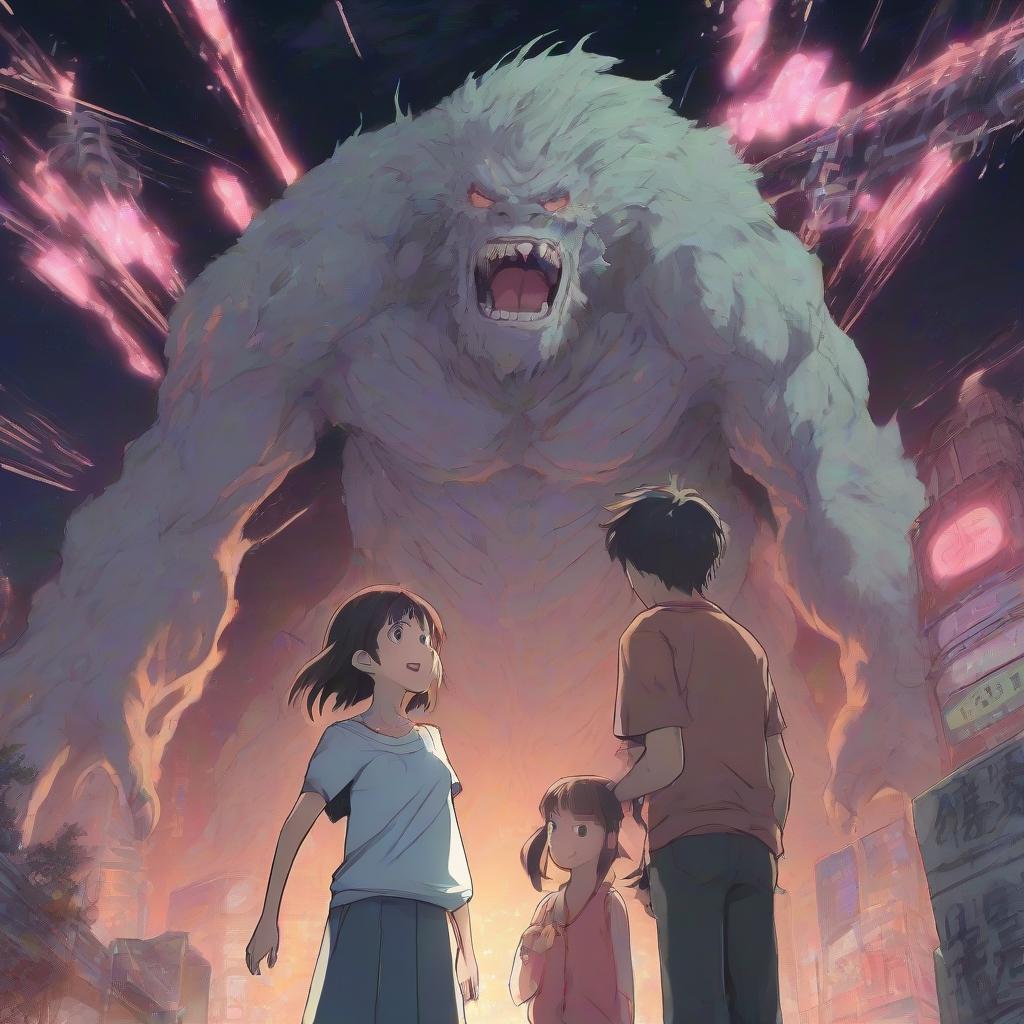
Episode 8 of Kaiju Girl Caramelise continues to unravel its quirky romance and unique take on identity, offering a surprisingly adept perspective on womanhood and relationships through a transgender lens. This installment delves deeply into Manatsu's over-the-top kaiju fandom, recontextualizing her behavior with a thought-provoking analogy, while also highlighting Minami's unwavering acceptance.
Manatsu's Kaiju Chaser Analogy Explored
Manatsu's enthusiastic adoration for Harugon, the kaiju form of Kuroe, provides a rich ground for discussion when viewed through a transgender lens. The term "chaser" in the trans community refers to an individual, typically cisgender, who primarily pursues relationships with trans people due to a fetishistic fixation on their transness rather than genuine connection. While the concept is often negative, the review uses it as an analytical framework for Manatsu's actions.
Manatsu's ravings are frequently sexualized; she expresses a desire for Harugon to "step on her and crush her," which, in a modern masochistic vernacular, can be interpreted as a desire for Harugon to "top" her. This sentiment is sometimes observed among chasers of trans women. Furthermore, Manatsu initially misgenders Harugon, believing the kaiju to be male. While not all chasers consciously misgender, their fixation on "nonstandard" aspects of trans bodies often reinforces a perceived distinction from cis counterparts.
The episode also features Manatsu dressing up as Harugon, first in a full-body costume and later in a stylized approximation. This act can be interpreted in several ways. It might represent a chaser's adaptation of trans aesthetics, either consciously to appeal to their desired partner or subconsciously through prolonged exposure. It can also touch upon the phenomenon of appropriation, where a non-kaiju individual like Manatsu adopts elements that bother Kuroe—such as the giant claws and tail—and wears them proudly, with the significant distinction that Manatsu can remove them at will. This contrasts sharply with Kuroe, who cannot shed her kaiju nature.
It is crucial to note that Manatsu is not depicted as a reprehensible character. She serves as a comedic relief and plays a vital role in Kuroe's journey of self-acceptance. Her genuine adoration, despite its complex undertones, helps Kuroe realize that her kaiju nature is not a curse. Instead, it is a source of strength, enabling her to save the day and reciprocate friendship, as seen when she gives Manatsu a unique sightseeing experience. Therefore, while the chaser analogy is a powerful analytical tool, Manatsu's ultimate role in the story is rooted in a deeper connection than mere fetishism.
Minami's Steadfast Acceptance Amidst Media Chaos
In stark contrast to the complexities surrounding Manatsu, Minami continues to shine as a beacon of genuine acceptance and support. The media frenzy surrounding his romantic connection with Harugon escalates, with a clever TV producer orchestrating a variety show appearance. Minami is visibly uncomfortable and out of his depth with the sensationalist, maximalist aesthetic of these programs, which exploit and exaggerate his relationship with Harugon for entertainment.
The show sensationalizes the idea that anyone in their "right mind" would date a kaiju, turning their relationship into a spectacle. However, Minami, to his immense credit, refuses to yield to this fervor. He perceives his connection to Harugon as entirely normal and states this plainly when Manatsu questions him. Crucially, he consistently genders Harugon correctly on live television, a small but significant act of respect and validation. Minami's actions underscore his genuine affection and unwavering support, positioning him as a commendable partner and ally against societal pressures and sensationalism. He navigates the media blitzkrieg with integrity, proving his connection to Harugon is rooted in true affection.
Kuroe's Evolving Identity
Throughout these events, Kuroe inches closer to a profound revelation: that she was born a kaiju. This impending realization carries its own weighty transgender implications, suggesting a natural, inherent identity rather than an acquired one. Her interactions with Manatsu, despite the analytical layers, contribute positively to her evolving self-perception. Manatsu's enthusiastic acceptance, even if interpreted as a form of "kaiju chasing," ultimately validates Kuroe's unique existence and helps her embrace her power and identity rather than view it as a burden. The journey of self-discovery and acceptance remains a central, compelling theme in Kaiju Girl Caramelise, expertly explored through its diverse and nuanced cast.