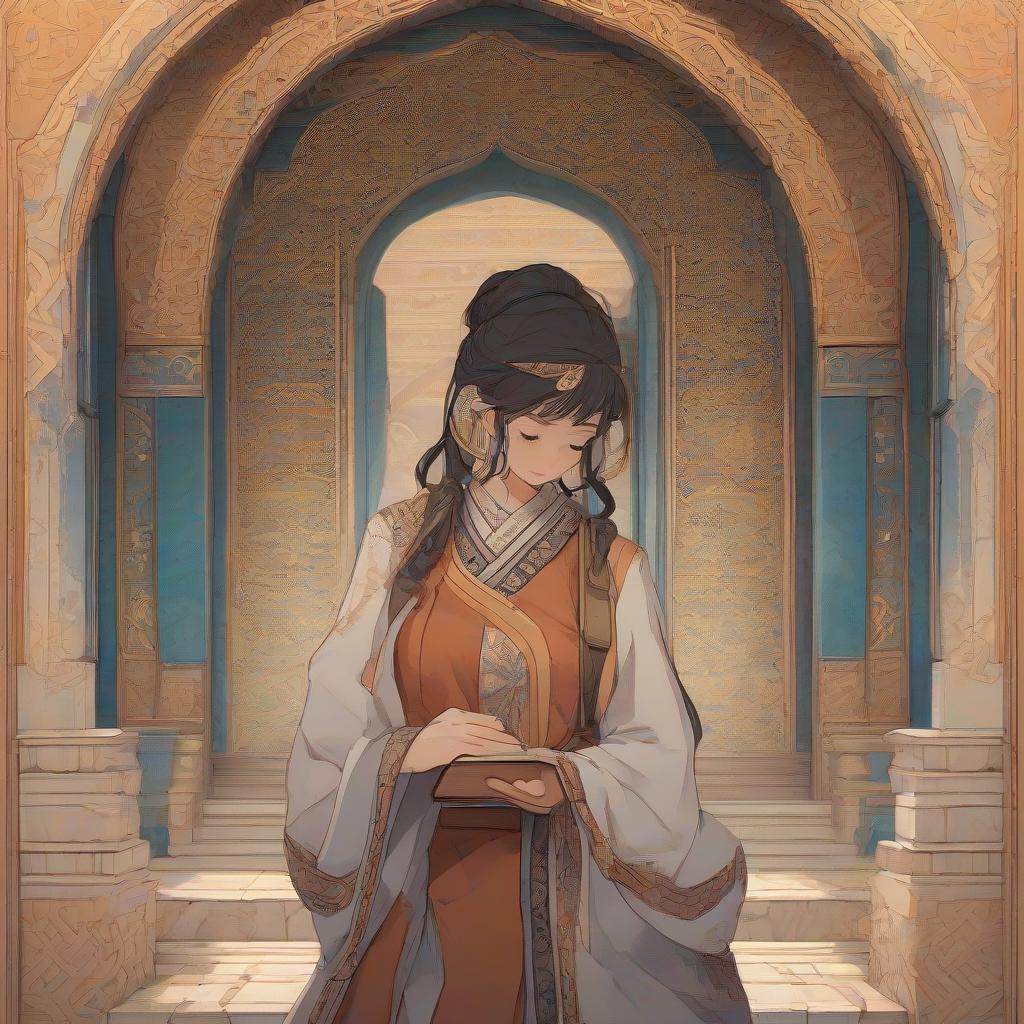
Jaadugar: A Witch in Mongolia - A Mesmerizing Historical Anime Journey
Science SARU, known for its distinctive animation style, has once again captivated audiences this season with a truly unique offering: Jaadugar: A Witch in Mongolia. Moving away from the typical modern settings, magic, or giant robots often found in seasonal anime, Jaadugar plunges viewers into the raw, unforgiving yet culturally rich world of 1200s Persia and Mongolia. Adapted from Tomato Soup's manga, the series immediately establishes itself as a standout, combining uniquely proportioned character designs with meticulous cultural attention to detail to weave a poignant story of betrayal, knowledge, and survival.
From the outset, Jaadugar: A Witch in Mongolia distinguishes itself through its compelling historical setting and narrative depth. The series meticulously showcases the cold, expansive steppes of Mongolia contrasting sharply with the intricate, arched doorways and sophisticated society of Persian nobility. This stark cultural juxtaposition is not just visual; it forms the very backbone of the story, exploring themes of war, the plight of enslaved people, and the profound value of knowledge as a cultural currency. For viewers seeking something genuinely different and thought-provoking, this anime offers a refreshing alternative to its contemporaries.
Sitara's Journey: From Enslaved Servant to Scholar
The narrative primarily follows Sitara, who later adopts the name Fatima, introduced to us after being sold into servitude within a scholarly household in the bustling city of Tus. Initially feigning ignorance in her desperate quest for freedom, Sitara gradually finds herself adapting to her new domestic life, forming an unexpected and deeply moving bond with her owner, Fatima. While the dynamics of an enslaved person and owner are inherently complex, the series carefully portrays a familial connection blossoming between the two. Fatima, a woman of immense intellect and compassion, reciprocates Sitara's growing affection, taking her under her wing and imparting invaluable knowledge in reading, writing, and advanced mathematical concepts.
This early period beautifully highlights Persia's rich academic heritage, particularly in mathematics, which dates back millennia. Set during the "Islamic Golden Age" of the 1200s, the story immerses us in a world where knowledge was revered and expanded through the translation of ancient texts from across the globe. A central artifact in this intellectual tapestry is Euclid's Elements, an ancient treatise on geometry, which serves as a potent symbol of accumulated wisdom. Fatima's vast personal library, filled with such priceless tomes, underscores the profound intellectual environment that Sitara briefly experienced.
The Shadow of War: Betrayal and a Quest for Revenge
Sitara's newfound comfort and intellectual awakening are violently shattered when Tolui, a figure of the burgeoning Mongolian Empire, razes Tus and brutally murders her beloved mentor, Fatima. Taken captive, Sitara witnesses the tragic demise of her fellow household servants under harsh conditions, leading to a deep-seated fury against her captors. Just as she faces a similar grim fate, she is coerced into a daunting mission: to retrieve the coveted Euclid's Elements from Tolui's wife, Sorghaghtani. This pivotal moment ignites Sitara's slow burn of revenge, forcing her to navigate a world that stands in direct opposition to her values and faith. Her journey transforms into a protracted game of survival and subtle manipulation, as eight years pass with her teaching Sorghaghtani's children and biding her time. The series deftly handles significant historical events off-screen, such as the deaths of Genghis Khan and Tolui, and the ascension of Ögedei as Kha'an, focusing instead on Sitara's personal evolution and silent struggle. The fourth episode concludes with a dramatic shift, as Sorghaghtani, recognizing Sitara's unique capabilities, requests her to transcend her serving duties and become a spy.
Challenging Perceptions: Complexity in a Conquering Empire
One of the series' most commendable aspects is its refusal to paint characters in simplistic black-and-white strokes. Sitara initially perceives the Mongols as uneducated, brutal, and entirely alien, a common sentiment given the empire's ruthless expansion. However, Sorghaghtani quickly challenges these preconceived notions. Her interest in Euclid's Elements is not merely for acquisition or hoarding power; she genuinely believes in the importance of educating her people. This revelation showcases a depth to Sorghaghtani that Sitara, and perhaps the audience, did not anticipate. It will be fascinating to observe how Sorghaghtani, now freed from the immediate shadow of her husband's power, continues to exert her influence and manipulate the political landscape. The groundwork is also laid for other significant historical figures, such as Ögedei's primary wife, Töregene, whose animosity towards him hints at future political machinations and an increasingly vital role as the story unfolds.
Science SARU's Visual Feast and Cultural Immersion
While the initial episodes serve as crucial table-setting for the unfolding drama, Science SARU ensures that the journey is a feast for the eyes. The studio's dedication to historical authenticity and visual splendor is evident in every frame. Director Masaaki Yuasa and Naoko Yamada notably spent time in Mongolia for preparatory research, a commitment that shines through in the series' breathtaking landscapes and intricate details. Influences from rich Persian art are seamlessly woven into the color palettes and textile designs seen throughout, especially in the opening episodes set in Tus. Jaadugar's distinctive art style, combined with its unique setting and compelling narrative, firmly establishes it as a visually captivating experience that sets it apart in the current anime landscape. Once Sitara, now Fatima, fully embraces her new role and finds her footing in this complex world of intrigue and betrayal, the possibilities for what comes next are boundless. This is a series that promises not just a story, but an immersive cultural and historical experience.
Jaadugar: A Witch in Mongolia is currently streaming and is a must-watch for those craving a departure from typical anime fare, offering a thoughtful, visually stunning, and emotionally resonant narrative steeped in history and human complexity.