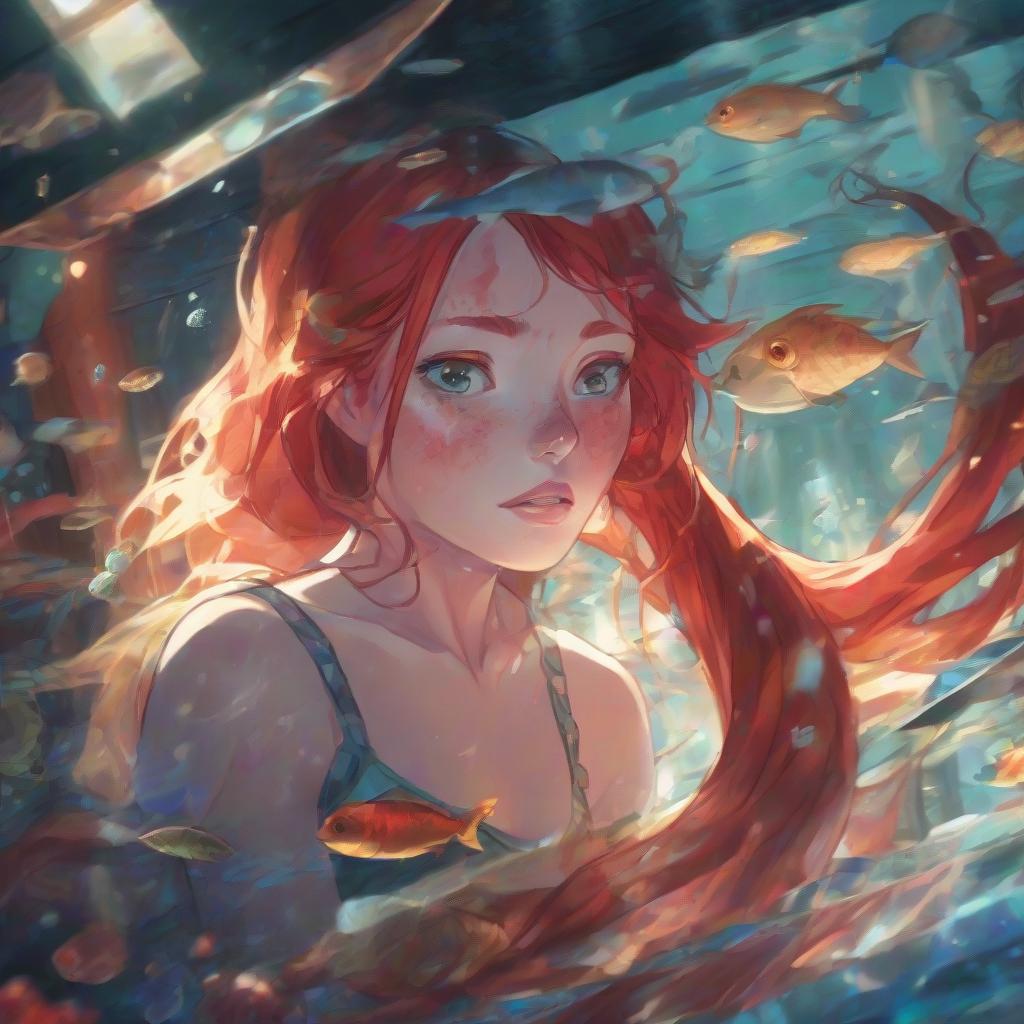
Goodbye Lara: A Fresh Take on The Little Mermaid Anime
The timeless allure of Hans Christian Andersen's "The Little Mermaid" continues to inspire countless adaptations, but "Goodbye, Lara" carves out its own unique space in this rich cultural tapestry. Acknowledging the beloved Disney legacy with its heroine's distinct hair color, this new anime series, currently streaming on Crunchyroll, promises to make a significant mark. With community scores of 4.6, 4.6, and 4.5 for its initial three episodes, it's clear that audiences are captivated by its imaginative reimagining. This series doesn't just retell; it redefines, offering a profound exploration of familiar themes through a fresh lens.
The Mermaid's Second Chance: A New Beginning
Remarkably, the entirety of Andersen's original "Little Mermaid" narrative is condensed and reimagined within "Goodbye, Lara"'s very first episode. We witness a beautiful, melancholic retelling that stays remarkably close to the classic, albeit omitting some of its more harrowing details like the physical pain of walking or the prince's inconsiderate actions. Lara, much like her 19th-century counterpart, transforms into seafoam. However, here is where the narrative boldly diverges. Instead of becoming a spirit of the air yearning for a human soul, Lara is returned to light, reborn from her seashell womb after two centuries. She reemerges a whole mermaid, presented with the opportunity not for a "Christian soul," but to revive her family and their magnificent underwater kingdom. This ingenious twist offers a far more satisfying conclusion to the initial tragedy and sets up a compelling premise for Lara's new journey. It reframes her original choice, suggesting she wasn't solely at fault, hinting at a larger purpose orchestrated by the enigmatic Sea Witch, Grace.
Grace: The Prescient Architect of Fate
Grace, the Sea Witch, is undeniably one of the most intriguing characters introduced in these early episodes. While many retellings cast the Sea Witch as overtly evil or purely selfish, "Goodbye, Lara" paints Grace in nuanced shades of gray. She appears less a villain and more a prescient figure, perhaps even an architect of Lara's destiny. Her actions don't seem designed to punish; rather, they suggest foresight and a vested interest in the merfolk's survival. When Lara reawakens, the stated price for her legs – her voice – is effectively nullified, marked only by a visible scar on her tongue as a symbolic payment already rendered. Grace herself transforms into "Gon," Mari's pet fish. This transformation isn't random; it hints at a deeper plan, suggesting Grace may have known Mari would be the human Lara would encounter upon her reawakening, strategically positioning herself to guide the mermaid. This portrayal challenges conventional notions of "witch," reminding us that such labels often unfairly diminish powerful, intelligent women. Grace’s complex motivations hint at a grander scheme, emphasizing her role as a protector rather than a tormentor.
Redefining True Love Beyond Romance
Lara's quest to save her people hinges on finding "true love." Initially, she believes this must be romantic love, reminiscent of her past with the prince. However, "Goodbye, Lara" deftly weaves in references to another of Andersen's tales, "The Snow Queen," to expand this definition. The prevalence of shattering mirrors in the undersea kingdom echoes the broken mirror shards from "The Snow Queen" that embed in hearts and eyes. More critically, "The Snow Queen"'s core message champions a broader form of love: the pure, childlike affection Gerda holds for Kai, a love of friendship or sibling bond. This theme is further reinforced by the pop culture resonance of Disney's "Frozen," an adaptation of "The Snow Queen," which also highlighted familial love. "Goodbye, Lara" uses these allusions to subtly yet powerfully suggest that Lara's salvation for her family might not lie in romantic partnership, but in the profound connections of friendship or kinship. Romance is a valid path, but it is not the only, nor necessarily the most important, form of true love the series intends to explore.
A World Rich with Detail and Foreshadowing
Beyond these central thematic reinterpretations, "Goodbye, Lara" enriches its narrative with a wealth of detail and subtle foreshadowing. The animation boasts wonderfully "lived-in" backgrounds, creating an immersive undersea and human world. Mari's cross is a direct nod to the overt Christian elements prevalent in Andersen's original works. The presence of Lara's sister, Lisa, subtly positions her to embody the brave third sister from the original tale, who tries to save the mermaid. Even the death of Mari's mother serves a purpose, tapping into classic fairy tale tropes. There's so much to unpack and appreciate, forming a rich tapestry for a folkloric reading of the series.
Conclusion: A Promising Fairy Tale Reimagined
"Goodbye, Lara" has made a powerful and captivating start with its first three episodes. It’s not merely a retelling but a thoughtful deconstruction and reconstruction of a beloved fairy tale, imbued with depth, character complexity, and an expanded understanding of love. The series successfully blends homage with innovation, offering a narrative that is both familiar and strikingly new. As Lara embarks on her journey, guided by a cryptic Sea Witch and a reawakened purpose, audiences are left eagerly anticipating what version of the tale this series will ultimately deliver and what form of "true love" will ultimately set the merfolk free. This is a must-watch for fans of fantasy, fairy tale adaptations, and compelling character-driven anime.