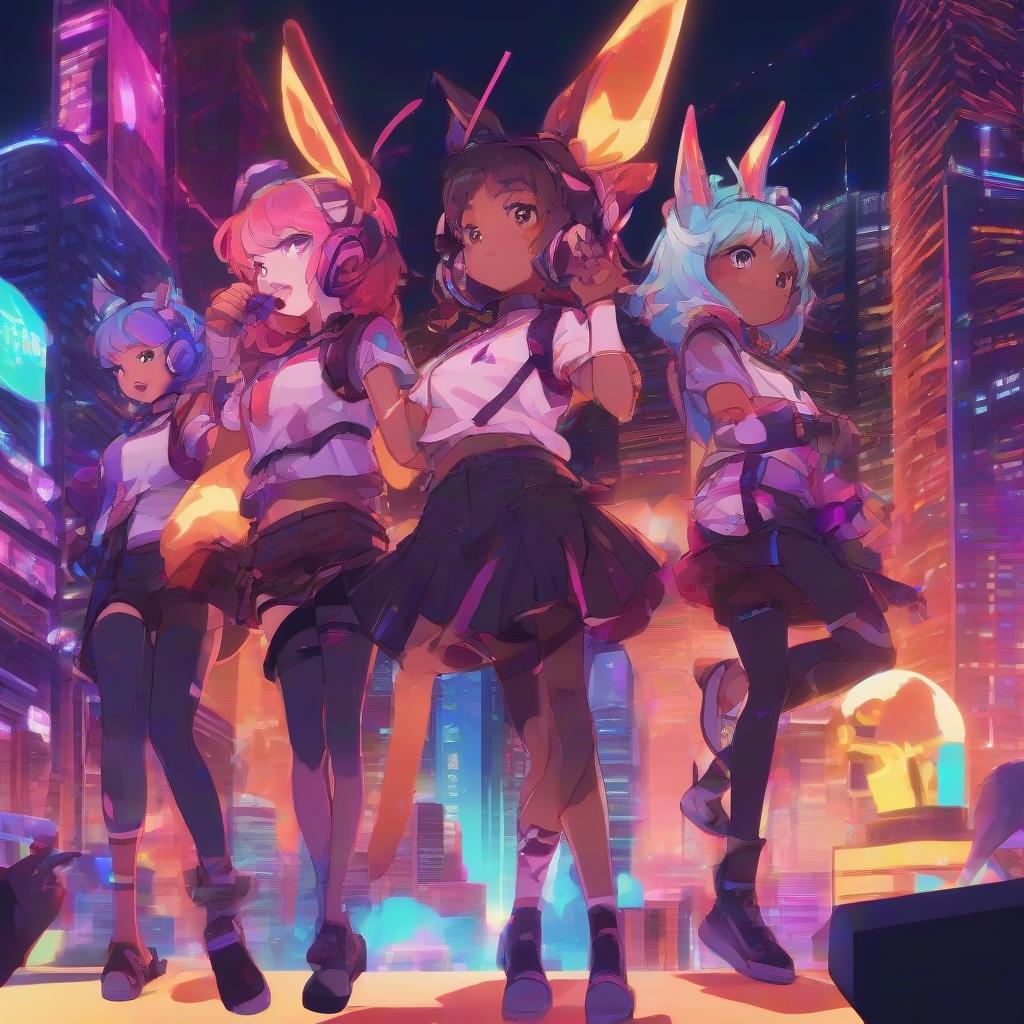
The latest BanG Dream! entry, YUME∞MITA, elevates the beloved series by deeply immersing itself in otaku culture. Set adjacent to Tokyo's iconic Akihabara district, a mecca for fans, the series draws its distinctive flavor from this vibrant backdrop. The characters are not merely observers but active participants, steeped in anime and manga, allowing their passions to shape their identities and the very essence of YUME∞MITA. This authentic integration speaks volumes about the evolving landscape of digital fandom and creative expression.
Mugendai MewType: Virtual Idols in a Digital Age
Mugendai MewType, the band at the heart of YUME∞MITA, immediately signals its connection to modern otaku culture through its unique presentation. Conceived as a "virtual band," its members are depicted as kemonomimi characters, echoing popular online streaming avatars. Their manager, a charming chibi pixel-art visage, further embraces the prevalent digital aesthetic. These visual choices resonate with contemporary online performers who frequently reference anime, manga, and games, establishing MewType as a true product of its digital era.
Fandom Fuels Friendship and Performance
The characters' journeys are propelled by their profound love for anime. Arale, the series lead, is defined by her enduring affection for "Magical Physical Kululu," an in-universe magical girl anime. Her fandom isn't just a hobby; it's a source of strength and inspiration. She's performed its songs online and bonded over it with childhood friend Ritsu, an early connection that paved their path into online performance. Before MewType, their group, La La La La Girls, showcased their love for Vocaloid and other otaku music, demonstrating the self-propelling nature of online fan content. The series even nods to the broader BanG Dream! universe, with Ritsu receiving a request to cover a Roselia song, highlighting the interconnectedness of these fan spaces.
The unifying power of fandom is vividly displayed through Arale's resurgence in MewType. Her new bandmate, Miyako, shares her fervent love for "Magical Physical Kululu," leading to a natural bond forged over their shared passion and the universal quest for limited-edition merchandise. This shared interest underscores how powerful these online communities can be for forming energetic, supportive friendships, despite the acknowledged potential for darker, weaponized aspects of online interaction that YUME∞MITA also explores.
From Fans to Creators: Miyako's Journey
The dynamic between Arale and Miyako further illustrates how fan creations can propel both creators and their interactions. Miyako, a popular illustrator and manga artist, initially captured Arale's attention with her "Magical Physical Kululu" fanart. This led Arale to admire Miyako's original serialized manga and idolize her as a creative force. This narrative beautifully encapsulates the phenomenon of parasocial attachments to online creators—artists, singers, streamers—within these vibrant digital communities. While such attachment can fuel intense fandom, it also carries the risk of negative elements, as Arale, having experienced the incendiary side of fan reactions, initially felt uncertainty about interacting with Miyako.
Miyako's character arc also highlights the origins of much otaku media. As an original manga creator who started in the Japanese doujinshi scene, she represents the countless artists who began as fans themselves. Her dedicated fandom, however, isn't without its challenges, bringing with it both protective loyalty and the immense workload of balancing illustration and performance. This serves as a potent reminder that the media we cherish doesn't magically appear; it's the product of dedicated creatives, often fans themselves, expressing their love for the art form through their hard work.
The Power of Shared Passion Unites Mugendai MewType
It is fitting that Arale's path to seeing Miyako as an equal, a fellow creative, was paved by their mutual fandom for "Magical Physical Kululu." Arale's admiration for Miyako's fanart is reciprocated, as Arale herself is a fan-creator through her song covers. Standing on equal ground, they bond over how their shared passion for Magilulu brought them together, embodying the themes of teamwork and collaborative strength, reminiscent of a magical girl anime itself.
This unifying thread extends to all members of Mugendai MewType. Nonoka streams guitar covers of otaku-friendly songs, while Yuno, a tech-savvy online enthusiast, finds her voice through her bandmates. Their collective focus on fandom acts as a powerful catalyst, bringing them closer and forming a cohesive group. Akihabara's constant presence, with its colorful anime characters and shifting art styles referencing shoujo and classic animation, provides the perfect stage for these connections to unfold.
Fandom's Enduring Impact
YUME∞MITA's rich tapestry of otaku references isn't just superficial; it's the very fabric that binds its characters. The series demonstrates the profound uniting power of fandom itself, mirroring how BanG Dream! has, for years, brought crowds together to cheer for its girls and foster community. By showcasing how shared stories can forge deep bonds and inspire creative expression, YUME∞MITA not only defines its unique flavor but also paves the way for a new generation of creatives, both within and outside the vibrant world of fandom.